by Akintokunbo Adejumo
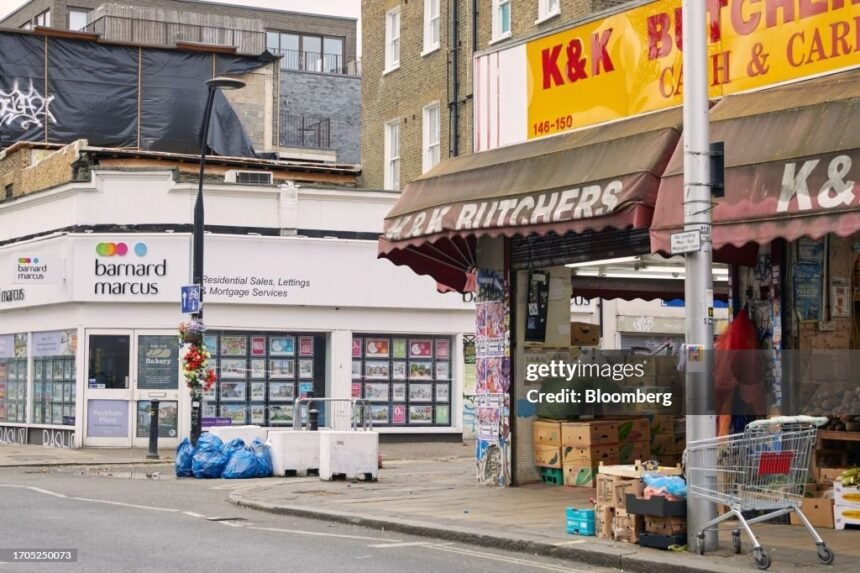
To the uninitiated, Rye Lane is a dizzying, high-octane assault on the senses. It is a South London artery where the rumble of the double-decker buses competes with the calls of fishmongers and the frantic pace of commuters rushing toward Peckham Rye station. Yet, amidst this chaotic urban rush exists a class of men who move at an entirely different speed. These are the Peckham Uncles. With an unhurried, monumental confidence, they treat one of the busiest high streets in London like their own private, carpeted living room. They do not navigate the street; they occupy it. They stand as immovable geographical features against the human tide, projecting the serene aura of monarchs who know that everything the light touches belongs, in some way, to them.
The visual signifiers of this lordship are highly specific and fiercely non-negotiable. The mandatory uniform consists of a designer-knockoff tracksuit—usually bearing an impossibly glossy, slightly suspicious logo—paired with thick, athletic socks and slides. Alternatively, an uncle might opt for leather loafers or slippers worn heel-crushed, transforming formal footwear into a casual slide through sheer force of will. This outfit is not a sign of relaxation; it is the ceremonial armour of the high street elder.
As they hold court, the sensory landscape of SE15 rises to meet them. Booming Afrobeat tracks spill from open shop doorways, creating a syncopated rhythm for the afternoon, while the rich, sweet smell of fried plantain from local canteens mixes with the heavy scent of diesel exhaust. In this space, the uncles are the masters of ceremonies, orchestrating the vibe of the lane with a nod, a shout, and an absolute refusal to be hurried.

The Art of Doing Nothing (Employment Optional)
To the untrained eye, the Peckham Uncle appears to have no job, no boss, and a calendar completely devoid of commitments. Yet, to watch him occupy the pavement outside Khan’s Bargain Store or lean against the glass doors of Rye Lane Market is to understand that he is, in fact, working overtime. His role? Chief Executive Overseer of the High Street. These uncles don’t just stand on Rye Lane; they hold it up. They occupy strategic lookout posts where they can monitor the complex geopolitical landscape of South London, from the fluctuating price of plantains at Bims African Foods, the Asian butchers and fishmongers, to who is entering Peckham Library looking entirely too stressed for a Tuesday.
The daily operation requires a unique social infrastructure. An uncle never stands entirely alone; he operates in a loose, shifting cooperative of like-minded, track-suited colleagues. When two uncles collide outside the Aylesham Centre, it is not a casual greeting—it is a theatrical production. The ritual begins with an explosive, high-pitched “Ah-ah! Chief!” that cuts clean through the rumble of the 12 bus. This is followed by a prolonged, multi-stage handshake that involves a thumb-lock, a chest-bump, and enough back-slapping to require a medical check-up.
The sheer volume of their conversation is a masterclass in decibel dominance. They speak to each other from three feet away as if trying to shout across the Atlantic Ocean, settling an intense debate about the Nigerian economy or Chelsea FC with absolute, unyielding authority.
Interspersed between these loud mini-summits is the art of the Rye Lane whistle. When a young woman walks past, an uncle will lean forward from his post, hand placed gently over his heart, and release a soft, sharp “Pssssst! Sisi, how you dey?” It is entirely harmless, mostly because the recipient doesn’t even break her stride, usually adjusting her headphones with a look of profound boredom that would crush a lesser man’s spirit. The uncle, completely unfazed, simply turns back to his colleague, nods to the sky, and says, “Beautiful girl. She looks like my niece in Ibadan,” before immediately resuming his post as if he hadn’t just been thoroughly ignored.
The Empire of Commerce
While many uncles treat the high street as an extended living room, others have physically staked their claim on the local economy. To find the entrepreneurial heart of the operation, one must dive deep into the labyrinth of Rye Lane Market. Nestled comfortably in Unit 31 sits the ultimate uncle sanctuary: the barbershop. This is not merely a place where hairlines are rescued; it is an unofficial parliament, a sports betting syndicate, and a philosophical society all rolled into one. Inside, the sharp scent of methylated spirits and blue hair pomade hangs thick in the air, while a flatscreen TV on the wall permanently screams either Arise News, Channels TV or a heavily pixelated Premier League replay.
The true genius of the Unit 31 barbershop is its fluid relationship with time. The master barber, usually an elder uncle wearing a crisp apron over a tracksuit, treats each haircut not as a job, but as an interactive debate. He will stop mid-clipper stroke, razor hovering perilously close to a customer’s ear, just to turn around and shout at the room about why Victor Osimhen should leave his club. The client in the chair doesn’t flinch; they simply join the shouting match.
Just a few yards away, outside the market’s entrance, sits the entertainment branch of the empire: the bootleg media stall. Run by an uncle who views himself as a cross between a tech mogul and a cultural archivist, this stall is a glorious monument to the early 2000s. Despite the entire world moving to streaming, this uncle commands his trestle table of physical CDs and DVDs with corporate seriousness. His stock is legendary: “Best of King Sunny Adé 2024 Mix,” bootleg copies of Nollywood blockbusters like The Wedding Party 4, and endless compilations of midnight gospel prayers.
If you question the relevance of compact discs, he will look at you with deep, paternal disappointment. “My friend, what if the internet collapses tomorrow?” he will ask, tapping a plastic case containing a grainy pastor’s sermon. “Where will your Spotify be then? Eh? Buy this one for five pounds and save your soul.”
The operational climax of the afternoon occurs when a phone rings. An uncle will pull an older iPhone from his tracksuit pocket, press it flat against his ear, and suddenly transform into an international oil tycoon. He will pace the concrete of Rye Lane, shouting over the roar of the 36 bus: “Hello?! Yes! Tell them I am in a board meeting right now on Rye Lane! Yes, the shipment for Lagos! I will call you back!” He then slides the phone away, rolls his shoulders, adjusts his slippers, and returns to leaning against the wall, his global business empire successfully managed for another hour.
Evening Migration and Feast
As the sun begins to dip below the London skyline, casting long shadows across the Rye Lane overground bridge, a subtle shift occurs in the uncle ecosystem. The tracksuits are zipped up against the evening chill, the slides are adjusted, and the lookouts are finally abandoned. The pavement shifts from a boardroom back into a regular street. It is time for the evening migration. Following an internal compass calibrated entirely by the scent of rich stews and frying spices, the uncles head toward the ultimate end-of-day sanctuaries: the classic, steam-fogged dining rooms of Lolak Afrique and Delta Inn on Choumert Road, Tiwa’nTiwa, near Lidl Supermarket, just off Peckham High Street, Nigerian take-away at Tasty’s (Peckham High Road) or the lively, wider expanses of 805 Restaurant, Old Kent Road just up the road, or the exquisite culinary experience of the famous Nigerian kebab, Suya, at Kola Ajayi’s Suuyar stall or buy Agege (hard-dough bread) at Angel Bakeries on the Rye Lane.
Stepping into the restaurant, the uncle undergoes a physical transformation. The alert, defensive leaning of the afternoon gives way to total, heavy relaxation. They slide into leather booths, throwing their car keys onto the tables with the dramatic flourish of men who have just spent twelve hours executing high-stakes mergers. The atmosphere is loud, thick with laughter, and heavy with the aroma of home. There are no menus required here. An uncle doesn’t look at a menu; he simply looks the waitress in the eye and commands the table.
Within minutes, the feast arrives. The centrepiece is always the pounded yam—a smooth, heavy, beautifully stretchy mountain of white dough that arrives piping hot and wrapped tight in plastic film. Next to it sits a bowl of egusi soup, glowing orange with palm oil, laced with assorted meats, and bubbling with a fierce, pepper-induced heat.
Watching an uncle eat is a masterclass in culinary physics. With his sleeves rolled up, he tears off a piece of pounded-yam, shapes it with a practiced swirl of his thumb, creates a perfect scoop, plunges it into the egusi, and swallows it whole. No chewing required, and it is sacrilegious to eat pounded yam with a fork and a knife, European-like – it must be eaten with your washed hands. To chew the swallow is to show a lack of experience.
To wash down a meal of this magnitude, standard London beverages will not suffice. The uncles bypass the trendy craft beers of South London and head straight for the heavy artillery: giant, condensation-beaded bottles of Guinness stout. They pour it slowly, watching the dark liquid settle like ink under a thick head of foam. Between massive swallows of food, they lean back, wipe their brows with a tissue, and sigh with deep, spiritual contentment.
It is here, over the remnants of pounded yam and emptying bottles, that the true heart of the Peckham Uncle is revealed. The shouting matches about football soften into nostalgic storytelling about the Lagos of their youth. The fierce, defensive pride they hold for their corner of London turns into a quiet, warm community warmth. They may not have a traditional nine-to-five, and their tracksuits might be loud, but as they laugh into the night, it is clear that they provide the very gravity that keeps Peckham grounded. They are the unofficial guardians of the high street, and SE15 would be completely empty without them.
The idea for this article was initiated by my daughter, Jola, one day when I wore a tracksuit given to me by my youngest son, Akintomiwa. They asked me where I was going wearing a tracksuit. I said Peckham. They started laughing and I asked why. And they said I was dressed like a Peckham Uncle. I asked them what a Peckham Uncle is, and they gave me funny details. So, the next time I was on the Rye Lane and I observed (what I had never paid any attention to, all my 30 years of living in Peckham, and it was so captivating, I decided to write a humorous account of my observations over the years.