By Ibrahim Bunu
ibrahimbunu2520@gmail.com
Why President Tinubu’s Hausa Day Message May Be More Politically Significant Than It Appears
President Bola Ahmed Tinubu’s decision to describe the Hausa people as “great pillars” of Nigeria’s unity and progress on Hausa Day deserves to be examined beyond the ceremony.
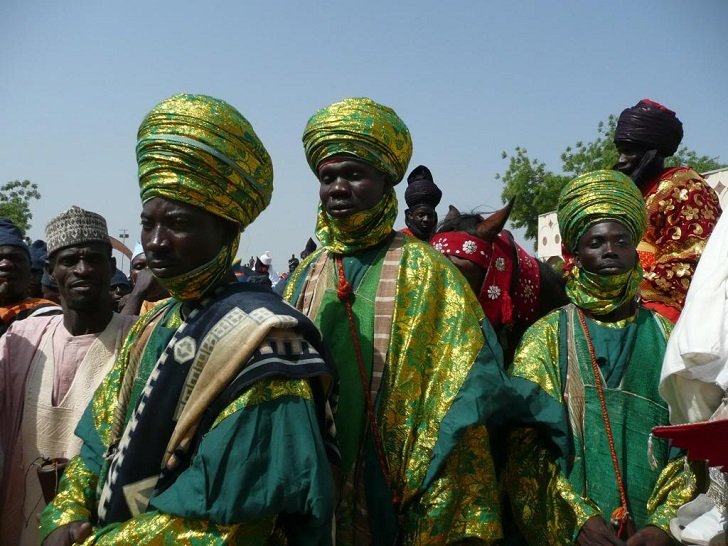
The President’s message was brief, but its timing is anything but insignificant. On 26 August 2026, as Nigeria moves steadily toward the 2027 general elections, Tinubu publicly acknowledged the Hausa as a distinct people and praised their contribution to Nigeria’s unity, progress, communication and commerce. The message was delivered in the context of Hausa Day celebrations at the historic Daura Palace. (PeoplesMind)
There is, of course, an innocent explanation: it was Hausa Day.
But politics is rarely about words alone.
Politics is about timing, audience, history, power and what is left unsaid.
And what makes this moment particularly interesting is that a long-suppressed question is becoming increasingly difficult to avoid:
Where exactly is the Hausa person in the political architecture of Northern Nigeria?
For generations, the answer has been obscured by one enormously convenient expression:
“HAUSA-FULANI.”
That expression has historical meaning, but it has also become politically problematic.
It can describe centuries of interaction, intermarriage, cultural assimilation and the adoption of Hausa language by many Fulani communities. Scholars have documented precisely that complexity. The 19th-century jihad and the subsequent emirate system produced profound Hausa-Fulani interaction, while many urban Fulani became culturally and linguistically Hausa. (The New York Academy of Sciences)
But there is another question:
Has the compound label sometimes concealed a real imbalance of political power between two distinct peoples?
That question deserves to be asked honestly.
Not with hatred.
Not with revenge.
Not with anti-Fulani sentiment.
But with historical courage.
1. THE HAUSA ARE NOT THE FULANI — AND THE FULANI ARE NOT THE HAUSA
This should be the starting point.
The Hausa are a distinct ethnic and linguistic community.
The Fulani are a distinct ethnic community.
They have interacted for centuries. They have intermarried. They have shared Islam, language, institutions, political structures and cultural practices.
That history is real.
But interaction is not identity.
And cultural assimilation does not automatically mean political equality.
The historical record shows that the Sokoto jihad led by Usman dan Fodio transformed the political order of much of Hausaland. Hausa rulers were displaced and a network of emirates emerged under Fulani aristocratic leadership. Academic literature explicitly describes the replacement of Hausa kings by Fulani emirs following the 19th-century jihad. (The New York Academy of Sciences)
That history should neither be romanticised nor weaponised.
But neither should it be erased.
Because a society cannot solve an old political imbalance by pretending the imbalance never existed.
2. THE PROBLEM WITH “HAUSA-FULANI” IS NOT THAT THE TWO PEOPLES NEVER INTERACTED
That would be historically inaccurate.
The problem is what the label has come to do politically.
For decades, “Hausa-Fulani” has often been used as though it represents one homogeneous political community with one leadership, one interest and one political destiny.
But there is a fundamental question:
Who actually controlled the commanding institutions inside that supposedly united political bloc?
That question changes everything.
Historical scholarship has documented the persistence of Fulani aristocratic lineages within the emirate system, while Hausa became the dominant language of public interaction and commerce. (The New York Academy of Sciences)
This produced an extraordinary historical paradox:
The Hausa supplied much of the population and the lingua franca, while a comparatively narrow aristocratic class acquired disproportionate access to traditional political authority.
That is the beginning of the Hausa question.
3. THE MOST IMPORTANT DISTINCTION: HAUSA POPULATION ≠ HAUSA POWER
This is where the conversation becomes uncomfortable.
A community can be numerically powerful and politically weak.
It can dominate the streets but not the palace.
It can dominate commerce but not the commanding institutions.
It can provide the electorate without controlling the political machinery.
It can speak the language that unites millions while remaining underrepresented in the institutions that define political authority.
That is why the Hausa question cannot be reduced simply to ethnicity.
It is a question of:
representation, opportunity, education, political access, social mobility and institutional power.
Some scholars have described the Northern political structure as an elite system whose authority historically rested heavily on religious and cultural capital concentrated around the emirate establishment. (Sage Journals)
That observation deserves serious interrogation.
4. THE PALACE QUESTION
For generations, the traditional hierarchy of large parts of Hausaland has been heavily associated with Fulani aristocratic lineages.
This is not a conspiracy theory.
It is part of the history of the emirate system.
The 19th-century transformation of Hausa political institutions resulted in Fulani emirs becoming the dominant traditional rulers in many major Hausa centres. (The New York Academy of Sciences)
And here lies the paradox:
The Hausa became the language of the palace, but the Hausa did not necessarily become the owners of the palace.
That distinction is profound.
It explains why contemporary debates about identity are becoming more intense.
The Hausa-speaking population can increasingly ask:
If this is our land, our language, our demographic heartland and our culture, why must political legitimacy continually pass through a traditional aristocratic structure whose origins lie elsewhere?
That question cannot simply be dismissed as tribalism.
It deserves an answer.
5. BUT LET US BE PRECISE: “ALL NORTHERN GOVERNORS ARE FULANI” IS NOT FACTUALLY CORRECT
This is where an honest analysis must separate structural criticism from exaggeration.
It is inaccurate to say that every northern governor is Fulani.
Northern Nigeria is much more complicated.
There are Hausa, Fulani, Kanuri, Tiv, Nupe, Gbagyi, Ebira, Margi and many other peoples occupying political offices.
For example, the North-West itself comprises Kaduna, Kano, Katsina, Jigawa, Kebbi, Sokoto and Zamfara, and the political leadership of those states has changed over time. Current reporting confirms that the APC controls all seven North-West governorships following recent defections, but that is a party-political fact, not proof that every officeholder belongs to one ethnicity. (The Sun Nigeria)
Therefore, the serious argument should not be:
“Every northern governor is Fulani.”
The stronger argument is:
“Why has the Hausa population, despite its enormous demographic and cultural importance, historically experienced a level of political representation that many believe does not correspond to its numerical and socioeconomic weight?”
That argument is much harder to dismiss.
6. THE DEEPER CRISIS: THE HAUSA MASSES AND THE NORTHERN ELITE
Here is where the real injustice may lie.
It is not necessarily:
Hausa versus Fulani.
It is:
Masses versus entrenched privilege.
A poor Hausa farmer and a wealthy Fulani aristocrat do not automatically share the same economic interests simply because they are Muslims.
A Hausa almajiri and an elite political family do not experience Nigeria in the same way.
A Hausa petty trader struggling to feed his family does not necessarily benefit from the political influence of an emir simply because both belong to the same broad northern Muslim society.
This is the fundamental deception of elite politics:
It persuades the poor to identify with the identity of the powerful instead of the interests of the disadvantaged.
And this is not exclusively a northern problem.
It happens across Nigeria.
But in parts of Northern Nigeria, the combination of ethnicity, religion, traditional authority and politics has historically made the system particularly powerful.
7. THE ALMAJIRI QUESTION IS THE MOST DEVASTATING SYMBOL
Look at the Almajiri.
The Almajiri system has deep religious and historical roots and should not simply be demonised as though Qur’anic education itself is the problem.
It isn’t.
The problem is what happens when religious education exists without adequate integration with modern education, child protection, vocational training and economic opportunity.
Research on Almajiri children has documented severe vulnerability, including poverty, physical and emotional abuse and exclusion from formal education. (publications.iom.int)
One study found that the Almajiri practice is particularly common among Hausa/Fulani communities and that many participating children lack formal education. (npsang.org)
Another recent academic review noted that the system has been allowed to expand despite its damaging educational and social consequences. (journals.library.ualberta.ca)
Now ask the uncomfortable question:
Who are the children walking the streets?
Who are the children begging?
Who are the children selling small items?
Who are the children shining shoes?
Who are the children growing up without adequate formal education?
Who are the children whose potential is being sacrificed?
The answer is not “the elite.”
It is overwhelmingly children from poor families.
And that is why the Almajiri crisis should be understood as a class and governance failure, not simply an ethnic issue.
8. THE MOST DANGEROUS THING IS TO MAKE POVERTY LOOK CULTURAL
This is where Northern Nigeria must have an honest conversation with itself.
Poverty is not Hausa culture.
Begging is not Hausa destiny.
Illiteracy is not Hausa destiny.
Political passivity is not Hausa destiny.
Underdevelopment is not Hausa destiny.
A child roaming the streets with a begging bowl is not evidence that Hausa civilisation is backward.
It is evidence that society and government have failed to convert human potential into human capital.
The Hausa have historically been traders, farmers, craftsmen, scholars, entrepreneurs and commercial intermediaries across West Africa.
Hausa became a major language of trade precisely because Hausa society developed enormous commercial networks.
Tinubu himself recognised this when he described Hausa as a major language of communication, unity and commerce across the world. (Punch Newspapers)
The question therefore becomes:
How did a people with such extraordinary commercial and cultural influence end up with such severe pockets of educational and economic deprivation?
That is a governance question.
9. THE “TALAKAWA” MUST STOP BEING AN ELECTORAL CATEGORY
For too long, ordinary northern people have been described as talakawa and then mobilised during elections.
They are asked to vote.
They are asked to defend “the North.”
They are asked to defend “Islam.”
They are asked to defend “our leaders.”
But after the election:
Who defends them?
Who defends the child who cannot read?
Who defends the farmer whose land is unsafe?
Who defends the trader who cannot access affordable credit?
Who defends the young man without employment?
Who defends the girl excluded from school?
Who defends the displaced family?
Who defends the unemployed graduate?
This is the real question.
10. THE HAUSA-FULANI POLITICAL FORMULA MAY BE ENTERING A NEW PHASE
This is perhaps the most consequential development.
A growing body of public commentary is now questioning whether the expression “Hausa-Fulani” still accurately represents the political realities of the North.
Recent Nigerian commentary has explicitly described an emerging “Hausa question” centred on the argument that Hausa demographic weight and political visibility do not always correspond. (Businessday NG)
That does not mean the Hausa are suddenly declaring war on the Fulani.
It does not mean Hausa and Fulani communities cannot coexist.
And it certainly does not mean every Fulani person belongs to a political elite.
It means something more important:
The Hausa are increasingly capable of asking whether their own political identity has been subordinated to a broader identity whose benefits have not been distributed equally.
That is a legitimate political question.
11. THE HAUSA DO NOT NEED A WAR WITH THE FULANI
This must be made absolutely clear.
The answer to historical imbalance cannot be another injustice.
The Hausa should not seek collective punishment of Fulani people.
They should not discriminate against Fulani citizens.
They should not attack Fulani communities.
They should not turn legitimate demands for representation into ethnic hatred.
That would simply replace one injustice with another.
The proper demand is:
EQUALITY.
Equal opportunity.
Equal political access.
Equal educational opportunity.
Equal economic opportunity.
Equal dignity.
Equal representation.
Equal citizenship.
That is justice.
12. THE HAUSA SHOULD NOT HAVE TO “BREAK AWAY” FROM NIGERIA TO FIND THEIR VOICE
There is a much more constructive alternative.
The Hausa can rediscover their political identity within Nigeria.
They can say:
We are Hausa.
We are Nigerian.
We are Muslim or Christian according to our individual faith.
We respect Fulani citizens.
We respect every Nigerian nationality.
But we will no longer allow our distinct identity to disappear inside an administrative or political label that prevents honest discussion of representation.
That is not separatism.
That is democratic self-awareness.
13. AND THIS MAY EXPLAIN WHY TINUBU’S MESSAGE MATTERS
Tinubu did something politically interesting today.
He didn’t simply say:
“Hausa-Fulani people are pillars.”
He specifically said:
“The Hausa people are great pillars…”
That linguistic distinction should not be exaggerated into a political manifesto.
But it is still noteworthy.
The President recognised the Hausa as a community in their own right.
He recognised their language.
He recognised their contribution.
He recognised their role in national unity and commerce. (Punch Newspapers)
At a time when the 2027 political contest is beginning to intensify, that recognition could be read as a deliberate attempt to speak directly to a constituency that has historically been approached through the broader language of “Northern Nigeria” or “Hausa-Fulani.”
That is politically intelligent.
14. BAT MAY BE SEEING SOMETHING THE OLD POLITICAL CLASS MISSED
The traditional Northern political formula has often been:
Religion → North → traditional institutions → political mobilisation.
But a new formula may be emerging:
Identity → economic interest → representation → performance → political choice.
That is a major transformation.
The Hausa voter of today is not necessarily the Hausa voter of 1960.
The young Hausa man has social media.
He listens to Hausa radio.
He watches politicians.
He sees how other societies develop.
He compares governors.
He compares states.
He compares Nigeria with other countries.
He asks questions.
And perhaps most importantly:
He is increasingly willing to separate religious loyalty from political loyalty.
That could fundamentally alter Northern politics.
15. THE HAUSA MAY NO LONGER BE WILLING TO VOTE AS A “BLOCK”
This is perhaps the most important political development ahead of 2027.
The assumption that the North will vote as a single bloc is becoming increasingly dangerous.
The Hausa voter may ask:
Who created jobs?
Who improved security?
Who built schools?
Who improved agriculture?
Who created opportunities?
Who respected our identity?
Who gave our children education?
Who treated us as citizens rather than electoral numbers?
That is a completely different political conversation.
16. THE EMIRATE QUESTION MUST ALSO BE REOPENED — DEMOCRATICALLY
This is not a call to destroy traditional institutions.
Far from it.
Traditional institutions can provide cultural continuity, conflict resolution, historical memory and social cohesion.
But traditional authority must coexist with democratic citizenship.
The question should therefore be:
Should traditional offices be monopolised indefinitely by hereditary lineages when the communities they serve are ethnically and socially diverse?
That question should be debated peacefully and constitutionally.
A Hausa man should not be told:
“You cannot aspire to this position because your ancestors did not belong to the ruling lineage.”
Likewise, a Fulani man should not be denied an opportunity simply because he is Fulani.
The principle must be:
heritage without exclusion.
17. THE REAL ENEMY IS NOT THE FULANI — IT IS STRUCTURAL EXCLUSION
This distinction is essential.
If a Fulani citizen becomes governor because voters elected him freely, that is democracy.
If a Hausa citizen becomes governor because voters elected him freely, that is democracy.
If a Kanuri citizen becomes governor, that is democracy.
If a Tiv citizen becomes governor, that is democracy.
The problem begins when ethnic origin becomes a permanent gatekeeping mechanism.
That is what must be challenged.
18. WHAT JUSTICE FOR THE HAUSA SHOULD LOOK LIKE
If the Hausa question is to become constructive rather than destructive, the demands should be concrete.
1. EDUCATIONAL JUSTICE
Integrate Qur’anic education with quality modern education.
No child should have to choose between religious knowledge and mathematics, science, technology and literacy.
2. POLITICAL JUSTICE
Hausa citizens must have genuine access to elected and appointed positions based on competence and democratic choice.
3. ECONOMIC JUSTICE
Build northern economies around agriculture, manufacturing, trade, livestock, technology and regional commerce rather than permanent political dependency.
4. HUMAN-CAPITAL JUSTICE
The Almajiri child must become a national priority.
5. SECURITY JUSTICE
No community should be abandoned to bandits, kidnappers or terrorists.
6. TRADITIONAL-INSTITUTION JUSTICE
Traditional institutions should preserve culture without becoming instruments of ethnic exclusion.
7. WOMEN AND GIRLS
Northern development cannot happen while half the population remains educationally and economically constrained.
8. YOUTH REPRESENTATION
Young Hausa Nigerians should not merely be mobilised to attend political rallies. They must be prepared to lead.
19. THE HAUSA NEED A NEW SOCIAL CONTRACT WITH THEIR POLITICAL ELITE
This may be the most important conclusion of the entire debate.
The Hausa masses should no longer ask merely:
“Which politician is Hausa?”
They should ask:
“Which politician serves Hausa interests?”
And there is a huge difference.
A Hausa politician can exploit Hausa people.
A Fulani politician can serve Hausa communities.
A Yoruba politician can advance Hausa interests.
An Igbo politician can advance Hausa interests.
Ethnicity does not automatically produce good governance.
Performance does.
Justice does.
Competence does.
Integrity does.
20. THE MOST DANGEROUS POLITICAL FRAUD WOULD BE TO TURN THIS INTO HAUSA AGAINST FULANI
That would be a catastrophic mistake.
The Hausa have suffered enough from political manipulation.
They should not now be manipulated into another cycle of ethnic hatred.
The objective should not be:
“Remove Fulani.”
The objective should be:
“Remove exclusion.”
That is a much more powerful political philosophy.
It allows the Hausa to demand their rights without denying the rights of others.
21. WHAT SHOULD TINUBU DO IF HE REALLY MEANS WHAT HE SAID?
This is where President Tinubu has an extraordinary opportunity.
If Hausa people are truly “great pillars” of Nigeria’s unity and progress, then the government should translate the words into policy.
BAT should consider a comprehensive Northern Human Capital Compact:
Education.
Almajiri integration.
Vocational training.
Agricultural productivity.
Industrialisation.
Digital economy.
Women and girls’ education.
Youth employment.
Security.
Cross-border commerce.
Hausa-language technology and AI.
Cultural preservation.
That would transform a ceremonial statement into a historic policy intervention.
22. THE POLITICAL OPPORTUNITY FOR 2027
Tinubu should not attempt to capture the Hausa electorate through ethnic sentiment.
He should attempt to earn it through respect and results.
That distinction could determine the future.
If BAT says:
“You are important.”
The Hausa may applaud.
If BAT says:
“You are important, therefore here is what we will do.”
They will listen.
But if BAT can eventually say:
“Here is what we promised. Here is what we delivered. Here is what changed in your schools, farms, markets, security, businesses and children’s lives.”
Then he will have transformed symbolism into political credibility.
23. THE BIGGER HISTORICAL QUESTION
Perhaps the greatest injustice committed against the Hausa was not simply that particular individuals occupied particular offices.
It was the creation of a political culture in which the Hausa masses could be persuaded that their interests were automatically identical to those of the elite who claimed to speak for the North.
That is the issue that deserves exposure.
The Hausa must learn to distinguish:
Islam from politics.
Culture from political authority.
Ethnicity from competence.
Tradition from democracy.
Northern identity from elite interests.
Religious solidarity from political obedience.
Once that distinction becomes normal, Northern politics will change permanently.
24. THE HAUSA QUESTION IS THEREFORE NOT A WAR QUESTION
It is a JUSTICE QUESTION.
Not:
“How do we defeat the Fulani?”
But:
“How do we build a Northern Nigeria in which no ethnic group is born to rule and no ethnic group is born to serve?”
That is the question.
Because the future North cannot be built on the assumption that one group must occupy the palace while another supplies the population.
Nor can it be built by reversing the hierarchy and replacing one ethnic dominance with another.
The future must be:
Hausa + Fulani + Kanuri + Tiv + Nupe + Gbagyi + Berom + every other northern nationality — equal citizens.
25. MY CANDID READING OF THE MOMENT
Tinubu’s Hausa Day message may ultimately prove more significant than the President intended.
Why?
Because the political language of the North is changing.
The old vocabulary was:
North.
Muslim North.
Hausa-Fulani.
Caliphate.
Consensus.
Northern unity.
The emerging vocabulary may increasingly be:
Hausa identity.
Representation.
Education.
Economic opportunity.
Security.
Accountability.
Political choice.
That is a profound transition.
And if the Hausa majority begins demanding political representation without abandoning peaceful coexistence with the Fulani and other northern peoples, Northern Nigerian politics could enter a completely new era.
26. THE FINAL MESSAGE TO THE HAUSA
The Hausa should not hate the Fulani.
They should not fear the Fulani.
They should not worship the Fulani.
And they should not surrender their identity to the Fulani.
They should simply demand what every Nigerian citizen deserves:
Dignity.
Education.
Security.
Opportunity.
Representation.
Justice.
A voice.
And above all:
The right to determine their own political destiny without being permanently spoken for by anyone else.
That is not extremism.
That is democracy.
That is citizenship.
That is justice.
CONCLUSION: BAT HAS OPENED A DOOR — WHAT HE DOES WITH IT WILL MATTER
President Tinubu has opened an interesting door by recognising the Hausa directly and publicly as a major pillar of Nigeria’s unity and progress. (PeoplesMind)
But words alone will not settle the Hausa question.
The real test is whether recognition becomes representation, whether representation becomes policy, and whether policy becomes measurable improvement in the lives of ordinary Hausa Nigerians.
The Hausa question should therefore not become another weapon of ethnic mobilisation.
It should become a national conversation about justice, equality and political inclusion.
And perhaps this is the most important sentence in this entire analysis:
The Hausa do not need to replace one ethnic hierarchy with another. They need to end the idea that Nigeria — or Northern Nigeria — belongs to any ethnic hierarchy at all.
For two centuries, history has been used to explain power.
The next generation must use democracy to distribute it.
That is the real challenge before the Hausa people, the Fulani, the Northern elite, President Tinubu and Nigeria itself.
The North does not need another master.
It needs citizens.
It does not need another dynasty.
It needs opportunity.
It does not need another ethnic hierarchy.
It needs justice.
And if President Tinubu truly believes that the Hausa are “great pillars” of Nigeria, then the time has come to ensure that those pillars are not merely praised during Hausa Day — but educated, protected, empowered, represented and given a genuine stake in determining the future of the country they have helped build.
— Ibrahim Bunu
ibrahimbunu2520@gmail.com