By Mohammed Bello Doka
The mathematics is simple. The suffering is real. And the lies are inexcusable.
In May 2023, Nigerians bought petrol at ₦197 per litre. Today, that same litre costs over ₦1,300. A 560% increase in just over three years. Yet, there are those—well-fed apologists in air-conditioned rooms—who have the audacity to tell us that the poor do not benefit from fuel subsidies.
Let me be categorical: That is a lie. A wicked, calculated, and insulting lie.

And the data does not lie.
The Bloody Numbers
Since the subsidy was removed, over 8 million small-scale businesses have collapsed, according to the Association of Small Business Owners of Nigeria (ASBON). 7.2 million MSMEs—representing roughly 30% of Nigeria’s entire small business sector—shut their doors between 2023 and 2024, per the Nigerian Economic Summit Group (NESG).
767 manufacturing companies died in 2023 alone, the Manufacturers Association of Nigeria (MAN) confirmed. 10,000 oil marketers faced imminent collapse by October 2024.
Let these numbers sink in.
These are not statistics. These are families destroyed. These are jobs vaporized. These are dreams buried under the weight of a policy defended by people who have never worried about how to feed their children on Monday morning.
Who Truly Benefited from the Subsidy?
The subsidy was never about the rich. The rich have generators. The rich have solar panels. The rich have private jets and foreign accounts.
The subsidy was for the market woman who used ₦500 to transport her goods to the city. Today, she pays ₦2,500—and passes that cost to you.
The subsidy was for the danfo driver who could feed his family after a day’s work. Today, he works twice as hard to earn half as much—and his passengers pay the price.
The subsidy was for the factory worker whose employer could keep the lights on. Today, manufacturers are operating at below 50% capacity—or shutting down entirely—because diesel and petrol costs have made production unsustainable.
The subsidy kept food prices manageable. It kept transport fares within reach. It kept small businesses alive. It was the invisible hand that held Nigeria’s fragile economy together.
Enter Tinubu’s ‘Energy Security’—Subsidy by Another Name
Here is where the wickedness deepens.
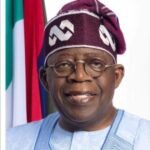
President Bola Tinubu removed the subsidy with great fanfare, declaring it a necessary sacrifice. But what has replaced it? A massive, opaque spending spree disguised as “energy security.”
Consider these figures:
· ₦17.5 Trillion (2024): Total energy security and pipeline spending in a single year. To put it in perspective, Nigeria spent roughly ₦18 trillion on fuel subsidies over 12 years under previous administrations.
· ₦4.84 Trillion (2023): Spent on “energy-security expenses and related shortfalls.”
· ₦7.13 Trillion (2024): Spent on “energy-security costs.”
· ₦8.67 Trillion (2025): Proposed spending for “energy-cost”—a staggering 38.7% rise from 2024.
· $60 Billion: Energy sector investments and commitments secured—on paper.
· ₦68 Billion: Operational support approved for the Maiduguri Emergency Power Plant.
The question that demands an answer: If subsidy was too expensive to sustain, how is spending nearly ₦18 trillion in one year on “energy security” any different?
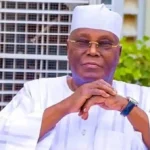
Critics have rightly called it “subsidy by another name.” As former Vice President Atiku Abubakar put it: “You cannot abolish subsidy at the podium and resurrect it in the accounts under an alias.”
The hypocrisy is staggering. The government grants major tax credits to oil companies—multi-billion naira incentives—while removing the subsidy that helped everyday Nigerians. As Atiku further asked: “Subsidy is only evil when poor Nigerians benefit from it?”
The Cost of Removal: Inflation, Hunger, and Despair
When fuel prices jumped, everything jumped with them.
Transport fares tripled. Food inflation peaked at 40.9% in June 2024. A pot of jollof rice that cost ₦10,000 now costs over ₦30,000. The price of bread, beans, yam, and even sachet water all skyrocketed.
And why? Because over 90% of Nigeria’s goods move by road. Every truck, every van, every okada runs on petrol. When fuel goes up, the cost of moving goods goes up. When the cost of moving goods goes up, the price of everything on those trucks goes up.
Food and beverages, transportation, housing, and energy alone account for about 87% of headline inflation. This means that when fuel prices rise, the basic necessities that make up most of an average Nigerian’s budget become more expensive.
This is not economics. This is common sense.
Yet, we have “data boys”—hungry, desperate, collecting monthly stipends from their political masters—peddling the narrative that subsidy removal was a blessing. These are people who cannot afford a decent meal in highbrow Abuja or Lagos, yet they lecture us about fiscal responsibility.
You cannot eat fiscal responsibility.
Buhari’s Subsidy vs. Tinubu’s ‘Energy Security’
Under President Muhammadu Buhari, the official pump price of petrol remained below ₦200 per litre for most of his tenure. Yes, it rose from ₦87 in 2015 to about ₦197 by 2023—a difficult increase, no doubt. But it remained accessible. It remained predictable. It kept the economy breathing.
Under President Bola Tinubu, the subsidy was removed entirely. Prices soared past ₦1,000 per litre. And in its place, we got “energy security” —a murky, unaccountable spending category that has swallowed trillions of naira with little to show for it.
What is the difference?
· Buhari’s subsidy: Transparent. Predictable. Benefited the poor directly at the pump.
· Tinubu’s “energy security”: Opaque. Unaccountable. Benefits contractors, cronies, and oil companies—while Nigerians pay ₦1,300 per litre.
This is not progress. This is re-branding theft.
The Wickedness of Man to Man
It is perfectly fine to support a political candidate. Democracy allows for that. But to stand before Nigerians—before mothers who cannot afford milk, before fathers who cannot afford transport to work, before young graduates who cannot find jobs because businesses have collapsed—and tell them that paying ₦1,300 per litre is better than paying ₦197?
That is not support. That is wickedness.
That is looking down on our collective sensibility.
That is treating the Nigerian people like fools who cannot count, cannot feel, cannot see the devastation unfolding around them.
The subsidy did not benefit the rich. It benefited everyone. It kept the economy breathing. It kept the poor alive. Its removal has not “reset” the economy—it has crippled it.
You must be heartless to support subsidy removal and approve of Tinubu’s energy security fraud.
The Final Verdict
The subsidy removal has been a disaster for the Nigerian people. Businesses are collapsing. Jobs are disappearing. Hunger is spreading. And inflation is eating whatever is left of the average Nigerian’s salary.
When you tell us that removing the subsidy was necessary, that it benefits us in the long run, that the poor don’t really feel it—you are either delusional, dishonest, or both.
We see the prices at the market. We feel the pain at the pump. We watch our neighbors lose their livelihoods. We know the truth.
And the truth is this: No Nigerian—rich or poor—is better off today than they were when fuel was ₦197 per litre.
The economy is not healing. It is hemorrhaging. And those who defend this policy while sipping coffee in Victoria Island and Abuja have lost all moral authority to speak for the suffering masses.
Buhari’s subsidy kept Nigerians alive. Tinubu’s “energy security” is keeping contractors rich.
Reflect on that. And ask yourself: Who truly benefits from this wickedness?
Nigeria is bleeding. The least we can do is tell the truth about who is holding the knife.
Mohammed Bello Doka can be reached via bellodoka82@gmail.com