By Ibrahim Bunu
There is something Nigerians must begin to understand about religious provocation in politics.
Not every controversial statement deserves an emotional response.
Sometimes, the response is precisely what the provocateur wants.

And that is why Sheik Yahya Jingir’s latest intervention deserves something more serious than outrage, insults or another endless Christian-versus-Muslim argument on social media.
It deserves an autopsy.
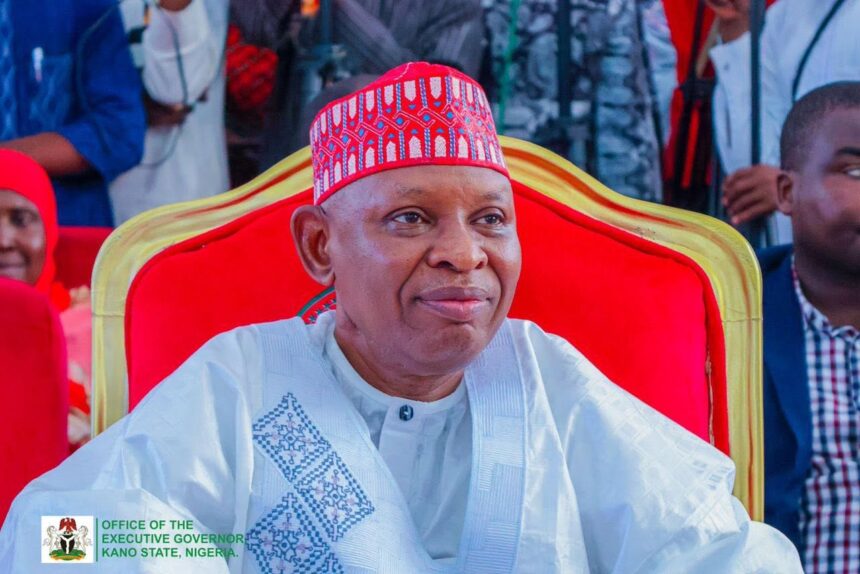
At a campaign event tagged “Abba Go Again” in Kano, Jingir reportedly threw himself once again into the Muslim-Muslim ticket debate, praised President Bola Ahmed Tinubu for pioneering the arrangement, urged Muslims to obtain their Permanent Voter Cards and declared that they should “show the infidels their limit.”
He went further.
He suggested that those claiming Christians are more numerous than Muslims are lying.
He then invoked the previous presidential election as evidence that Muslims had demonstrated their numerical strength.
And, most disturbingly, he reportedly described the Maitatsine movement as involving “so-called Christians in disguise.”
That last claim is not merely provocative.
It is historically reckless.
Maitatsine was a radical Islamic movement associated with violent disturbances in northern Nigeria in the 1980s. To casually transform such a movement into a Christian conspiracy without evidence is to replace history with religious suspicion.
That is not scholarship.
That is not responsible preaching.
And it certainly is not the language Nigeria needs from people who understand the extraordinary power of their words.
But perhaps the deeper question is this:
Why does this kind of rhetoric keep working?
Because Jingir’s real political weapon may not be the statement itself.
It may be the reaction to the statement.
THE FIRST TRICK: TURN POLITICS INTO RELIGION
Let us begin with the Muslim-Muslim ticket.
There is nothing inherently unconstitutional about two Muslims contesting together. Nigerians are free to support such a ticket.
Christians are equally free to oppose it.
Muslims can vote for it.
Christians can vote against it.
And Nigerians who care more about competence, character, security, economic performance and constitutional government can make their own choice.
That is democracy.
But Jingir’s argument appears to move beyond supporting a political arrangement.
It turns the arrangement into a religious contest.
Muslim-Muslim.
Muslim versus Christian.
Us versus them.
Majority versus “infidels.”
That is where the argument becomes dangerous.
Because once politics is converted into a religious census, every election begins to resemble a religious war.
And once an election becomes a religious war, compromise becomes betrayal.
Competence becomes secondary.
Character becomes secondary.
Performance becomes secondary.
National interest becomes secondary.
The only question left becomes:
“Are you one of us?”
That is an incredibly primitive way to run a modern republic.
THE SECOND TRICK: CLAIM THE MAJORITY WITHOUT ACTUALLY PROVING IT
Jingir’s argument that electoral victory proves Muslims outnumber Christians is logically weak.
An election does not constitute a religious census.
A candidate’s victory does not automatically reveal Nigeria’s religious composition.
Votes are influenced by geography, ethnicity, party structure, incumbency, personalities, alliances, economic interests, security concerns, candidate selection, turnout and countless other variables.
A Muslim can vote for another Muslim without voting because he is Muslim.
A Christian can vote for a Muslim.
A Muslim can vote for a Christian.
And millions of Nigerians can vote according to party, personality or policy.
That is precisely what makes an election different from a religious census.
Nigeria also lacks a contemporary, authoritative official religious census capable of settling the kind of numerical claim Jingir is making.
So when someone says, in effect, “We won an election, therefore we have proved that we are more numerous than you,” he is not demonstrating mathematics.
He is demonstrating political mythology.
And mythology is extremely useful when facts are inconvenient.
THE THIRD TRICK: GIVE CHRISTIANS A TARGET
This is where I believe Nigerians need to be much more sophisticated.
There is a recurring political psychology in inflammatory rhetoric:
Create an enemy.
Name the enemy.
Provoke the enemy.
Wait for the enemy to respond emotionally.
Then use the response as evidence that the enemy is hostile.
That is the trap.
The provocateur says something incendiary.
Christian Nigerians become angry.
Christian organizations issue statements.
Pastors respond.
Social media explodes.
Muslim groups defend their cleric.
Counter-accusations begin.
Old wounds are reopened.
Historical grievances are resurrected.
Suddenly, everyone is discussing the religious insult.
And almost nobody is discussing the real political question.
That is what I call the politics of misdirection.
The smoke becomes more important than the fire.
THE FOURTH TRICK: MAKE THE AUDIENCE FORGET THE SPEAKER’S ACTUAL POWER
Here is the uncomfortable truth.
A religious cleric does not possess constitutional authority over Nigeria merely because thousands of people listen to him.
He does not become the Nigerian electorate.
He does not become a member of the National Assembly.
He does not become INEC.
He does not become the Constitution.
He does not become the courts.
He does not become the Nigerian state.
He is a citizen with a microphone.
That microphone may be powerful.
His audience may be large.
His religious credentials may command respect among his followers.
But in a constitutional democracy, a microphone is not a mandate.
That distinction is critical.
Because Nigerians sometimes give inflammatory personalities far more political importance than they deserve.
A cleric says something outrageous.
Millions of people immediately begin discussing him.
Television stations debate him.
Social media platforms amplify him.
Politicians react to him.
Religious organizations respond to him.
And suddenly the person who made the provocative statement becomes the center of national political gravity.
Why?
Because we allowed him to become the center.
That is the mistake.
THE JINGIR PATTERN MUST BE EXAMINED, NOT WORSHIPPED OR DEMONISED
There is a documented history around Jingir that makes the present controversy worth examining carefully.
He has long been an influential figure within the Izala movement, and academic research on Izala records his strong positions on religious doctrine, leadership and political questions. (Univerlag)
He has also previously made controversial claims surrounding Boko Haram.
In 2014, for example, he argued that Boko Haram’s activities were being used by “faceless” or powerful actors to damage Islam and Muslims, while simultaneously calling for Muslims and Christians to cooperate against the insurgency. (Blueprint Newspapers Limited)
That history is important because it shows something more complicated than the cartoon version of Jingir as simply “anti-Christian.”
He has, at different moments, condemned extremist violence and himself been targeted by extremists.
In 2015, an attack targeted him while he was delivering a Ramadan sermon at Yantaya Mosque in Jos. (CSW)
And in 2014, Boko Haram leader Abubakar Shekau reportedly threatened Jingir, among other Muslim figures, describing them as enemies because of their positions on democracy and other issues. (Sahara Reporters)
That history matters.
It means the intellectually honest criticism is not:
“Jingir is Boko Haram.”
That would be false and irresponsible.
The stronger criticism is this:
A man can oppose terrorism and still use rhetoric that deepens religious polarisation.
Those two facts can coexist.
Indeed, that is precisely why his words deserve scrutiny.
THE COVID EPISODE ALSO DESERVES REMEMBERING
During the early COVID-19 crisis, Jingir was among prominent Nigerian religious figures whose public statements were criticized for promoting skepticism about the virus and government restrictions on congregational worship.
Academic research has documented his pandemic-era discourse as part of a broader religious reaction that framed restrictions on religious gatherings as connected to Western conspiracy narratives. (D-NB)
That episode teaches another lesson:
Religious influence carries public consequences.
When an ordinary citizen says something scientifically wrong, the damage may remain within a small circle.
When an influential cleric says it to a large audience, the statement can become social behavior.
This is why powerful religious voices must be held to a higher standard—not because their religion is inferior, but because their influence is greater.
AND THEN COMES THE MOST DANGEROUS PART: “INFIDELS”
Let us be precise.
A Muslim has the right to believe Christianity is theologically wrong.
A Christian has the right to believe Islam is theologically wrong.
Religious disagreement is not a crime.
But political language is different from theological language.
When a political campaign is framed around defeating “infidels,” the political opponent is no longer merely an opponent.
He becomes a religious enemy.
That is dangerous.
The Nigerian Constitution protects freedom of religion and prohibits discrimination on religious grounds. Section 38 protects freedom of thought, conscience, and religion, while Section 42 protects citizens from discrimination based on religion. (nicnadr.gov.ng)
So Nigeria’s political identity cannot be reduced to:
Muslim Nigeria versus Christian Nigeria.
There is no such constitutional category.
There is only Nigeria.
THE MAITATSINE CLAIM IS EVEN MORE SERIOUS
The reported statement that Maitatsine were “so-called Christians in disguise” should not simply be allowed to disappear into the noise.
It requires evidence.
Where is the historical evidence?
Where are the records?
Where are the investigations?
Where are the names?
Where are the findings?
Maitatsine was a radical Islamic movement whose activities produced major religious violence in northern Nigeria.
To rewrite that history as a Christian operation in disguise is an extraordinary allegation.
And extraordinary allegations require extraordinary evidence.
Without evidence, it is not history.
It is conspiracy theory.
And conspiracy theories become particularly dangerous when delivered from religious platforms because they can convert historical ignorance into contemporary suspicion.
THE FIVE-WHY TEST
Let us apply the simplest possible test.
Why invoke “infidels”?
To create a religious “us” and “them.”
Why insist Muslims must prove their numbers?
To transform political competition into demographic competition.
Why tell people to obtain PVCs in this language?
To mobilize voters through religious identity rather than primarily through policy.
Why provoke Christians?
Because an angry opponent is easier to mobilize against than a complicated political argument.
And why does the controversy continue?
Because everyone keeps responding to the provocation instead of dissecting the strategy behind it.
That is the real lesson.
CHRISTIANS MUST STOP CHASING EVERY SHADOW
This is where I disagree with the instinct of some Christian commentators.
Every time a cleric makes a provocative statement, some Christians immediately organize around it.
They become angry.
They issue counter-statements.
They circulate the video.
They reproduce the insult.
They give the speaker another million impressions.
They turn the speaker into a celebrity.
And then they complain that he is receiving too much attention.
You cannot feed the fire and complain about the smoke.
If Jingir says something designed to provoke Christians and Christians spend three days discussing Jingir, who actually won the communication battle?
Think about it.
The speaker made one statement.
The Christians did the marketing.
The media did the amplification.
Social media did the distribution.
And the algorithm did the rest.
That is the misdirection.
THE ANSWER IS NOT CHRISTIAN COUNTER-BIGOTRY
But let nobody misunderstand this argument.
The answer to Islamic bigotry is not Christian bigotry.
The answer to Muslim provocation is not anti-Muslim provocation.
The answer to religious exclusion is not another form of religious exclusion.
If a Muslim cleric calls Christians “infidels,” a Christian leader does not become wiser by calling Muslims names.
That creates two mirrors facing each other.
And Nigeria gets trapped between them.
The answer is stronger:
Constitution.
Evidence.
Democracy.
Competence.
Equal citizenship.
Accountability.
Peace.
And political maturity.
JINGIR IS NOT NIGERIA
This may be the most important sentence in this entire argument.
Sheik Yahya Jingir is not Nigeria.
He does not speak for every Muslim.
He does not speak for every northern Nigerian.
He does not speak for every Hausa person.
He does not speak for every Fulani person.
And he certainly does not speak for the Nigerian Constitution.
Millions of Nigerian Muslims want peace.
Millions of Nigerian Christians want peace.
There are Muslims who oppose the Muslim-Muslim ticket.
There are Christians who supported it.
There are Christians who oppose it.
There are Muslims who support it.
That is democracy.
Reducing an entire population to the loudest cleric in the room is intellectual laziness.
THE REAL BATTLE IS NOT BETWEEN MOSQUES AND CHURCHES
Nigeria’s real enemies are bigger than religion.
Poverty does not ask whether you are Muslim before it enters your house.
Bandits do not ask whether you attend church before kidnapping you.
Terrorists do not check your denomination before planting explosives.
Unemployment does not recognize theology.
Inflation does not distinguish between the Bible and Qur’an.
Bad roads do not care about your religion.
Corruption does not ask whether you pray five times a day or attend Sunday service.
When insecurity arrives at night, it does not knock and say:
“Are you Muslim or Christian?”
It simply enters.
And yet some politicians and religious actors continue attempting to convince ordinary Nigerians that their most important enemy is the Nigerian who worships differently.
That is the greatest deception of all.
THE QUESTION JINGIR SHOULD ANSWER
If Muslim-Muslim tickets are so strong, why must they constantly be defended through religious antagonism?
If Muslims truly constitute the majority, why is there such anxiety about proving it?
If democracy is genuinely respected, why must political competition be described in terms of defeating “infidels”?
If a candidate is competent, why not sell his competence?
If a government is performing, why not sell its performance?
If a political party has delivered, why not list the achievements?
Why summon the mosque against the church?
Why summon the Qur’an against the Bible?
Why summon the Muslim against the Christian?
Why turn the ballot box into a battlefield of faith?
Because perhaps the religious argument is easier than the governance argument.
That is the question Nigerians should be asking.
STOP TAKING THE BAIT
There is a certain maturity that Nigeria desperately needs.
The maturity to hear provocation without becoming provoked.
The maturity to distinguish a cleric’s opinion from national reality.
The maturity to distinguish religious conviction from constitutional authority.
The maturity to distinguish political mobilization from religious warfare.
And above all, the maturity to understand that sometimes the greatest victory over a provocateur is refusing to become his instrument.
If Jingir throws a stone into the pond and waits for the Christians to create the waves, Nigerians must learn to leave the stone where it fell.
Don’t pick it up.
Don’t throw it back.
Don’t build your entire political identity around it.
Instead, ask:
Who benefits from the noise?
Who benefits when Nigerians fight over religion?
Who benefits when Christians spend their energy answering a cleric instead of organizing around policy?
Who benefits when Muslims are encouraged to see elections as a religious confrontation?
Those are much more important questions than the insult itself.
THE FINAL WARNING
Nigeria has survived military coups.
Nigeria has survived civil war.
Nigeria has survived religious riots.
Nigeria has survived ethnic massacres.
Nigeria has survived terrorism.
Nigeria has survived political assassinations.
But survival should not be confused with invincibility.
A country can be wounded repeatedly until one day the wound becomes permanent.
That is why irresponsible religious rhetoric must be confronted early—not because Muslims must be silenced, and not because Christians must be protected from disagreement, but because every Nigerian has a right to participate in politics without being converted into a religious enemy.
Jingir has the right to support Muslim-Muslim tickets.
Christians have the right to oppose them.
Muslims have the right to campaign.
Christians have the right to campaign.
Everybody has the right to vote.
But nobody has the right to redefine Nigeria as a battlefield between believers and “infidels.”
And Christians must learn something equally important:
Do not allow a provocateur to decide the subject of your political conversation.
That is the trap.
He speaks.
You react.
He provokes.
You explode.
He becomes the center.
You become the audience.
He throws the match.
You spend the night discussing the smoke.
Enough.
Nigeria needs fewer religious firebrands and more citizens capable of thinking beyond the bait.
Because the greatest victory over religious provocation is not shouting louder.
It is refusing to be manipulated.
The mosque is not Nigeria.
The church is not Nigeria.
The cleric is not Nigeria.
The politician is not Nigeria.
We are Nigeria.
And Nigeria must never become a country where one man’s microphone can turn millions of citizens against one another.
— Ibrahim Bunu
ibrahimbunu2520@gmail.com