by Mohammed Bello Doka
Welcome to this week’s edition of Sarcastic Sunday with Mohammed Bello Doka, where we study Nigeria’s political gymnastics sarcastically laced with humour, because doing otherwise will choke us to death.
Nigeria is currently running an interesting experiment: make everybody poorer, then watch them argue over who is responsible.
Fuel is expensive. Food is expensive. Transport is expensive. Rent is expensive. Electricity is expensive. Even being angry is becoming expensive because you need data to complain about it.

But strangely, while Nigerians are struggling with the consequences of economic hardship, something else has happened. The elite have discovered patience. The media has discovered silence. Some intellectuals have discovered creative explanations. And many young Nigerians have discovered that their greatest patriotic duty is to fight anybody who criticises their favourite politician.
Welcome to the Renewed Hope Republic, where hope is renewed regularly but the pockets remain stubbornly unreformed.
To be fair, Tinubu did not create every problem Nigeria has. We have been carrying corruption, insecurity, unemployment, poor infrastructure and institutional weakness for decades. But his policies have undeniably changed the intensity of the economic pain, particularly through fuel subsidy removal, exchange-rate reforms, rising costs and increased pressure on households and businesses.
We were told the medicine would be bitter.
Nigerians swallowed it.
The pharmacist then increased the price of the medicine.
And when we complained, somebody explained that complaining was evidence that we did not understand economics.
This is where the real comedy begins.
The most fascinating thing about the Tinubu era may not actually be Tinubu.
It may be us.
Look at Bayo Onanuga.
In 1999, TheNEWS magazine, under Onanuga’s editorial leadership, published the famous “The Face of a Liar” investigation into then-Speaker Salisu Buhari over false claims concerning his educational credentials, age and other aspects of his background.
That was journalism.
Investigate powerful people.
Ask uncomfortable questions.
Publish the evidence.
Expose the contradiction.
Fast-forward to today and Onanuga is serving as Special Adviser to President Tinubu on Information and Strategy.
When questions arose over Tinubu’s credentials, his posture was dramatically different.
The irony is almost too delicious for a satirist.
In 1999, questionable credentials were a national scandal.
Today, questioning presidential documentation can suddenly be dismissed as an unnecessary obsession.
Perhaps certificates have developed political party cards.
Perhaps a certificate is important when it belongs to the opposition and becomes “just paper” when it belongs to your political principal.
We have already examined this extraordinary transformation in The Death of a Journalist and the Birth of a Courtier.
And please, let nobody misunderstand the present argument.
This is not another Chicago State University debate.
The current issue is much simpler: questions have been raised over the publicly available 2027 INEC documentation, particularly the absence of primary and secondary school qualifications.
The sensible response to a question about documentation should be documentation.
Not abuse.
Not tribalism.
Not “your candidate is worse.”
Not “certificate is just paper.”
If certificate is just paper, then perhaps our lawyers should stop displaying theirs on their office walls.
Maybe doctors should stop hanging theirs in hospitals.
Perhaps universities should simply give graduates a handshake and say, “Congratulations. The paper is irrelevant.”
But the funniest part is watching supposed academics—people who proudly attach “Dr.” to their names—coming online to explain why certificates are merely pieces of paper.
Doctors of what?
Doctor of Political Rationalisation?
Professor of Presidential Defence?
And lawyers are not helping matters.
People who should understand the importance of documentary evidence suddenly become philosophers of paper.
Primary certificate? It doesn’t matter.
Secondary certificate? It doesn’t matter.
Next they will tell us that the Constitution is also paper.
Perhaps tomorrow somebody will explain that a court judgment is merely paper, provided it is inconvenient.
Then there is Daniel Bwala.
Once upon a political lifetime, Bwala was a fierce critic of the APC and Tinubu. He made some remarkably strong statements about the party and its leadership.
Today, he is a prominent defender of the Tinubu administration.
Again, people are entitled to change their minds.
Politics is not marriage.
But when yesterday’s political certainty becomes today’s political wisdom, Nigerians are entitled to ask what happened in between.
Bwala has explained that his earlier statements were not lies but became baseless because circumstances and information changed.
Fair enough.
But Nigeria now has an interesting definition of political truth:
It is true until your political relationship changes.
Then there is Reno Omokri.
During the 2023 political battle, Omokri made extremely serious allegations against Tinubu, including describing him as a drug lord. He later withdrew the allegation, saying he had discovered that the claim was untrue, and apologised.
To be fair, admitting that you were wrong is not hypocrisy.
It can actually be integrity.
But the episode demonstrates how dramatically political narratives can change.
Yesterday, the man was presented as an existential threat.
Today, he is defended.
Tomorrow, perhaps somebody will write a book explaining that they had always misunderstood each other.
Nigeria is a country where political convictions have very flexible joints.
And then we come to Reverend Matthew Hassan Kukah.
Kukah is more complicated because he has continued to criticise aspects of the Tinubu administration.
But he also holds a government appointment as Pro-Chancellor and Chairman of the Governing Council of the Federal University of Applied Sciences, Kachia.
That does not automatically make him a government apologist.
It does, however, raise a legitimate question about the relationship between moral criticism and proximity to power.
Because Nigerians have become experts at condemning government failure from outside government and suddenly discovering nuance after entering the government ecosystem.
The Nigerian elite have perfected this art.
They have aligned themselves with Tinubu despite the enormous hardship experienced by ordinary Nigerians.
Perhaps hardship looks different from a government banquet.
Inflation is apparently less painful when your business is thriving.
Fuel subsidy removal is easier to describe as courageous reform when you are not paying transport fares every morning.
And government appointments have a remarkable ability to improve one’s vocabulary.
“Failure” becomes “transition.”
“Hardship” becomes “temporary adjustment.”
“Controversy” becomes “political persecution.”
“Accountability” becomes “distraction.”
“Appointment” remains appointment.
The media, meanwhile, seems to have misplaced its voice.
Not everyone, of course. There are still courageous journalists and serious publications.
But the Nigerian media environment increasingly feels like a watchdog that has discovered government biscuits.
It still has teeth.
It is simply chewing more carefully.
We examined another dimension of this selective media morality in One People, Different Lenses: Abba Kyari and Gbajabiamila in the Eyes of the Lagos-Ibadan Media.
Then there are our young people.
Ah!
The generation that was supposed to save Nigeria has become, in many cases, political data boys.
Give them 2GB and they will defend a politician until the last megabyte.
Someone says Nigerians are hungry.
“Your candidate lost.”
Someone complains about fuel prices.
“Where were you during Buhari?”
Someone asks government to explain something.
“Sponsored agent!”
Someone raises a question about qualifications.
“Your candidate did worse!”
Wonderful.
The young Nigerian is paying for the data with money he barely has, using it to defend politicians earning money he will probably never see.
Meanwhile, the politicians sit comfortably and watch poor Nigerians fight poor Nigerians on their behalf.
This is perhaps the greatest achievement of Nigerian political mobilisation.
We have converted citizens into unpaid public-relations departments.
And perhaps this is why the title of this column asks a more uncomfortable question.
Is God using Tinubu to punish us—or to expose the real us?
Because maybe Tinubu did not create all our hypocrisy.
Maybe he simply switched on the light.
And suddenly we discovered what was already inside the room.
He exposed the elite who can exchange principles for proximity.
He exposed journalists who can exchange scrutiny for access.
He exposed intellectuals who can exchange independent thought for political defence.
He exposed lawyers who can bend documentary standards when the politics becomes inconvenient.
He exposed young Nigerians who can spend their scarce data defending politicians instead of demanding accountability from them.
And he exposed ordinary Nigerians who condemn corruption, nepotism and impunity until their own person becomes the beneficiary.
Perhaps the greatest tragedy is not that politicians have perfected the art of political gymnastics.
It is that we have become their cheerleaders.
We are suffering and defending the people we believe are responsible.
We are paying more and explaining why it is necessary.
We are angry and attacking those who express the anger.
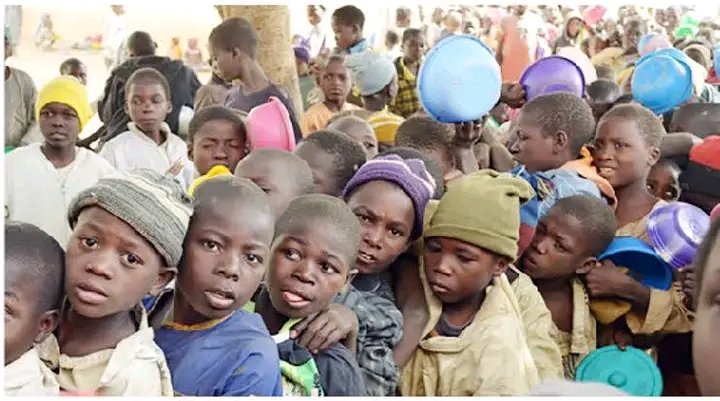
We are hungry and fighting over which political party is more responsible for our hunger.
Meanwhile, the elite are negotiating.
The politicians are smiling.
The media is adjusting its microphone.
The academics are publishing explanations.
The lawyers are interpreting the papers.
The youth are burning their data.
And the ordinary Nigerian is paying for the entire show.
There is perhaps no better way to describe this strange national journey than the question explored in our earlier article, APC vs the Catholic Church: A Case of When You Gained the World but Lost Your Soul.
So perhaps Tinubu is not merely punishing us.
Perhaps he is exposing us.
And if that is the case, then the most embarrassing question is no longer what Tinubu has done to Nigeria.
It is what Nigeria has revealed about itself while Tinubu was doing it.
Welcome to Sarcastic Sunday.
Please keep your data on.