By Okoi Obono-Obla
Botswana has always intrigued me, especially when viewed against the trajectory of African countries that emerged from colonialism to independence.
Whereas many African states emerged from colonial rule only to wobble and descend into chaos, instability and military rule at the hands of an irresponsible elite that inherited fragile structures grudgingly erected by paternalistic colonial masters, Botswana took a completely different path. It is a confounding and heart-warming case study in post-colonial African politics.
Botswana is a landlocked country in Southern Africa. Like Nigeria, it experienced British rule, but as the Bechuanaland Protectorate from 1885 to 1966, not as a settler colony. It gained full independence as a Republic on September 30, 1966, under Sir Seretse Khama, and through prudent governance, stable multi-party democracy and the discovery of diamonds, became an oasis of economic development and stability.

The people of Botswana are an admixture of ancient and migrant groups. Its earliest inhabitants were the San people, one of the oldest human lineages in the world, alongside the Khoekhoe. The majority today are the Tswana — collectively called Batswana — a Bantu-speaking people.
The Yakurr people share a deep connection to that same history. They are a Benue-Congo people of the Cross River Basin who speak Lokạạ, an Upper Cross River language. Oral tradition traces their origin to an ancestral homeland called Akpa, or Lẹkanakpakpa, which scholars locate in the Lake Ejagham borderland — the Cameroon-Obudu range in what is today the South-West Region of Cameroon, precisely the zone recognized as the cradle and dispersal point of Bantu peoples into Eastern, Central and Southern Africa.
Yakurr history records that they began leaving Akpa around 1617, not in the 15th century due to the Transatlantic Slave Trade, but after a dispute over a burial custom led to war and expulsion. Between 1617 and 1707, they migrated westward to found their present settlements in Cross River State — Idomi and Ugep around 1660, and later Ekori and Nko — alongside many other groups in the Cross River Basin today.
Marriage remains a timeless builder of humanity, forging families and creating new kinship from the union of peoples.
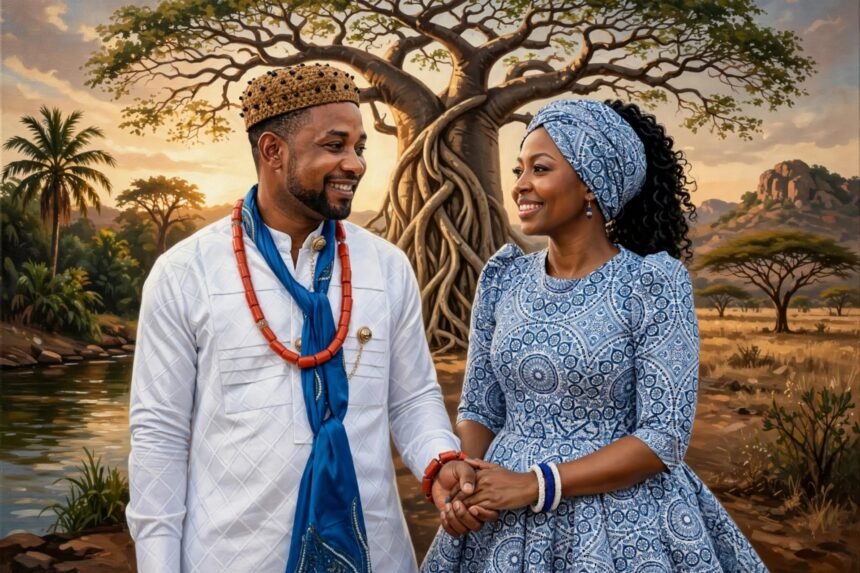
It is therefore profoundly symbolic and heart-warming that Barrister Kebe Eric Ifere, son of Obol Eric Ifere, is connecting the Yakurr Nation with the people of Botswana through marriage — reuniting two distant branches of a shared African family tree that first diverged in that Cameroon-Nigeria borderland centuries ago.
I congratulate the young couple and wish them a happy, fruitful and enduring marital life.