By Okoi Obono-Obla
Decolonising Legal Traditions in Uganda and Nigeria
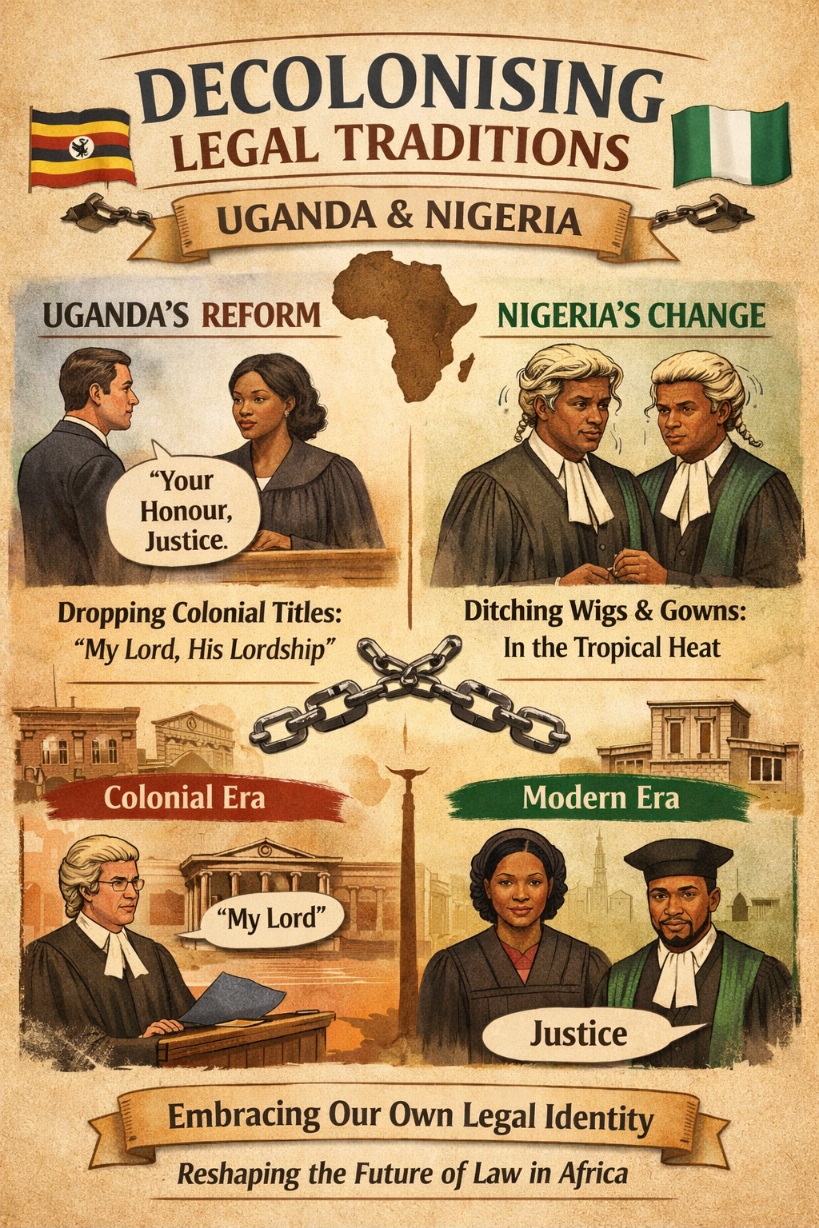
The process of decolonising the legal profession in Uganda has begun with the Ugandan Law Society issuing new guidelines on how lawyers should address the Court. According to these guidelines, lawyers should no longer use colonial-era honorifics such as My Lord, Her Lady, His Lordship, or Your Worship. Instead, they are directed to address the Court using terms such as Justice, Judge, or Your Honour.

Uganda, a member of the Commonwealth of Nations, inherited much of its legal tradition from the United Kingdom, which colonised the country until independence in 1962—nearly six decades ago. These reforms reflect a conscious effort to reshape courtroom practice in line with Uganda’s post-colonial identity and to modernise legal language in a way that is both respectful and culturally relevant.
Nigeria, which also gained independence from Britain in 1960, should borrow a leaf from Uganda and commence the process of decolonising its own legal system. This would include reforming courtroom language, etiquette, and attire. The continued use of wigs and gowns in Nigeria’s tropical climate often leaves lawyers uncomfortable in sweltering heat and high humidity. Revisiting these colonial legacies would not only improve practicality but also affirm Nigeria’s sovereignty over its legal traditions.
Conclusion
The Ugandan initiative signals a broader movement across Africa to redefine legal culture in ways that reflect local realities rather than colonial inheritances. If Nigeria follows suit, both countries will be taking meaningful steps toward modernising their legal systems while preserving the dignity of the Court.