By Professor Anthony Ejiofor
Nigeria stands today at a dangerous but defining crossroads. As the 2027 elections approach, the country faces a profound national question: will Nigeria continue the cycle of elite-centered politics, propaganda, ethnicity, wasteful governance, and superficial political discourse, or will it finally move toward issue-based governance, accountability, productivity, and people-focused development?
At the center of this historic question stands one institution expected to serve as the conscience of the republic: the Nigerian media.
The press — print, electronic, and social media — has historically been called the “Fourth Estate of the Realm,” an unofficial but powerful arm of democracy tasked with interrogating power, educating citizens, exposing corruption, and compelling accountability from leaders.
But today, Nigerians must ask honestly:
Is the Nigerian media truly helping to build the Nigeria we want?
Or has much of it become trapped in political entertainment, ethnic sensationalism, personality worship, elite access journalism, and shallow reporting?
The Constitutional Duty of the Media
Section 22 of the Nigerian Constitution places upon the media the responsibility of holding government accountable to the people. The Nigerian press therefore carries not merely a professional obligation but a constitutional mandate.
Historically, Nigerian journalism once stood as one of Africa’s most courageous democratic forces. During military rule, journalists risked imprisonment, exile, and death to defend civil liberties and democratic ideals.
But contemporary Nigeria presents a troubling contrast.
Much of today’s political journalism increasingly revolves around:
Meanwhile, existential national issues receive shallow, episodic, and inconsistent attention.
The Troubling Outcome of Studies on Nigeria’s 2023 Election Coverage
Perhaps the greatest indictment of Nigerian media performance lies in the findings of several studies examining media coverage during the 2023 elections.
The conclusions are disturbing.
Research examining newspaper and broadcast coverage found that critical developmental issues such as:
received significantly less sustained attention than political personalities, controversies, and campaign drama.
One study concluded that issue-based reporting was frequently overshadowed by “horse-race journalism” — media obsession with:
This is catastrophic for a developing country.
At a time when:
one would expect the media to rigorously interrogate candidates on practical governance solutions.
Instead, much of the political coverage resembled reality television.
Presidential candidates frequently escaped interviews without being seriously challenged on:
Many interview sessions became exercises in image management rather than democratic accountability.
Even more troubling was the limited attention paid to legislative candidates.
How many senatorial aspirants were aggressively questioned about:
Very few.
The consequence is predictable:
citizens vote emotionally rather than developmentally.
The Media and Nigeria’s Obscene Political Compensation Structure
One of the greatest moral scandals in Nigeria today is the grotesque cost of governance.
Nigeria remains a country where:
yet political office holders maintain one of the most extravagant compensation systems in the world.
Former governors and presidents enjoy astonishing benefits including:
even after presiding over states or administrations marked by poverty and underdevelopment.
Meanwhile, ordinary workers are frequently denied living wages.
The question must therefore be asked:
Has the Nigerian media truly mounted sufficient sustained pressure against this immoral structure?
The answer is largely no.
There are occasional reports and editorials condemning excessive remuneration, but sustained investigative campaigns capable of mobilizing national outrage remain inadequate.
Why are journalists not relentlessly demanding:
Why are presidential candidates not repeatedly forced to declare their position on reducing the cost of governance?
Instead, media discourse often normalizes elite excesses as though they were natural features of governance.
A truly people-centered media would make this issue central to national debate.
The Scandal of Wasteful Political Entourages
Another glaring symbol of Nigeria’s elite disconnect is the scandalous size of political entourages.
In a struggling economy, Nigerian politicians routinely travel with:
Both local and foreign trips frequently resemble royal processions funded by taxpayers.
State governors, ministers, legislators, and even local government officials often travel with excessive delegations while citizens face economic hardship.
International conferences that should involve five officials sometimes include dozens.
The cost implications are enormous:
Yet media outrage remains episodic rather than sustained.
Where are the detailed investigative breakdowns?
Where are the weekly governance waste trackers?
Where are the comparative analyses showing how lean governments operate elsewhere?
In advanced democracies, media institutions aggressively expose wasteful public spending because they understand that governance culture matters.
Nigeria’s media must begin to ask:
External Borrowing and the Burial of Nigeria’s Future
Perhaps no issue better demonstrates the failure of governance accountability than Nigeria’s dangerous debt trajectory.
Over the years, successive governments have accumulated staggering levels of external and domestic debt.
Borrowing itself is not inherently bad if tied to productive capital development.
Countries borrow to:
But Nigeria’s tragedy is different.
A substantial portion of borrowed funds appears to have disappeared into:
Meanwhile:
Debt servicing increasingly consumes huge portions of national revenue.
Yet one must ask:
Has the Nigerian media dug deeply enough into this national emergency?
Has the press consistently tracked:
In many cases, debt reporting remains superficial.
Announcements of new loans are reported almost mechanically, without sufficient forensic follow-up.
Nigeria desperately needs investigative economic journalism capable of tracing:
Without this, borrowing simply becomes legalized mortgaging of future generations.
The Dangerous Weakness of Political Interviews
One of the deepest problems in Nigerian journalism is the weakness of political interrogation.
Far too many interviews are dominated by:
Politicians are rarely pinned down with measurable questions.
Instead of asking:
“How exactly will you generate 20,000MW in four years?”
interviewers ask:
“What is your vision for Nigeria?”
This allows politicians to escape into rhetoric and empty speeches.
Nigeria needs a new generation of journalists trained in:
The era of superficial political interviews must end.
Social Media: Between Democratic Awakening and Digital Chaos
Social media has transformed Nigeria’s political landscape.
Platforms like X, Facebook, TikTok, YouTube, and WhatsApp have empowered millions of citizens to:
The #EndSARS movement demonstrated the power of digital civic engagement.
But social media has also amplified:
Political actors increasingly employ digital propaganda armies to shape narratives and attack opponents.
If traditional media fails to provide intelligent, evidence-based journalism, Nigeria risks allowing social media chaos to dominate national political consciousness.
What the Nigerian Media Must Do Before 2027
If Nigeria truly seeks transformation, the media must radically redefine its role before 2027.
The press must move:
from political entertainment
to developmental accountability.
From:
“Who will win?”
to:
“What exactly will they do?”
From:
“Who insulted whom?”
to:
“How will Nigeria industrialize?”
From:
“Political permutations”
to:
“National productivity.”
The Nigerian media must begin demanding:
Every presidential and gubernatorial candidate should be compelled to answer hard questions on:
Towards the Nigeria We Want
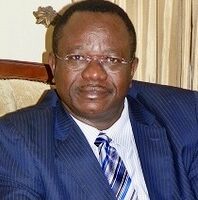
Prof. Anthony Ejiofor is an academic, public intellectual, and community leader engaged in issues of governance, development, and the future of Nigeria and Africa.