
By OTUNBA (Dr) Abdulfalil Abayomi Odunowo
Nigeria’s political journey has long been defined by high-stakes contests that transcend elections and touch the soul of the nation. From the annulment of the June 12, 1993 presidential election to the bitter divisions of the Jonathan era, moments of profound change have always provoked fierce resistance from those whose privileges were threatened.
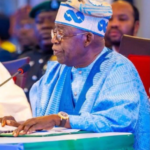
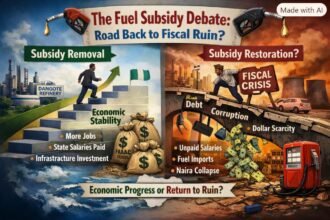
Today, a similar drama unfolds around President Bola Ahmed Tinubu’s administration. Supporters frame the intense opposition as more than policy disagreement: they see it as a desperate pushback by entrenched interests against structural reforms designed to dismantle decades of economic distortion. The removal of the fuel subsidy, the unification of exchange rates, tax reforms, and aggressive efforts to plug revenue leakages are presented as necessary surgery on a chronically ill economy.
The Case for Reform
Objectively, the old systems were unsustainable. The fuel subsidy had become a fiscal black hole, riddled with corruption and inefficiency, repeatedly flagged by economists and even previous governments. The multiple exchange rate regime fostered arbitrage, rent-seeking, and massive capital flight. Few serious analysts dispute that these distortions needed to end if Nigeria was to have any chance of meaningful progress.
Yet acknowledging the necessity of reform demands equal honesty about its execution and human cost.
The Human Toll
Millions of Nigerians are not experiencing abstract “economic transition” they are living through skyrocketing inflation, crushing transportation costs, food insecurity, and a painful erosion of purchasing power. Families that once managed modest livelihoods now face impossible choices between food, school fees, and medical care. Young graduates see their dreams deferred. Small business owners watch decades of effort dissolve under macroeconomic pressures they did not create and cannot control.
These hardships are not mere statistics. They are real people mothers skipping meals, fathers swallowing pride, entire communities losing hope. Any analysis that dismisses this suffering as mere “short-term pain” risks losing moral credibility. Reforms that ignore the lived reality of citizens risk breeding cynicism and eventual rejection, regardless of their theoretical soundness.
Questioning the Thought Process
This is the critical juncture Nigerians must confront with clear eyes:
* Are the current reforms being implemented with sufficient speed, competence, and social safeguards? Or have critical gaps in sequencing, communication, and safety nets unnecessarily amplified suffering?
* Is the opposition primarily driven by genuine concern for citizens, or by a coalition of former beneficiaries of the old, broken system?
* Are we witnessing necessary disruption that will eventually deliver lower inflation, job creation, improved security, and rising prosperity or a painful experiment whose benefits remain speculative and poorly measured?
* Have the architects of reform demonstrated enough humility to adjust course when data and public feedback demand it?
These are not questions that should be answered by partisan loyalty. They demand rigorous scrutiny of outcomes, not slogans. History shows that transformative reforms whether in post-war Europe, East Asia, or more recent African cases succeed only when they combine bold structural change with intelligent social protection and adaptive governance. Pain without visible progress eventually exhausts public tolerance.
The Emotional Reality and National Stakes
There is an emotional truth beneath the statistics: Nigerians are a resilient but weary people. Many feel they have sacrificed enough across multiple administrations. The current generation carries the accumulated burden of past failures. Yet within this weariness lies something powerful a deep, if battered, yearning for a Nigeria that finally works: where hard work is rewarded, children have real futures, and national potential matches national pride.
The true value of this trajectory lies not in blind support or reflexive opposition, but in whether today’s sacrifices are forging that better nation. Will the children of today’s struggling families inherit an economy that rewards productivity rather than connection? Will infrastructure, security, and opportunity improve measurably? Or will this period be remembered as yet another painful chapter where ordinary Nigerians paid dearly for elite experimentation?
Beyond 2027
As the 2027 electoral cycle approaches, citizens must reject the lazy reduction of these complex issues to ethnic, religious, or regional binaries. Nigeria’s future cannot be built on fear, grievance, or political mythology. It must rest on evidence, accountability, and a shared commitment to national interest.
The government has a duty to govern decisively while listening and adjusting. The opposition has a duty to critique constructively and offer credible alternatives, not merely amplify suffering for political gain. Both sides ultimately answer to the Nigerian people.
The ultimate verdict on the Tinubu administration will not come from elite commentators, social media warriors, or political coalitions. It will be rendered by millions of ordinary Nigerians through their daily experiences and, ultimately, at the ballot box.
The central question facing the nation is both economic and deeply human: Are the pains of today laying the foundation for a stronger, more prosperous Nigeria tomorrow or are citizens paying too steep a price for reforms whose benefits remain uncertain and unevenly distributed?
How we answer this question through critical thinking, honest debate, and collective vigilance will shape the destiny of generations yet unborn.
Signed Otunba (Dr) Abdulfalil Abayomi Odunowo National President SpeakUp Collective Nigeria 8th June, 2026