

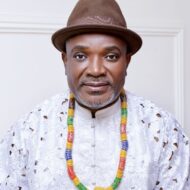

By Okoi Obono-Obla
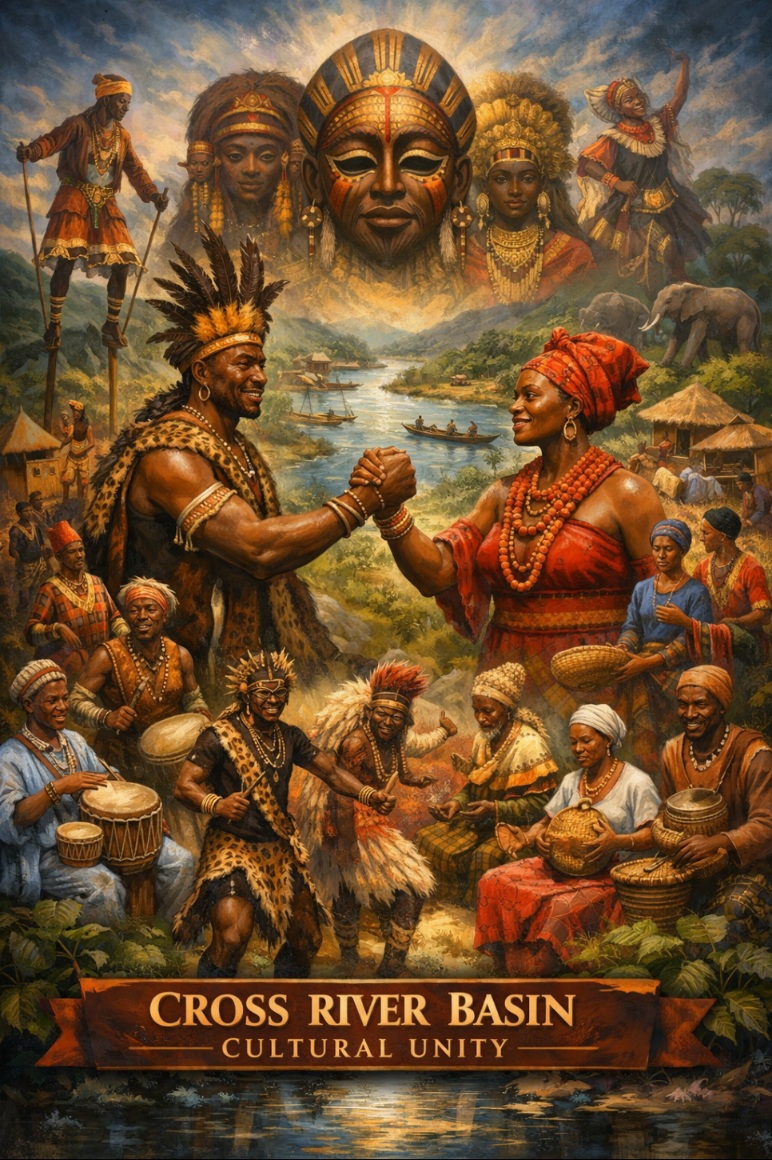
In the Cross River region of southeast Nigeria, extending into Cameroon, several ethnic groups are found, among them the Ejagham (Ekoi). The oldest Cross River secret society may be the all‑male Ngbe society of the Ejagham people. In their language, ngbe means “leopard.” The cult of the leopard had a unifying effect on scattered communities of the Cross River. Through it, commercial, ritual, and social exchanges flourished, helping to overcome the limitations of non‑centralized regimes and village‑based political institutions.
Traditionally, with the exception of forest clearing, Ejagham farm labor was carried out by women, leaving men free to focus on hunting and warfare. This also gave men leisure to elaborate art. They combined a love of physical combat and hunting with artistic fulfillment. Both women and men wove raffia cloth on upright looms and devoted great care to coiffure, body paint, and dress.
The Ekoi‑speaking peoples (Anyang, Boki, Ejagham, Keaka, and Yako [Yakurr]) are best known for their large, skin‑covered masks, which may have one, two, or even three faces, and for smaller headpieces representing heads or entire figures. These helmet‑masks and headpieces are unique in Africa. Earlier masks used the skins of slaves, later replaced by antelope skins. The elaborate river trading network involved selling rights to Ngbe and other associations, including the right to perform masquerades. Groups selling these rights would perform in the buyer’s village, then leave their masks and costumes behind. This trade spread art events and objects across diverse communities, though local copies often introduced changes in form and meaning.

Masks of secret societies appeared in performances at funerals, initiations, agricultural festivals, and other events. Two types dominated: helmet masks, which covered the entire head down to the shoulders, and crest masks, which sat atop the head attached to basketry caps. These masks often featured metal teeth, inlaid eyes, carved hair coils, feathers, quills, and even human hair. They were believed to represent ancestors, though some depicted skulls or animals, often fierce and frightening. The skin covering of a mask served as a magical agent to invoke ancestral spirits, bridging the living and the dead in communal rituals.
In northern Ejagham areas, around Ikom, large carved stones known as akwanshi—ranging from one to six feet high—are found. These figures, carved in low relief, are thought to date no earlier than the 16th century.
The Ekpe society also played vital roles. It functioned as a police force maintaining law and order, and as a judiciary body settling disputes and interpreting laws.
Ekpe Society and Traditional Governance of Ugep: A Personal Discovery:
The cultural uniformity, interlocking, intertwining, and blending of various peoples, traditions, customs, and norms into a commonality manifested in Mgbe or Mgba (Ekpe)—the leopard as a totem animal symbolizing strength, nobility, power, and royalty. This ingenious system showcases the profundity of African philosophy in its undiluted form. The Ekpe is graded in ranks, and among the Ugep (Yakurr), the highest order is the Ekpogara.
The Ekpe Society played a crucial role in the areas now known as Akwa Ibom, Cross River, parts of Abia and Ebonyi States in Nigeria, and southwestern Cameroon during the precolonial era—particularly in the first half of the 19th century, before colonial intrusion. It functioned as the police force, military force, and the judicial and political branches of government. Beyond these, it also played spiritual, cultural, and intellectual roles. Remarkably, the society had its own system of writing known as Nsibidi.
Until recently, I did not know that the Ekpe Society in Ugep, Yakurr, is deeply intertwined with the traditional political structure and governance of the community. I made this discovery when I encountered a procession of traditional chiefs—including the Okpebri of Ugep and Obol Bassey Okoi Bassey—on their way to participate in ritualistic events heralding the celebration of the Ugep New Yam Festival, known as Leboku.
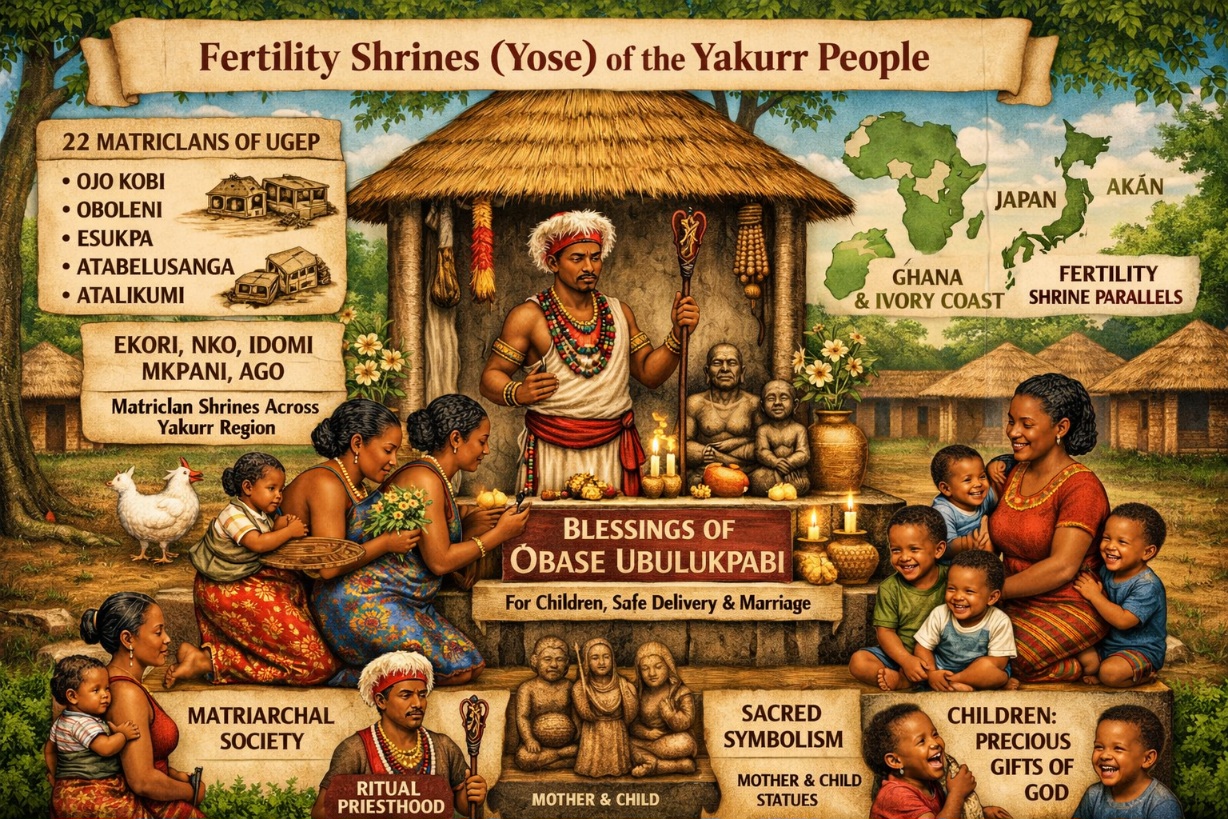
Obol Bassey Okoi Bassey is a member of the Council of Be‑Inah, which comprises the Obol Lopon of Ugep, the heads of the twelve matriclans in Ugep, and the Chief Priest of the fertility shrines—shrines devoted to promoting and enhancing female reproduction.
When I asked Obol Bassey Okoi Bassey what category of chief he was, he clarified that he is Akeh Ekpe, the chief in charge of the Ekpe Society in Ugep and a principal member of Be‑Inah. He is also the Secretary of the Ekpe Society in my own part of Ugep, known as Ijiman Okurubong.
This encounter deepened my appreciation for the layered and sophisticated nature of indigenous governance systems, and the enduring relevance of institutions like the Ekpe Society in shaping communal identity, leadership, and cultural continuity.
Conclusion:
The Ejagham and Yakurr traditions, embodied in the Ngbe and Ekpe societies, reveal a profound African philosophy where art, governance, spirituality, and social order are inseparably intertwined. The leopard as a totem, the masks as ancestral invocations, and the Ekpe as both cultural and political authority showcase a heritage of ingenuity and resilience. These institutions remain enduring symbols of unity, law, and cultural identity across generations.











Great job, Chief👍
Pls Sir, what are some cultural objects among the Yakurr with inscriptions and the meaning of the inscriptions?