By Ibrahim Bunu
ibrahimbunu2520@gmail.com
Nigeria’s 2027 political battle is no longer a future event.
It has already started.

The slogans are appearing.
The alignments are changing.
Former allies are becoming critics.
Former enemies are becoming strategic partners.
And across parts of the South-West and other regions, political tensions are beginning to surface in ways that may shape the next presidential election.
The questions Nigerians are asking today are simple:
Why are some protesters chanting “Tinubu Must Go”?
Why are some groups demanding “Bring Back Our Children”?
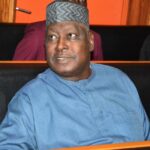
Why did former SGF Babachir Lawal suddenly come out strongly against Atiku Abubakar?
Could Babachir eventually support President Bola Ahmed Tinubu in 2027?
What political realignments are quietly taking place behind the scenes?
To understand where Nigeria may be heading, we must carefully connect these dots.
THE “TINUBU MUST GO” PROTESTS: WHAT IS REALLY DRIVING THEM?
Across Nigeria, especially among youth, frustration remains high.
The reasons are not difficult to identify.
Many Nigerians continue to struggle with:
High food prices.
Rising transportation costs.
Inflation.
Unemployment.
Declining purchasing power.
Increased cost of living.
For many households, the removal of fuel subsidy and the floating of the naira created economic pain faster than economic relief.
Supporters of President Tinubu argue that these reforms were necessary because previous governments avoided difficult decisions.
Critics argue that ordinary citizens are carrying the burden while political elites continue to enjoy privileges.
This frustration has created fertile ground for protest movements.
Historically, whenever economic hardship rises faster than public confidence, protest slogans become powerful political weapons.
The phrase “Tinubu Must Go” therefore represents more than opposition to one individual.
It reflects broader dissatisfaction among sections of society who feel excluded from the benefits of governance.
However, there is another side to the argument.
Supporters of the administration insist that reforms require time and that many of today’s economic problems were inherited from decades of policy failures.
This debate is likely to intensify as 2027 approaches.
“BRING BACK OUR CHILDREN”: THE SECURITY DIMENSION
The slogan “Bring Back Our Children” touches a deeper emotional nerve.
Nigeria continues to face security challenges in various forms:
Kidnappings.
Banditry.
Terrorism.
School abductions.
Rural insecurity.
Every time children are kidnapped or communities are attacked, public anger naturally rises.
Parents do not evaluate security through government statistics.
They evaluate it through fear.
A mother whose child has been abducted does not care whether crime figures are improving nationally.
Her concern is simple:
“Bring my child back.”
Political actors understand the emotional power of such slogans.
Therefore, security-related protests can quickly evolve into broader political movements.
This is something every administration in Nigerian history has faced.
WHY BABACHIR LAWAL CAME OUT AGAINST ATIKU
Perhaps one of the most intriguing developments in opposition politics is the increasingly critical tone Babachir Lawal has adopted toward Atiku Abubakar.
Babachir was once considered part of the broader northern political establishment that could potentially align with opposition forces.
However, politics is rarely about friendship.
It is usually about interests, calculations, and future positioning.
Several possible factors may explain the tension.
1. Leadership of the Opposition
Many opposition figures believe that the opposition cannot continue using the same political formulas repeatedly and expect different outcomes.
Some believe new faces are needed.
Others believe Atiku remains the strongest opposition figure.
This disagreement has created divisions.
2. Control of Political Structures
Political parties are not merely election platforms.
They are structures of influence.
Questions about who controls delegates, governors, funding networks, and campaign machinery often create friction.
What appears to be an ideological disagreement may actually be a struggle over political direction.
3. Northern Political Recalculation
A significant conversation is taking place quietly across northern political circles.
Some politicians are asking:
Should the North remain united behind one candidate?
Should power return to the North immediately?
Should existing alliances with southern politicians continue?
Different answers to these questions are producing different political camps.
Babachir’s public criticism may reflect these broader debates.
COULD BABACHIR EVENTUALLY SUPPORT TINUBU?
In Nigerian politics, permanent enemies are rare.
Permanent interests are more common.
Many observers believe it would be premature to rule out future cooperation between Babachir Lawal and President Tinubu.
Why?
Because political calculations change.
Several factors could create such a possibility.
First
If opposition forces remain divided, some politicians may conclude that Tinubu remains the most viable option.
Second
If economic indicators improve significantly before 2027, some current critics may reassess their positions.
Third
If opposition parties fail to agree on a consensus candidate, strategic defections may occur.
Fourth
Political negotiations often happen quietly long before they become public.
What politicians say today is not always what they will do tomorrow.
Nigerians have witnessed this repeatedly since 1999.
Therefore, while Babachir currently appears critical of both Tinubu and Atiku at different moments, the political landscape remains fluid.
THE BIGGER BATTLE: THE FIGHT FOR THE NORTHERN VOTE
Behind many current political events lies one central reality.
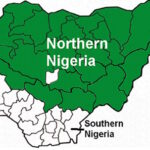
The northern vote remains critical.
No presidential candidate can easily win Nigeria without substantial support from the North.
This explains why:
Political consultations are increasing.
Regional meetings are becoming more frequent.
Opposition coalitions are being discussed.
Political elders are becoming more vocal.
Everyone understands the arithmetic.
The candidate who successfully builds bridges across northern and southern blocs will enter 2027 with a major advantage.
WHAT SHOULD NIGERIANS EXPECT NEXT?
Several developments are likely over the next eighteen months.
More Protests
Economic pressure could continue producing demonstrations and public dissatisfaction.
More Political Defections
Many politicians will likely switch camps once they identify where power appears to be moving.
More Coalition Talks
Opposition parties may attempt to unite against the incumbent.
More Internal Opposition Crises
The opposition may struggle over leadership, candidate selection, and regional balancing.
More Pressure on Tinubu
The administration will face increasing demands to demonstrate tangible economic improvements before the campaign season begins.
THE FINAL QUESTION
The real battle of 2027 may not be between Tinubu and the opposition.
It may be a battle between perception and reality.
If Nigerians begin to feel genuine improvement in their daily lives, many current criticisms may weaken.
If hardship remains widespread, opposition narratives could gain momentum.
That is why the ongoing protests, the security-related slogans, and the growing disagreements among opposition leaders should not be viewed as isolated events.
They are early warning signs of a larger political contest already unfolding.
The road to 2027 has begun.
The alliances are not yet settled.
The candidates are not yet finalized.
The defections are not yet complete.
But one thing is already clear:
Nigeria is entering another season in which today’s political enemies may become tomorrow’s allies, and today’s allies may become tomorrow’s fiercest opponents.
As always in Nigerian politics, the next move may come from the least expected direction.