by Boma West
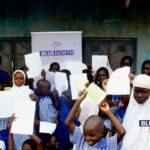
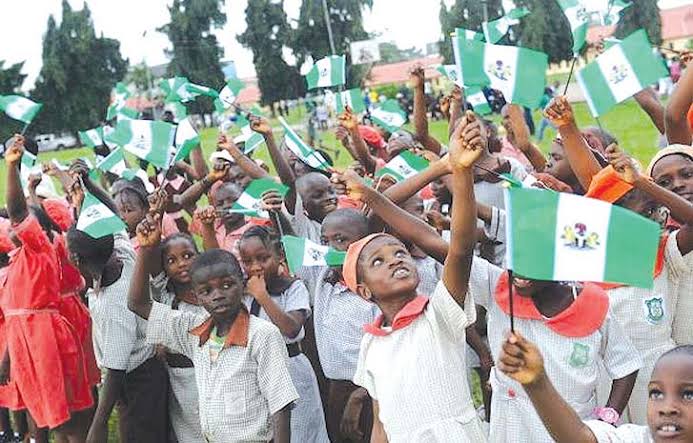
Every year on May 27, Nigeria joins the rest of the world to mark Children’s Day. Flags are raised, schools host events, and government officials deliver speeches about the future belonging to children. For many Nigerian children, however, the day passes like any other , waking up hungry, skipping school, or sifting through garbage heaps under a scorching sun. The celebrations feel distant from the reality of millions of kids whose daily lives are defined not by play and learning, but by survival.
The United Nations Convention on the Rights of the Child, which Nigeria ratified in 1991, is clear about what every child deserves. Every child has the right to food, education, healthcare, protection from exploitation, and a safe environment. These are not luxuries. They are obligations. More than three decades after signing that agreement, Nigeria has struggled, and in many regions outright failed, to deliver on those promises to its youngest citizens.
Nigeria is home to over 90 million children, making up nearly half of its population. According to UNICEF, the country has one of the highest numbers of out-of-school children in the world, with roughly 10.5 million children of primary school age not attending school. That number swells when secondary school-age children are factored in. These are not statistics on paper. They are children who wake up each morning with no classroom to go to, no teacher to learn from, and no structured future to look forward to.

The northeast of the country remains one of the most devastating examples of education in crisis. The Boko Haram insurgency, which began around 2009 and continued evolving through various factions including ISWAP, has destroyed thousands of schools across Borno, Yobe, and Adamawa states. Teachers fled. Parents buried their children or watched them get abducted. The 2014 Chibok kidnapping of 276 schoolgirls shocked the world, but it was neither the first nor the last mass abduction targeting students in the region. Many children in these states have grown up knowing school as a dangerous place rather than a safe one. Some communities have completely abandoned formal education, with parents choosing to keep children home rather than risk losing them.
In the northwest, banditry and kidnapping have created a parallel crisis. States like Zamfara, Katsina, Sokoto, and Kebbi have seen armed groups raid villages, abduct children, and terrorize communities. Schools in these areas have faced repeated closures. In 2021, gunmen abducted over 300 students from the Government Science Secondary School in Kagara, Niger State, and hundreds more from schools in other parts of the country. Fear became the curriculum. School enrollment figures in the northwest have dropped sharply over the years.
In the south, the story changes in texture but not in pain. Across riverine communities in the Niger Delta, children attend schools with leaking roofs and no furniture. Some schools sit in areas accessible only by canoe, meaning a child must cross a river every day just to get to class. In states like Bayelsa and Rivers, oil wealth surrounds communities where children drink contaminated water and breathe polluted air because decades of oil spills have destroyed the ecosystem their parents once relied on. The government collects revenue from beneath their feet while the children grow up with nothing above the surface. Thousands of children work as scavengers on dumpsites, picking through mountains of refuse to find scraps of metal, plastic, or anything saleable. There are dumpsites across the nation, where children as young as seven or eight spend their days in dangerous conditions, exposed to toxic waste, sharp objects, and disease. These children are not doing this for pocket money. Their families depend on whatever they bring home.
Child labor in Nigeria is widespread and woven into both rural and urban life.
Children work on farms in Kogi, Kebbi, and Anambra states, often missing school during planting and harvest seasons. In markets across the country, children carry heavy loads as errand runners, earning small change for traders. In the north, the almajiri system — where young boys are sent to Islamic schools and left to beg on the streets for their feeding — has produced millions of children living in poverty with minimal formal education. Successive governments have launched schemes to reform the almajiri system, including a 2012 federal program that built integrated almajiri schools, but implementation was patchy and the problem persisted. The children who were supposed to benefit remained on the streets.
Child trafficking is another reality that shadows the lives of vulnerable Nigerian children. Children from poor states are trafficked to wealthier households under the guise of domestic service. Girls are taken to cities like Lagos, Abuja, and Port Harcourt and made to work as house helps, often denied schooling, freedom, and dignity. Some are trafficked across borders to Gabon, Libya, and other countries. The National Agency for the Prohibition of Trafficking in Persons (NAPTIP) has made arrests and secured convictions, but the scale of the problem outpaces enforcement. Poverty is the engine driving this trade, and until poverty is genuinely addressed, the trade will continue.
Malnutrition remains a quiet emergency. Nigeria accounts for a significant share of stunted children in sub-Saharan Africa. In the northeast and northwest, where conflict has disrupted farming and displaced communities, children face acute malnutrition. UNICEF has repeatedly flagged the high rates of wasting among children under five in these zones. A child who is malnourished in the first one thousand days of life suffers consequences that last a lifetime — reduced cognitive development, weakened immunity, and a narrower future. Celebrating Children’s Day with rice and juice in Abuja does not reach the child in Monguno or Gusau whose stomach has been empty for days.
The federal and state governments have not been entirely inactive. Programs like the National Home-Grown School Feeding Program have provided meals to millions of primary school pupils in some states, helping to improve enrollment and reduce dropout rates. The Better Education Service Delivery for All (BESDA) initiative, supported by the World Bank, targets out-of-school children in high-burden states. Some state governments have built new schools, trained teachers, and run campaigns to get children back into classrooms. These are genuine efforts. The problem is that the need is vastly larger than the response, and too many of these programs are inconsistently implemented, underfunded, or abandoned when administrations change.
Security must be addressed for education to survive. Children cannot learn in schools that soldiers of fortune treat as soft targets. The government’s approach to the northeastern insurgency has shown some military progress, but the humanitarian situation for children displaced by the conflict remains severe. Millions of children live in internally displaced persons camps where schooling is informal at best. In the northwest, the government has oscillated between negotiating with bandits and pursuing military action, without a consistent strategy that keeps children safe. Safe school declarations and protection mechanisms exist on paper, but execution on the ground remains weak.
Civil society organizations have filled some of the gaps. Groups like the Education as a Vaccine Foundation, Street Child Nigeria, and Slum2School have worked to provide education, psychosocial support, and opportunities to children in difficult circumstances. Their work is commendable and impactful, but it cannot substitute for functional government systems. Philanthropy and NGOs can supplement; they cannot replace the state.
Is there hope for Nigerian children? The honest answer is that hope exists, but it is conditional. Nigeria has a young and growing population, enormous natural and human resources, and a society that deeply values children in cultural terms. The country has produced brilliant young minds in science, arts, technology, and business who prove that when opportunity is given, Nigerian children flourish. The potential is not in question. What is in question is whether those in power will treat children’s welfare as a genuine priority rather than a talking point for May 27.
Stopping child labor requires more than laws. It requires social protection systems that give poor families a real alternative. It requires cash transfers that reach rural mothers, school feeding programs that incentivize attendance, and enforcement that targets exploitative employers without criminalizing desperate families. The Child Rights Act has been domesticated in many states, but several northern states have still not adopted it, leaving millions of children without legal protection.
Nigerian children are not broken. They are resilient and carry a dignity that their country’s leadership has not matched. What they need is not pity. They need the country to honor the promise it made when it signed the UN Convention on the Rights of the Child. They need food, schools, safety, and the simple right to be children.
Until Nigeria closes the gap between the celebrations of May 27 and the daily lived reality of its most vulnerable young people, Children’s Day will remain, for too many, just another day to endure.