By Prof. Adeyemi Ademowo
My worry is not birthed on whether a sovereign state has the right to regulate undocumented migration; every state does (and should). Questions of irregular migration, labour market pressures, crime anxieties and undocumented populations are legitimate policy concerns. No serious observer denies that porous immigration systems, exploitative labour practices and weak institutional oversight can generate social tensions. Nor should pan-African solidarity be confused with tolerance for criminality especially involvements in drugs, robberies and advanced fees fraud. Brotherhood cannot become, and should NEVER be, a shield for disorder or lawlessness.
But there is a profound difference between migration governance and vigilante nationalism; between law enforcement and ethnic scapegoating; between regulating borders and turning fellow Africans into enemies. That difference appears to be collapsing. And therein lies the moral crisis.
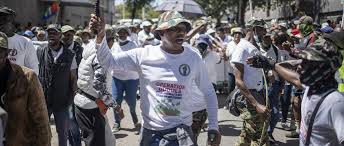
The Dudula phenomenon, whatever grievances animate it, risks turning social frustration into a politics of exclusion in which the foreign African, their brothers and sisters, becomes the convenient face of unemployment, insecurity and urban distress. Yet one must ask: are migrants truly the cause of these structural crises, or merely their most vulnerable targets?
To me, it is often easier to police the powerless than confront the systems that produce precarity. This is where I think the Dudula campaign members and their supporters missed the point. Dubious employers who prefer cheap and exploitable undocumented labour rarely attract the same public fury directed at migrants because most of the companies are well guarded with armed personnel. Corruption within immigration institutions that enables irregular entries and forged papers is too often ignored because ther officers are family members of the Dudula campaigners. And sadly, failures of economic redistribution, job creation and social protection are displaced onto those with the least protection.
The migrant becomes scapegoat for problems rooted elsewhere.This is where the matter exceeds immigration politics and enters the terrain of ethics.
Ubuntu is an African moral philosophy which means “I am because we are” (Umuntu ngumuntu ngabantu), meaning a person realizes their humanity through relationships, compassion and interdependence with others. This should not be merely a slogan for diplomatic speeches. It is, and should be, a social ethic of recognition, mutuality and human dignity. Ubuntu asks not only how one protects one’s own, but how one remains human in the treatment of others.
So, my question (which is really my concern) is: what becomes of Ubuntu when brothers become borders?
This is why voices, like that of Julius Malema, urging South Africans to see fellow Africans as brothers rather than invaders matter. These voices recall a history some now seem too willing to forget: that African solidarity was once not rhetoric but political survival. Many who now suffer suspicion, molestations and attacks come from countries that stood, materially and morally, with South Africa during the apartheid. Memory should caution against turning solidarity into amnesia.
Yet this is not an invitation to romanticize migration. No society can endure without rules. Documentation matters. Regulation matters. National sovereignty matters.
But so does proportion. So does justice. And so does refusing the dangerous fiction that the African other is the principal obstacle to national renewal. For when anger meant for corruption, inequality and failed governance is redirected toward migrants, nationalism begins to cannibalize its own moral foundations.
That is the trouble with xenophobia: it often presents itself as protection while feeding on fear. And that is the danger in Dudula’s excesses.
Many (like myslef) support lawful reforms addressing undocumented migration while condemning harassment, looting, public humiliation and mob vigilantism. These are not instruments of order; they are symptoms of democratic erosion.
So, to members of the Dudula group I say:
If labour exploitation is the problem, confront exploitative employers.
If corruption is the problem, reform immigration institutions.
If crime is the problem, strengthen policing through law.
If unemployment is the crisis, pursue economic justice.
But do not confuse persecuting migrants with solving structural problems!
Today, South Africa stands at a moral crossroads where it must choose whether border anxieties will overwhelm the ethics of Ubuntu, whether economic frustrations will become racialized hostility, whether brotherhood will survive nationalism’s harder edges. Because once brothers become borders, nations risk becoming prisons of suspicion. And when Ubuntu retreats, something larger than migration policy is lost.
It is our shared African humanity.
The task, then, is not to choose between law and solidarity, but to insist that justice requires both. For the true spirit of Ubuntu was never meant to erase borders. but to ensure that borders do not erase brotherhood.
Mo wi t;emi
Ire o!
Professor Adeyẹmí Johnson Ademọwọ is of the department of Sociology, Afe Babalola Universoty, Afe Babalola University, Ado-Ekiti yemiademowo@gmail.com
Advertisement