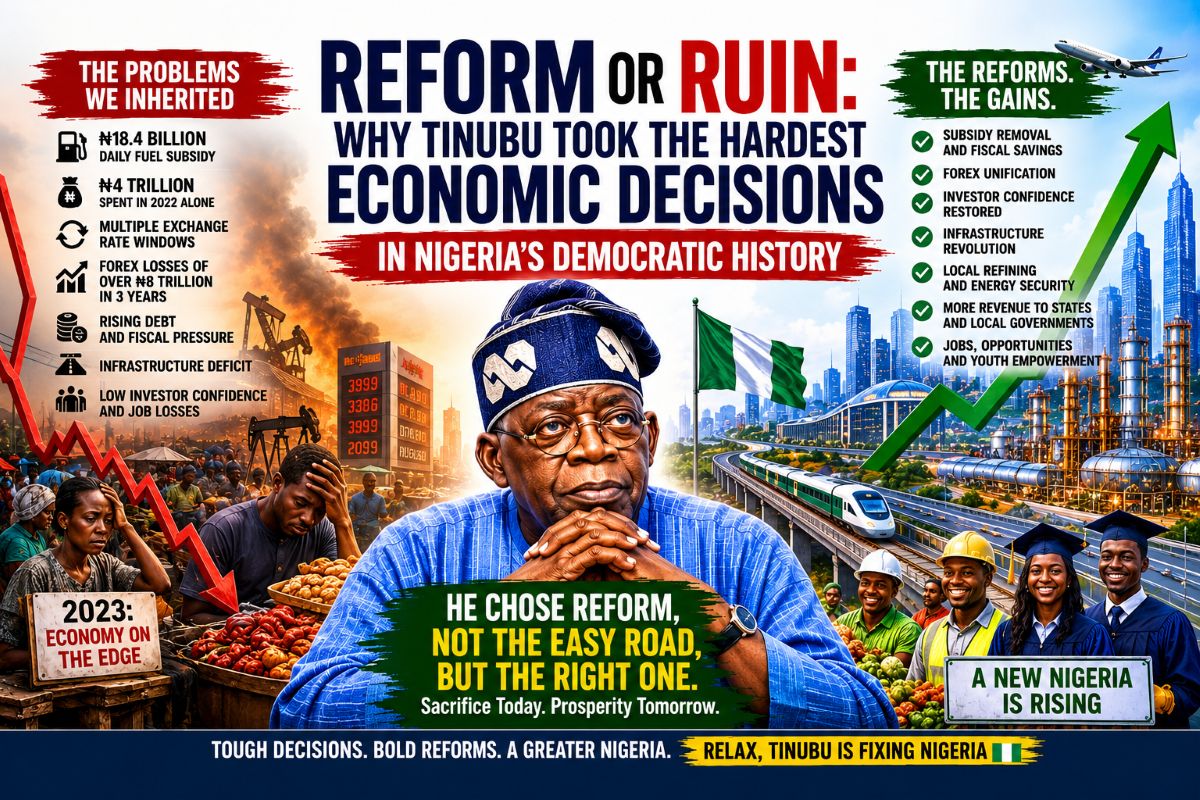
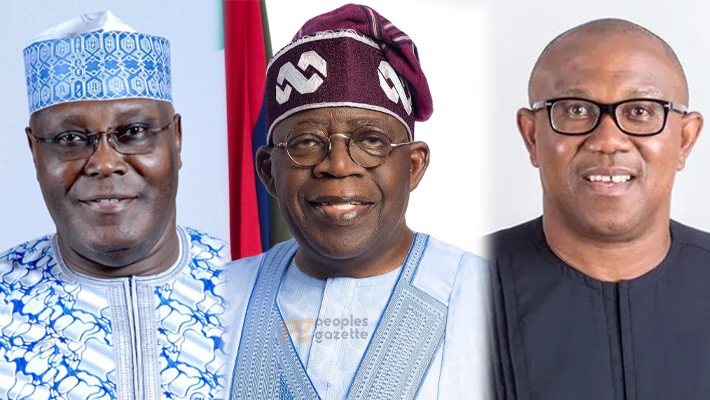
ASIWAJU BOLA AHMED ADEKUNLE TINUBU. GCFR
by Agbonmagbe Kazeem
Story so far………….
Bola Ahmed Adekunle Tinubu (born 29 March 1952) is a Nigerian politician who was elected senator for the Lagos West constituency in Lagos State, Nigeria in 1993. The election was just prior to a military take-over in December 1993. After the return to democracy, he was elected governor of Lagos State, holding office from 29 May 1999 to 29 May 2007. He is an influential member of the All Progressives Congress party; he also holds both the chieftaincies of the Asiwaju of Lagos and the Jagaban of the Borgu Kingdom in Niger State, Nigeria. He has been routinely referred to as the national leader of the APC during the presidency of Muhammadu Buhari.

Asiwaju Bola Ahmed Tinubu political career began in 1992, on the platform of the Social Democratic Party (where he was a member of the faction of the Peoples Front led by Shehu Musa Yar’Adua and made up of other politicians such as Dapo Sarumi, Abdullahi Aliyu Sumaila, Rabiu Kwankwaso and Yomi Edu). He was elected to the Nigerian Senate, representing the Lagos West constituency in the short-lived Nigerian Third Republic. After the results of the 12 June 1993 Presidential elections were annulled, Tinubu became a founding member of the pro-democracy National Democratic Coalition, a group which mobilized support for the restoration of democracy and recognition of the results of the 12th of June. He went into exile in 1994 and returned to the country in 1998 after the death of the military dictator Sani Abacha, which ushered in a transition to civilian rule. In the run-up to the 1999 elections, Bola Tinubu was a protege of Alliance for Democracy (AD) leaders Abraham Adesanya and Ayo Adebanjo. He won the AD primaries for the Lagos State gubernatorial elections in competition with Funsho Williams and Wahab Dosunmu, a former Minister of Works and Housing. In January 1999, he stood for the position of Executive Governor of Lagos State on the AD ticket and was elected Bola Tinubu achievements as Lagos State Governor
1.Infrastructure Development: Tinubu’s administration prioritized infrastructure development in Lagos, focusing on road construction, transportation systems, and public utilities. The emphasis on infrastructure played a crucial role in transforming Lagos into a more livable and economically vibrant city.
2.Fiscal Discipline and Revenue Generation: Tinubu implemented financial reforms that enhanced revenue generation and fiscal discipline. His administration introduced measures to increase internally generated revenue, reduce waste, and improve financial management. These efforts helped strengthen the state’s financial positionand fund development projects.
3.Public-Private Partnerships (PPPs): Tinubu’s administration embraced the concept of PPPs to attract private sector investment and expertise for public projects.
This approach facilitated the implementation of various infrastructure projects and service delivery initiatives, leveraging the strengths of both public and private sectors.
To be continue…..
“THE HISTORIAN”
AGBONMAGBE REMILEKUN KAZEEM
+2348036472826