
By Dr. Joel Ademisoye, United States
Hello, my fellow citizens of the Owo and Ose Federal Constituency in Ondo State, Nigeria, I vividly recall that I wrote against Rep Oluwatimehin Adelegbe’s efforts and plan to seek the Third Term in office in the Nigerian House of Representatives in Abuja. But, many people in the constituency came out to endorse and support the Non. Adelegbe’s candidacy in the APC Party primary election in May 2026. I raised an issue against the Adelegbe’s candidacy of third term, which I found to be politically, culturally and historically opposed to what the people of the constituency are familiar with, regarding what his predecessors or former members of the House of Representatives left behind like Prince Dr. Lad Ojomo. The idea of a Third Term by Rep Adelegbe suggests that money, power and politics are the root cause and driving force behind the candidate’s ambitions and plan for the Third Term in the Owo and Ose Federal Constituency of Ondo State.
I vividly recall that during the APC Party primary election, Adelegbe demonstrated and showed the other competing aspirants that he is the incumbent, the man to beat by his huge, deep financial war chest, which is available to him.
However, it is necessary and important that I mention and acknowledge the Hon. Adelegbe’s meaningful contributions since his election to two terms in office, I have observed that he has donated money to the APC Party in Ondo State, implemented many empowerment programs (agricultural inputs, grants and work tools and vocational and digital training) and delivered infrastructure projects (built for the community and its people through the improved the Oba’s Palace, constructed town halls, built new classrooms and renovated old educational facilities in some schools in the local government areas of the constituency. Imagine that Rep Adelegbe spent N10 million to pickup the House of Representatives nomination form, with a breakdown of N1 million for the expression of interest and N9 million for the nomination form in APC Party. I found this cost of the APC Party nomination form to be exceedingly high and it is very prohibitive as well. Question of interest to this writer is, how many citizens- men and women or political aspirants have the financial capacity to purchase the N10 million worth APC Party nomination form? Hence, arguably, the cost of N10 million for the APC Party nomination form, is exorbitant, prohibitive, in fact, it constitutes a barrier or obstacle to the entry and participation by the poor citizens, who are interested in seeking the political office of the Owo / Ose Federal Constituency in Ondo State. It is indeed exclusionary to the active participation of the citizens in the electoral process and the nomination of suitable candidates in the APC primary election. Also, under the Nigerian Electoral Act of 2026, the election spending limit has been increased from the 2022 Act of N70 million to N270 million, a 275% boost under the 2026 Electoral Act. I think the 2026 Act gives the incumbent aspirant a financial advantage and leverage over the political opposition and competition, such as Arobo in the Owo/ Ose Federal Constituency. In addition, this huge amount of money permitted by the Electoral Act of 2026 (Campaign Finance and Spending Limits), offers a potential incentive for the potential political corruption by the elected member of the House of Representatives in Abuja. Could this help to provide the explanation for the alleged corrupt tendencies in the country’s National Assembly in Abuja, involving the padding of the annual budget allocations submitted by the federal government ministries, parastatals and agencies as well?
I have serious concerns about the role of the National Working Committee (NWC) in vetting, approving the primary election results and submitting Adelegbe’s name as a winner of the party’s primary election to the INEC in Abuja? Could the ‘Big wigs’ in the NWC be neutral, maintain their independence without any interest in, favour and support for a particular aspirant among the contestants? I think the NWC’s decision to champion the election of Adelegbe, led to the legal challenge from one of his opponents in the May 16, 2026 APC Party primary election, Mr. Abdulghani Rotimi Arobo. Arobo’s legal challenge to Adelegbe’s nomination was mainly based on “who won the primary, how the party submitted the nominee to INEC and procedural fairness in court.” According to the court records, Adelegbe claimed to have won the APC Party primary election with 13,094 votes, in the Owo/ Ose Federal Constituency of Ondo State and secured his victory at the polls in May, 2026.
I found the Adelegbe’s claim of winner and Arobo’s counter claim of a winner in the APC Party primary election, is a clear indication of the paradox, choatic and confusion in the party’s primary election in Nigeria. It might interest you to know that the political parties in Nigeria, like the APC, PDP, ADC, NDC, etc, set their own internal laws, rules and regulations to guide and govern the conduct of the primary election in the country. How does INEC monitor and enforce the political party’s compliance with its internal primary election laws across Nigeria? It appears that the enforcement of the law guiding and governing the conduct of the party’s primary election, which is left in the hands of the party’s National Working Committee (NWC). For this writer, the role of the NWC in compiling, vetting and making the final determination of who is the winner of the primary election and submitting the winner’s name to INEC, is problematic and raises a red flag about the potential for the political corruption, godfatherism, interference and manipulation by the members of the National Working Committee of the party?
Against the above backdrop of anticipated chaos, lack of transparency and confusion regarding the NWC’s role in deciding who is the winner of the primary election between Adelegbe and Arobo, which led to the legal battle in the courts, all the way to the Supreme Court of Nigeria.
Adelegbe appealed his case against Arobo in the the Federal Appeals Court decision, which favoured candidate Arobo, in his effort to overturn the ruling in the Nigeria Supreme Court. However, the Supreme Court unanimously ruled and affirmed that candidate Arobo, is the legitimate winner of the APC Party primary election in the Owo / Ose Federal Constituency in Ondo State on May 16, 2026.
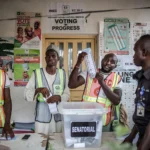
Without mincing words, I think that there is need for a paradigm shift in the political party’s conduct of the primary election and its structural arrangement, which puts the NWC members in Abuja at the apex of the party primary election structure, process and to making the final decision about the winner. Honestly speaking, how can you ask a few selected political leaders in the NWC in Abuja, to determine and ascertain, whether a primary election conducted in Owo/ Ose Federal Constituency, is transparent, free and fair? Why not announce the results of the primary election in the election site of Owo / Ose Federal Constituency? For example, I saw via a disturbing video clip that the voters were lined up behind each candidate’s name on a standing post in an outdoor place or in a football field. What happened to the use of the secret ballot in the conduct of the APC Party primary election on May 16, 2026? This election strategy, practice and method are ignoring and abusing the voters’ rights to privacy and secret ballot as well. The open election method as implemented by the APC Party, is a charade, joke and prone to many problems, such as intimidation, harassment and violence against the voters at the polls in the Nigerian nascent democracy. Bluntly put, I find this method to be crude, in unsecured environment and in conducting a poor party’s primary election in Nigeria in the 21st Century.
Over the years, going down the memory lane, I have observed that in election dispute over its results, who is the winner or loser, it is like a ‘Thunder striking a target,’ the losing candidate files an immediate legal suit in a hurry, to challenge the election’s result in a court, because there is 21-day of the statute of limitations, after which the aggrieved candidate is prevented from filing a complaint in court.
Going down the memory lane, I vividly recall that Chief Obafemi Awolowo of the Unity Party of Nigeria (UPN), challenged the election of Alhaji Shehu Shagari as the president-elect in August 1979. So, there is a long history behind and precedent of the election challenge in Nigerian courts, before the recent Oluwatimehin Adelegbe’s election legal suit against Arobo in the lower courts and ultimately in the Supreme Court of Nigeria in 2026. Thus, the Nigerian judiciary and its courts under Section 285 (5) of the 1999 Federal Republic of Nigeria Constitution (as amended ), are permitted to take action involving the election petitions and complaints across the country. Out of curiosity, what happened to the use of the election tribunals in Nigeria? I think that the Nigerian courts are serving as a ‘mop up’ and a neutral arbiter of the contradictions, conflicts and injustice in the electoral process and correct the fraudulent election as well. More importantly, there are tremendous benefits of the court’s intervention in and adjudication of the election dispute in Nigeria, which could not be overemphasized, because it eliminates the uncertainty conditions, the potential for violence and offers a political legitimacy for the duly elected candidate and provides a stability in the political space of the country. But, some legal experts and advocates, argue against the court’s intervention and involvement, because by so doing, it is robbing the voters of their choice and chosen candidate for a political office in Nigeria. In fact, some Barristers are of the opinion that the court’s intervention and decision are tantamount to elimination by substitution and the imposition of the court’s choice of political candidate on the voters and the people. However, in some developed, democratic countries in the world, such as the United States, United Kingdom and Canada, the dispute over an election outcome or results, has been handled, treated and adjudicated by the courts. You might recall that the election dispute between President George W Bush of the Republican Party and Vice President Al Gore of the Democratic Party in the United States in November and December 2000, a case that was resolved by the U. S. Courts. After five weeks of deadlock, recounts of votes and legal battles over the slim margin in electoral votes, the U. S. Supreme Court intervened and ruled in the favor of the presidential candidate George W Bush on December 12, 2000. Could you imagine what would happen if the courts have not intervened and gave a decision on the case?
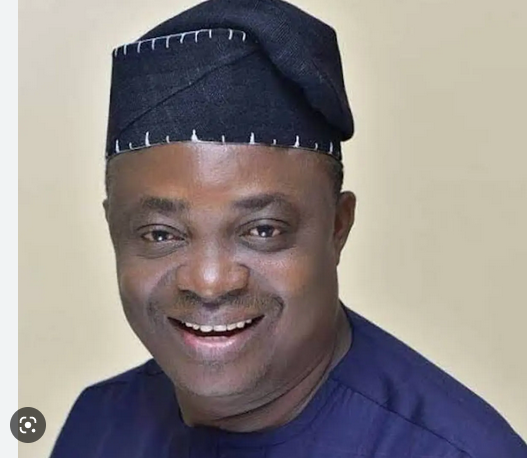
As a bonafide indigene of Owo Local Government Area in Owo / Ose Federal Constituency, I am delighted that the law has taken its course and justice is served in the Supreme Court of Nigeria’s decision in favour of Arobo’s candidacy. On this note, I am seizing this opportunity to congratulate the candidate for his hard fought bid for the House of Representatives in the APC Party, Hon. Abdulghani Rotimi Arobo. As a result, I am appealing to all the peace loving people of Owo / Ose Federal Constituency, to put the election controversy and court battles behind them, to rally round, support and vote for the Arobo’s candidacy for the House of Representatives in Abuja.