


by Mohammed Bello Doka
23 November, 2026.
Let us begin with the hypocrisy that the Obidients hope you will forget. In 2010, Goodluck Jonathan, a Southerner, completed the unexpired tenure of a Northern President, Umaru Yar’Adua, who died in office. At that exact moment, the South had ruled for eight years under Olusegun Obasanjo, and the North had ruled for barely two. The unwritten “gentleman’s agreement” within the ruling party was that the North should have its full eight years. Did Jonathan step aside for the North to complete its turn? No. He contested the 2011 presidential election and won a fresh four-year mandate. By the time he was sworn in for that new term, the South had ruled for twelve years and the North for two. And here is the part that should make every Obidient look away in shame. In 2015, the same Jonathan contested again. The South had already enjoyed twelve years in power. The North had barely tasted two. Yet Jonathan did not say it was the turn of the North. He ran for another four years, and who was one of the deputy directors-general of his campaign council? Peter Obi. The records are public: Jonathan appointed Peter Obi as Deputy Director-General (South) of his National Campaign Organization ahead of the February 2015 election. The same Peter Obi whose supporters now scream that it is the turn of the South was busy campaigning for a Southern President to take another term when the South was already twelve years deep and the North had nothing but two. So spare us the moral grandstanding.
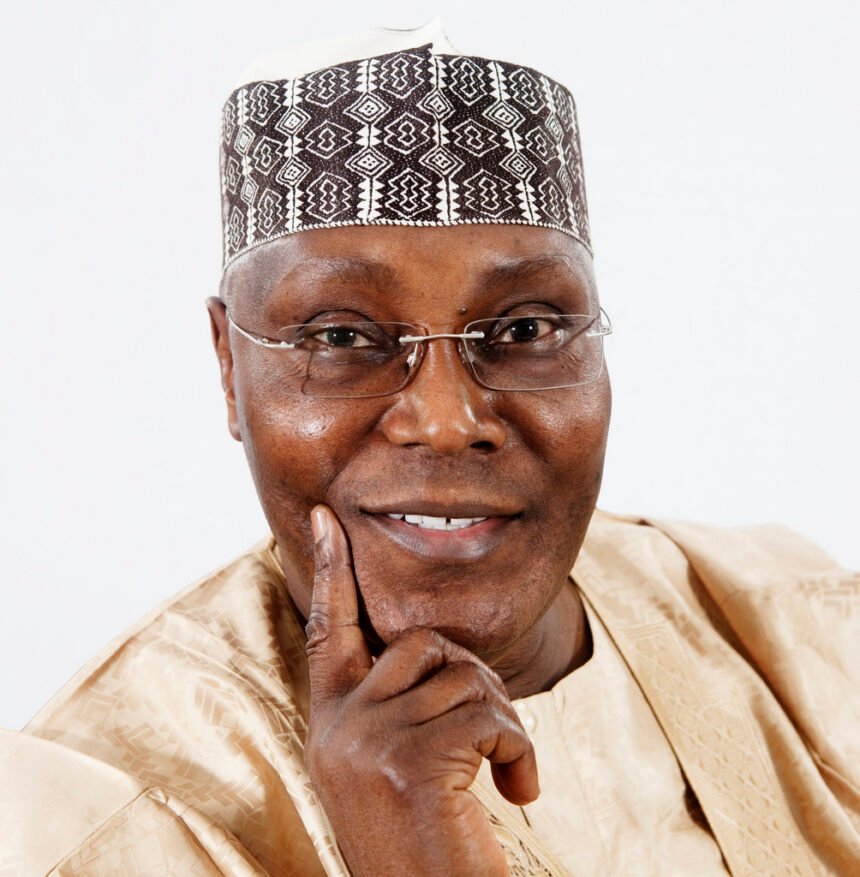
Now look at the 2023 numbers, the ones the Obidients love to shout about until they are asked to read them. The Independent National Electoral Commission certified that Atiku Abubakar of the Peoples Democratic Party scored 6,984,520 votes, or 29.07 per cent. Peter Obi of the Labour Party scored 6,101,533 votes, or 25.4 per cent. Atiku came second. Obi came third. In every serious democracy on this planet, the person with fewer votes does not summon the person with more votes and demand that he step down. It is the other way around. The logic of the Obidient camp is the logic of a child who loses a race and then insists that the winner should hand over the medal.
But 2023 is history. The campaign trail that matters now is the one unfolding before our eyes, and it has already buried the Obidient fantasy. On November 4, 2026, Atiku Abubakar flagged off the African Democratic Congress presidential campaign in Sokoto, and the response was not a rally. It was a referendum. The streets, rooftops, and roadsides of Sokoto were filled with supporters from the Sultan Abubakar III International Airport through the state capital to the campaign headquarters. Rotimi Amaechi, Atiku’s running mate, admitted he thought they would end up addressing the crowd from their cars because the turnout was so overwhelming. The campaign council said it plainly: what happened in Sokoto was not a crowd that was assembled; it was a conviction that was declared. From Sokoto, the campaign moved to Kebbi, then Bauchi, then Yobe. In Bauchi, a large crowd trooped out just for his arrival ahead of the Saturday rally. In Yobe, Solomon Dalung, a former minister who campaigned with Buhari in 2015, said it took the convoy three and a half hours to cover three kilometres in Potiskum because the crowds were so dense, and that this never happened even during Buhari’s 2015 campaign, which eventually pulled roughly twelve million votes. Atiku himself mocked the Presidency for allegedly using artificial intelligence to conjure crowds for Tinubu, while the people of Potiskum came out “in flesh, blood, unfiltered, unedited and impossible to fabricate”. That is the 2027 campaign trail. Not a Twitter space. Not a hashtag. Flesh and blood in the North.
And what has the APC done in response to this? It has run to the courts and to the security agencies. Barely twenty-four hours after the Sokoto rally, a Federal High Court in Abuja nullified Atiku’s candidacy by voiding the David Mark-led ADC leadership and the primary that produced him. The ADC called it a judicial assault on the opposition and accused the APC of trying to set Nigeria on fire through the courts. Atiku described the ruling as a panic sign from Tinubu and the APC and declared he was not going anywhere. Before the rally even held, Atiku had raised the alarm that the Department of State Services and local security outfits loyal to the APC government in Sokoto were harassing ADC supporters, manhandling people for wearing party branded shirts and caps, and recruiting people to stage protests so the state government could impose a curfew and prevent the campaign from taking off. Tambuwal confirmed that the party faced intimidation, harassment, and denial of access to campaign venues and hotel accommodation, and still the people came out in their numbers. If the APC were confident, it would not need court orders and security agencies to stop a campaign flag-off. It would meet Atiku at the ballot box. The desperation is the confession.
This is why the call by Peter Obi’s supporters for Atiku to step down is not just laughable. It is an extension of the APC plot, and Nigerians are not stupid. The Kano State Government has already told us what is happening behind the scenes. Governor Abba Kabir Yusuf’s spokesman, Sanusi Bature, disclosed that the governor approached President Bola Tinubu about defecting to the APC with the consent of Rabiu Kwankwaso, because the NNPP was no longer a formidable platform for 2027. The Guardian reported the same claim: that Kwankwaso may be indirectly working towards Tinubu’s re-election in 2027 through certain political alignments. So the Kwankwasos are cutting deals with the Tinubu camp while the Obidients demand that the only opposition figure with a national footprint should step aside. Any such attempt to force Atiku out has already failed, because the crowds in Sokoto, Kebbi, Bauchi, and Yobe have already answered it. You do not remove the man the North is receiving in flesh and blood and replace him with a third-place candidate who could not carry the North-Central.
Then there is the arithmetic of power rotation that the South-East conveniently refuses to do. Since 1999, the South has governed for eighteen years and the North for ten. Atiku himself said it plainly: the South has governed for eighteen years and the North for ten, so who is in the deficit. The North’s shorter tenure was not a gift; it was the result of Yar’Adua’s death, which thrust Jonathan into office. That accident does not erase the fact that the South has had more than its fair share. So when an Obidient tells you it is the turn of the South, ask them to subtract ten from eighteen. They will not like the answer.
But the deepest strategic error belongs to the South-East itself. In 2019, Peter Obi ran as Atiku’s running mate on the PDP ticket and lost. By 2023, instead of building a national coalition, he broke away, ran on a Labour Party platform that was long on online noise and short on Northern structures, and ended up third. The pattern repeats: the South-East would rather stand alone and lose than build a bridge and win. And then they wonder why the South-West, which has produced a democratic President from 1999 to 2007 and again from 2023, keeps outmanoeuvring them. The South-West plays politics. The Obidients play hashtags.
So here is the blunt truth. In 2027, Atiku Abubakar is the man to beat. He has more votes, more national spread, more money, and more experience. Obi has a passionate online choir and a third-place certificate. The North has no reason to remove Tinubu only to hand power to another Southerner for another eight years, and it certainly has no reason to do so for a candidate who could not even carry the North-Central. If you look at the campaign trail from Sokoto to Yobe, the numbers, and the crowds, and you still think Atiku should step down for Obi, then the problem is not political analysis. The problem is that you are not doing politics at all. You are doing delusion.
Mohammed Bello Doka can be reached via bellodoka82@gmail.com
Abuja Network News