
By Idowu Ephraim Faleye +2348132100608
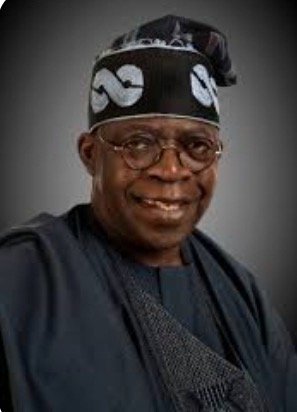
When President Bola Ahmed Tinubu stood before the nation on his first day in office and announced the removal of the fuel subsidy, many people were shocked. Some clapped. Others shouted in anger. But very few stopped to ask the real question. What kind of courage does it take to touch something that previous presidents carefully avoided for years?
This was not a small policy change. This was a direct challenge to a powerful group of people who had grown rich from the fuel subsidy system. These people did not just make money quietly. When someone tried to stop them in the past, they showed how far they were ready to go.
Some years ago, a woman named Ngozi Okonjo-Iweala served as the Coordinating Minister of the Economy and Minister of Finance under President Goodluck Jonathan. She was known for her honesty, her strong sense of duty, and her refusal to look the other way when something was wrong. While she was serving Nigeria, she noticed something strange. The claims for fuel subsidy were rising too fast and too high.

She asked the President for permission to check the accounts. What she found was shocking. About 2.4 billion dollars in fraudulent claims. That is money that was supposed to help ordinary Nigerians but was being stolen through false subsidy payments.
She refused to pay. That single decision changed everything for her family. Shortly after she blocked those payments, her mother was kidnapped from her home in Ogwashi-Uku, Delta State. The old woman was taken into a forest and held for five days. The people who took her did not hide their purpose. They contacted the minister and made their demand clear. For her mother to be released, she must resign as minister and leave the country.
Think about that for a moment. A senior minister was told to quit her job and run away because she refused to release 2.4 billion dollars of public money to fraudsters. Her mother was used as a weapon against her. Those five days remain one of the darkest periods in Okonjo-Iweala’s life. She has said openly that she felt paralysed by fear and even thought of resigning. That is the kind of pressure that came with simply blocking part of the fraudulent payments.
If this could happen to a minister of her standing simply for refusing to pay a portion of the stolen money, then we must ask a serious question. What kind of people were behind that act? Ordinary thieves do not kidnap the mother of a Minister and demand that she leave the country. That level of planning, boldness, and cruelty points to something bigger.
In the language of organised crime, such a group is often called a mafia. A mafia is not just a collection of criminals. It is a powerful network that uses violence, fear, and political connections to protect its source of money. It does not play by normal rules. When its income is threatened, it strikes hard and without mercy. The people who kidnapped Okonjo-Iweala’s mother fit this description. They had the reach to strike at the family of a top government official. They had the confidence to make political demands. And they had a clear economic motive — protecting the flow of subsidy money that was filling their pockets.
This is why the decision Tinubu took on his first day in office must be seen in a different light. He did not just remove a subsidy. He shut down a major source of illegal earnings for a network that had already shown it was ready to use extreme violence. Previous presidents knew the subsidy was draining the nation’s finances. They knew it was full of fraud. Yet they chose not to remove it. They managed it. Tinubu did not wait. He acted immediately. That kind of decision requires the willingness to accept the consequences that will follow. And the consequences have been heavy. Anger spread across the country. Political attacks increased. Insecurity continued to trouble different parts of the nation.
One of the recently organised forms of that anger has been the “Tinubu must go” campaign that has found a strong voice in the northern part of the country. It is important to look carefully at where this campaign is loudest. These are the same regions where elite petroleum marketers felt the sharpest cut when the subsidy was removed. These marketers had built big businesses around the old system. When the free money stopped flowing, their interests were badly affected. It is therefore not surprising that the strongest calls for the President to leave office are coming from areas where those elite interests were hit hardest.
Anyone who has watched Nigerian politics for some time knows that large crowds do not just gather for long protests by accident. Ordinary people have daily struggles. They have shops to open, farms to tend, and families to feed. When large numbers of them leave their work to stay on the streets for days, someone is usually paying the cost. Heavy funding is almost always behind mass mobilisation. There is often a promise that those who join will not go home empty-handed. This is not a new pattern. It is an old method used by powerful interests when they want to put pressure on a government.
So when we see sustained campaigns calling for the President to go, especially in the regions most linked to the old subsidy profits, we should not pretend it is only about the suffering of the masses. The suffering is real, and it must be addressed. But the organisation, the funding, and the timing also point to something else. They point back to the same kind of powerful interests that once kidnapped a minister’s mother for blocking part of their money. Now that the entire subsidy system has been stopped, the reaction has grown bigger and louder.
This is what it means to take the bullet for the nation. Tinubu inherited a system that had become a feeding trough for a few at the expense of the many. He chose to confront it at the very beginning of his term, knowing the pain it would cause and the enemies it would create. Other leaders saw the same problem and stepped back. He stepped forward.
The hardship that followed is real. No honest person can deny that life became harder for many Nigerians after the subsidy was removed. Prices rose. Businesses struggled. Families felt the pressure. That pain must not be dismissed. At the same time, the alternative was not to continue a system that was bleeding the country dry and enriching a ruthless few. The choice was between short-term relief that kept the country weak and long-term correction that carried immediate cost.
History will judge whether the fiscal space created by the removal is used wisely for the benefit of ordinary people. That part is still unfolding. But the decision itself already reveals something important about the man who made it. It shows a readiness to accept political damage in order to confront a deep national problem. It shows the audacity to dare where others refused to act.
The same network that once used a mother’s life as a bargaining tool to protect 2.4 billion dollars did not disappear when the subsidy was finally stopped. Their methods may have changed from direct kidnapping to broader political pressure, from personal threats to mass mobilisation, but the goal remains the same — to protect or restore their access to easy public money. Understanding this background helps us see the current tensions more clearly. It also helps us understand why the first-day decision was far more dangerous than it first appeared.
In the end, leadership is tested not by popular decisions but by necessary ones. Removing the fuel subsidy was necessary if Nigeria was ever going to stop the bleeding. It was also dangerous because of the kind of people who benefited from the old order. Tinubu took that risk on day one. He took the anger, the protests, the campaigns, and the political attacks that came with it. He took the bullet that others carefully avoided.
That is the heart of the matter. A country cannot move forward if every hard decision is postponed because powerful interests might strike back. Someone has to be willing to face them. On the 29th of May 2023, that someone was President Bola Ahmed Tinubu. Whether one supports him or opposes him, the sheer boldness of that first act deserves to be recognised for what it was — a rare moment when a Nigerian leader chose the difficult path in full knowledge of the cost.
The road ahead remains hard. The pain of adjustment is still being felt. Results must still be delivered. But the decision to confront the subsidy system head-on will stand as one of the clearest examples of political daring in recent Nigerian history. It was not perfect. It was not painless. But it was brave. And in a country where too many leaders have chosen safety over responsibility, that courage still matters.
*Idowu Ephraim Faleye is a freelance political writer based in Nigeria +2348132100608*