By Ibrahim BUNU
ibrahimbunu2520@gmail.com
There is something profoundly dishonest about the way political arguments are conducted in Northern Nigeria.
A man can spend years speaking loudly, aggressively and sometimes recklessly about other people, their communities, their politics and their faith, yet the moment somebody from the other side of the political or geographical divide answers him with equal force, the same people who celebrated “free speech” suddenly discover the virtues of silence.
That hypocrisy must be confronted.

The current controversy surrounding General Christopher Gwabin Musa is therefore bigger than General Musa himself. It is about whether some Nigerians have been granted a permanent licence to define the national conversation while others are expected to remain silent simply because their truth makes powerful people uncomfortable.
General Musa has now spoken about former Kaduna State Governor Nasir El-Rufai and the experience of Southern Kaduna. He has described the divisions and security problems associated with the former administration in extraordinarily strong terms. That statement has generated predictable reactions.
But what exactly is the offence?
Is General Musa forbidden from having a political opinion because he is a retired military officer?
Is he forbidden from discussing the place where he comes from?
Is he forbidden from speaking about communities whose suffering he has witnessed?
Or has Nigeria quietly created a new constitutional principle under which a retired general may defend the country on the battlefield but loses his voice the moment he discusses the political conditions that produced some of the problems he spent his professional life confronting?
That would be absurd.
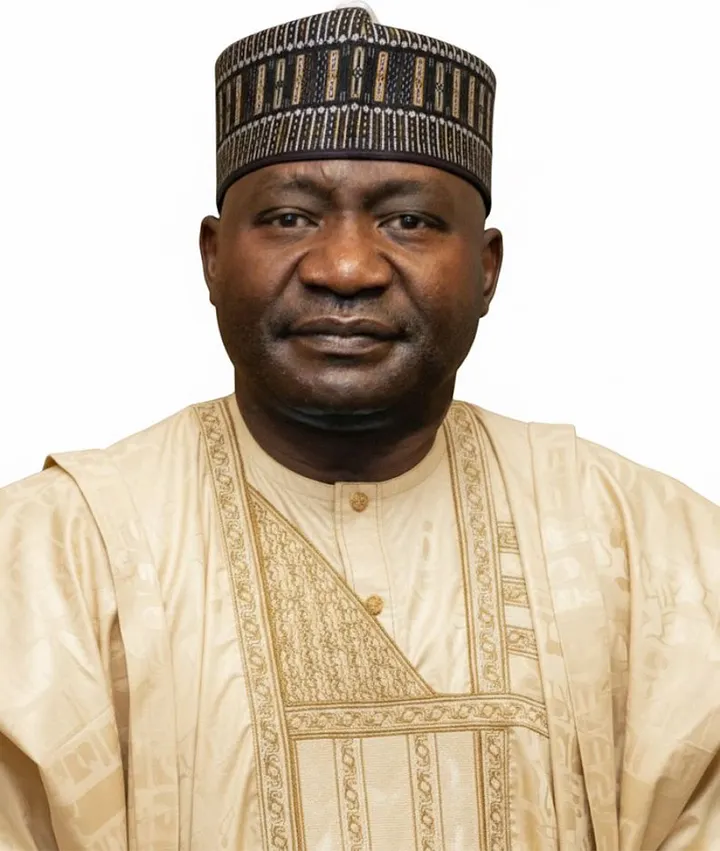
General Musa is not a commentator who suddenly appeared on social media yesterday. He is a retired senior military officer who rose through one of the most demanding institutions in Nigeria and eventually became Chief of Defence Staff before becoming Minister of Defence. His professional life has been deeply connected to Nigeria’s security challenges.
If anybody understands what insecurity, communal conflict, terrorism, displacement and the consequences of institutional failure mean, he does.
Yet some people now appear determined to reduce his intervention to one convenient accusation: he is from Southern Kaduna, therefore he is speaking out of ethnic or religious sentiment.
That argument is intellectually bankrupt.
If geographical origin automatically disqualifies a person from speaking about injustice, then almost every Nigerian political argument collapses.
A person from Kaduna cannot speak about Kaduna.
A person from Katsina cannot speak about Katsina.
A person from Borno cannot speak about Borno.
A person from Southern Kaduna cannot speak about Southern Kaduna.
What then are citizens supposed to discuss?
The weather?
For years, Senator Shehu Sani — a Muslim, a former senator from Kaduna Central and hardly somebody who can be dismissed as a Christian partisan — spoke openly about the political and religious tensions surrounding Kaduna under El-Rufai.
Sani publicly accused politicians of setting Muslims and Christians against one another for political gain. He also criticised the former administration’s treatment of Southern Kaduna and argued that the area’s problems could not be properly understood by listening only to the governor of the time. (Punch Newspapers)
He went further in 2023, accusing the former administration of what he described as a policy of marginalisation and repression against Southern Kaduna and saying that religious actors had been used to propagate division. Those are not the words of a Christian political activist defending his own religious constituency. They came from one of Kaduna’s most prominent Muslim political voices. (Leadership)
So where was the outrage then?
Where was the argument that speaking about El-Rufai’s record was automatically “divisive”?
Where was the demand that Senator Sani should keep quiet because his criticism might offend powerful political interests?
That is the question Nigerians must answer.
And Shehu Sani was not alone.
There have been Muslim voices, traditional voices, civil-society voices, journalists and political actors who have criticised different aspects of El-Rufai’s governance, particularly his handling of Kaduna’s religious and ethnic fault lines.
The historical record is not difficult to find.
El-Rufai’s decision to run with a Muslim deputy in 2019 generated substantial controversy because Kaduna had traditionally relied on a delicate political balancing arrangement between its religious and geographical constituencies. Contemporary reporting recorded strong objections from Christian groups and Southern Kaduna stakeholders who argued that the decision could deepen existing divisions. (The Guardian Nigeria)
Even more significant was the controversy surrounding remarks attributed to El-Rufai in a video that emerged after the 2023 elections. The remarks triggered condemnation from CAN, the Middle Belt Forum and other groups, with critics arguing that the former governor had openly discussed political power through a religious lens. (Channels Television)
These are matters of public record.
They are not inventions of General Musa.
They are not inventions of Southern Kaduna.
They are not inventions of Christians.
And they certainly cannot be erased from history simply because some people are uncomfortable with the person currently bringing them back into public conversation.
This is where the hypocrisy becomes dangerous.
When El-Rufai spoke, supporters called it political strategy.
When his critics responded, they were accused of being emotional.
When Muslim politicians criticised him, some people called it internal political disagreement.
But when a Southern Kaduna military officer who eventually became Nigeria’s Defence Minister speaks, suddenly his words must be subjected to an entirely different standard.
Suddenly everybody becomes concerned about national unity.
Suddenly everybody remembers the importance of restraint.
Suddenly social media becomes a courtroom.
Suddenly commentators who once demanded “fearless speech” begin demanding silence.
No.
That game should end.
General Musa has the same right to speak as every other Nigerian.
He does not lose that right because he comes from Southern Kaduna.
He does not lose it because he is a Christian.
He does not lose it because he occupies the office of Minister of Defence.
And holding public office does not mean surrendering one’s citizenship, memory or conscience.
Of course, there is an important distinction.
A Defence Minister must be careful about operational military information, classified intelligence and matters that could compromise national security. That is obvious.
But discussing the political history of Kaduna, expressing an opinion about a former governor or describing one’s assessment of the treatment of a region is not automatically a national-security breach.
The attempt to manufacture such a restriction is itself revealing.
It suggests that the real discomfort may not be about what General Musa said.
It may be about who said it.
That is the deeper problem.
Northern Nigeria has spent decades constructing an unhealthy political culture in which religion, ethnicity and political loyalty are frequently mixed together until disagreement becomes almost impossible.
Criticise a powerful Muslim politician and somebody says you are attacking Islam.
Criticise a Christian politician and somebody says you are attacking Christianity.
Criticise a northern politician and somebody says you hate the North.
Criticise a southern politician and somebody says you are promoting ethnic politics.
Eventually, nobody is allowed to criticise anybody.
That is how accountability dies.
Religion becomes the shield.
Ethnicity becomes the shield.
Regional identity becomes the shield.
And political loyalty becomes the ultimate shield.
But Nigeria cannot survive indefinitely under such a system.
A Muslim must be allowed to criticise a Muslim politician.
A Christian must be allowed to criticise a Christian politician.
A northerner must be allowed to criticise a northern leader.
A southerner must be allowed to criticise a southern leader.
And a Southern Kaduna man must be allowed to discuss Southern Kaduna without having his entire argument dismissed before anyone even examines the evidence.
That is what a mature democracy looks like.
The argument should be simple:
If General Musa is wrong, prove him wrong.
Bring documents.
Bring official records.
Bring eyewitness testimony.
Bring the decisions of government.
Bring the statistics.
Bring the historical record.
Bring credible counter-evidence.
But do not tell him to shut up.
Do not attempt to suffocate his voice through coordinated social-media attacks.
Do not manufacture a religious controversy simply because you cannot defeat his argument.
Do not convert an argument about governance into an argument about whether a Southern Kaduna man has permission to speak.
That is intellectual cowardice.
And it will not work.
Social media has created the illusion that whoever controls the loudest accounts controls public opinion.
That is another mistake.
A thousand anonymous accounts cannot change history.
A thousand insults cannot erase a documented statement.
A thousand hashtags cannot make communities forget what they experienced.
And no digital campaign can permanently suppress a legitimate question.
The people who believe General Musa can be socially intimidated into silence should understand something very simple:
He is not an isolated individual speaking into an empty room.
He is a public figure with a professional history, a constituency of people who know him, a community that recognises his story, colleagues who understand his career and Nigerians who have their own memories of Kaduna’s political history.
Those who imagine that nobody will answer back are seriously miscalculating.
And if Christians were to respond to every provocation, every insult and every perceived attempt to delegitimise General Musa by turning the matter into an openly religious mobilisation, the consequences for Nigeria could be disastrous.
That is precisely why responsible Nigerians must resist the temptation to turn this into a Christian-versus-Muslim confrontation.
The issue should remain where it belongs:
accountability, historical truth, political fairness and the right to speak.
General Musa does not need Christians to manufacture a religious war on his behalf.
He needs Nigerians to defend the principle that no citizen should be silenced simply because his testimony is inconvenient.
There is also something else the political class must understand.
Southern Kaduna is not a laboratory in which politicians can experiment with division and later demand silence from the people who lived through the consequences.
The region has a history of communal violence, insecurity, political mistrust and deep grievances. Contemporary reporting has repeatedly documented disputes surrounding political representation, religious balancing and insecurity in the area. (The Guardian Nigeria)
You cannot tell people who experienced those realities that they are forbidden from remembering them.
You cannot tell them that their memories are “political”.
You cannot demand silence simply because somebody powerful is uncomfortable with the conversation.
And you certainly cannot expect a retired general from that environment to pretend that his personal history has disappeared because he entered public office.
That is not leadership.
That is political theatre.
Perhaps the greatest mistake of those attacking General Musa is that they have misunderstood the nature of his office.
The Minister of Defence is not a decorative figure.
The office exists at the centre of Nigeria’s national-security architecture.
A man occupying that position inevitably carries an enormous amount of institutional experience and knowledge about the consequences of political instability.
That does not make him infallible.
It does not make every statement he makes automatically correct.
It does not place him above criticism.
But neither does it make him intellectually incompetent or politically voiceless.
Criticise him. Challenge him. Fact-check him. Disagree with him. But do not demand that he surrender his voice.
That is the standard democracy requires.
And this is where those attempting to suffocate him through social media should be particularly careful.
They may believe they are defending El-Rufai.
They may believe they are protecting an old political arrangement.
They may believe they are punishing General Musa.
But sometimes an attempt to silence one man only creates a much larger conversation.
Sometimes the person you are trying to isolate becomes the person around whom an entire suppressed conversation begins to organise itself.
That is the danger.
Nigeria has spent too much time teaching people to whisper.
It is time we learned how to argue openly.
It is time we stopped confusing disagreement with hatred.
It is time we stopped weaponising religion against accountability.
It is time we stopped treating Southern Kaduna as a political inconvenience.
And it is time we stopped pretending that political leaders are entitled to permanent immunity from historical scrutiny.
Nobody owns the microphone.
Nobody owns Kaduna.
Nobody owns the North.
Nobody owns Christianity.
Nobody owns Islam.
And nobody owns the right to define what Nigerians are allowed to remember.
General Christopher Musa has spoken.
Those who disagree should answer him with facts.
Those who believe he is wrong should dismantle his argument.
Those who have evidence should present it.
But those who think they can simply suffocate his voice through social media, religious intimidation or political blackmail should rethink their strategy.
Because the era when a handful of powerful voices could dictate who was allowed to speak is passing.
And if they believe General Musa has no people behind him, they are making the same mistake political establishments have made repeatedly throughout Nigerian history: confusing silence with absence.
A stray baby walking by the roadside surely has a mother somewhere.
The same is true of every suppressed voice.
There is always a memory behind it.
There is always a community behind it.
There is always a history behind it.
And sometimes, when that history finally finds its voice, no amount of social-media noise can put it back into silence.
This is not about protecting General Musa from criticism.
It is about protecting the right of General Musa — and every Nigerian — to speak.
Let the argument begin.
But let it be an argument of facts, evidence and history.
Not intimidation.
Not religious blackmail.
Not ethnic manipulation.
And certainly not the old Northern political culture in which some people are allowed to speak loudly while everyone else is instructed to dance to their drum.
That drumbeat has gone on for long enough.