by Jennyfer Radeino Ambe DrPH
Antimicrobial Resistance: Africa’s Silent Killer
On 27 August 2026, a significant moment in African public health unfolded in Nairobi, Kenya. The International Centre for Antimicrobial Resistance Solutions (ICARS) officially launched its regional presence, ICARS Africa, hosted at Amref Health Africa’s headquarters and funded through a partnership with Wellcome (ICARS, 2025). This announcement has direct consequences for every African citizen, farmer, parent, and business owner on the continent.
To understand why, we first need to talk about antibiotics and what happens when they stop working.

What Is Antimicrobial Resistance and Why Should You Care?
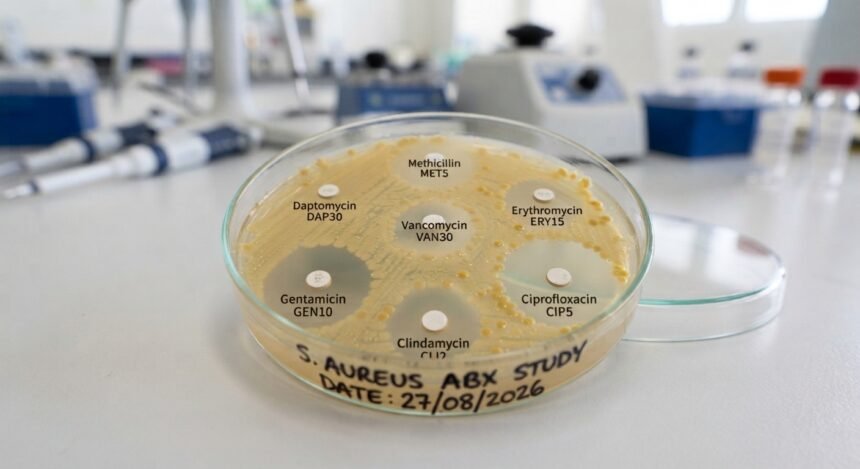
Most of us have taken antibiotics at some point: a chest infection, a urinary tract infection, a wound that needed treating. Antibiotics are the medicines that fight bacterial infections and have saved hundreds of millions of lives since their discovery. But here is the problem: bacteria are living organisms and, like all living things, they adapt. When antibiotics are overused, misused, or taken incorrectly, bacteria evolve to resist them. The drugs stop working. This is antimicrobial resistance, or AMR.
Think of it this way: the antibiotic your doctor prescribes today may simply stop working tomorrow, not because medicine has failed, but because decades of overuse have accelerated bacteria’s natural ability to fight back. When that happens, common infections become dangerous. Routine surgeries become high-risk. Childbirth complications become potentially fatal. Tuberculosis, already a major killer across Africa, becomes untreatable.
This is not a future problem. It is happening now.
Africa Is Bearing the Heaviest Burden
The World Health Organization projects that if immediate action is not taken, AMR-associated deaths across Africa could quadruple to 4.1 million per year by 2050 (ICARS, 2025; WHO Regional Office for Africa, 2026). To put that in perspective, that is more people than currently die from HIV/AIDS, tuberculosis, and malaria combined, from infections that were once treatable.
Nigeria alone recorded 64,500 deaths directly linked to AMR and an additional 263,400 deaths associated with resistant infections in a single baseline year, according to data from the African Union and Africa CDC (Nigeria Centre for Disease Control and Prevention, 2024). AMR already kills more Nigerians than many of the diseases that dominate public health headlines.
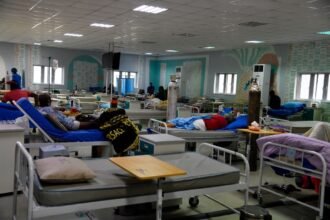
The reasons are structural. Across West Africa, antibiotics are widely available without prescription through informal markets and unlicensed vendors. People self-medicate, stop courses early when they feel better, or share leftover medicines with family members. These behaviours, understandably driven by cost and access, accelerate bacterial resistance. In hospitals, clinicians often prescribe broad-spectrum antibiotics without laboratory confirmation simply because diagnostic equipment is unavailable or too slow. In farms and livestock markets, human antibiotics are routinely administered to animals with minimal veterinary oversight, creating direct pathways for resistant organisms to move from farms into food chains, water systems, and communities.
What Is Being Done and What Is Still Missing
The policy architecture exists. All 14 West African countries reviewed in a 2025 equity analysis published in Tropical Medicine and International Health had developed National Action Plans to combat AMR (Adebisi et al., 2025). Nigeria launched its second-generation plan, NAP 2.0, in October 2024, a more comprehensive framework covering human, animal, and environmental sectors (Nigeria Centre for Disease Control and Prevention, 2024). Ghana has been recognised by WHO as a regional leader in integrating AMR responses into primary healthcare (WHO Regional Office for Africa, 2026).
But plans on paper and action on the ground remain two very different things. Nigeria’s first AMR action plan achieved only a 44% completion rate (Nigeria Centre for Disease Control and Prevention, 2024). Across the ECOWAS region, only three countries had established functioning national AMR surveillance systems by 2022 (Adebisi et al., 2025). Environmental pathways, including untreated hospital wastewater, unmanaged pharmaceutical waste, and contaminated drainage systems, remain largely unmonitored across the region, turning urban infrastructure into reservoirs for resistant organisms.
Research from Sierra Leone, published in the Sierra Leone Journal of Biomedical Research in May 2026, offers a sobering window into how this plays out on the ground (Suma, Ambe, Jalloh & N’Jai, 2026). The study is one of the few locally grounded, cross-sectoral analyses of AMR in West Africa. It found that over 70% of hospital antibiotic prescriptions were issued without any prior laboratory testing and that nearly 90% of health workers reported that a patient’s financial situation directly influenced prescribing decisions. AMR in West Africa is not simply a clinical problem. It is a poverty problem, a governance problem, and an environmental problem all at once.
A New Frontline, but Reach Must Follow
The launch of ICARS Africa in Nairobi is a genuine step forward. Its model, grounded in implementation research, One Health thinking, and country-owned solutions, is precisely what the evidence demands. Rather than imposing external frameworks, ICARS works with countries to develop context-specific, cost-effective interventions spanning human medicine, veterinary practice, and environmental stewardship (ICARS, 2025).
Critically, Nigeria will host the 5th Global High-Level Ministerial Conference on AMR in Abuja in December 2026, the first time this landmark global meeting will be held on African soil (Quadripartite Joint Secretariat, n.d.). It represents an opportunity for African governments to move beyond political declarations and commit to funded, enforceable, and measurable action.
But regional offices in Nairobi and ministerial conferences in Abuja will only matter if their outcomes reach the clinic in Freetown, the market in Lagos, the farm in Kano, and the drainage system in Accra. AMR will not be defeated in conference rooms. It will be defeated in the everyday decisions of citizens, clinicians, farmers, and policymakers across the continent.
Millions of Africans are already living the consequences of antimicrobial resistance. Most have never heard its name. That must change and it needs to change now.
Image generated by AI (Gemini)
Author links to AMR posts:
Linkedin: Africa-Led Solutions: ICARS and Amref Health Africa Join Forces in the Fight Against Antimicrobial Resistance https://lnkd.in/p/eeSP5QDW
Substack: From Vision to Reality https://substack.com/@majorityworldepidemiologist/note/p-213001423?utm_source=notes-share-action&r=jf7ps
References
Adebisi, Y. A., Ogunkola, I. O., Bamisaiye, A., Ekpenyong, A., Ntimeh, M., Agyemang-Duah, W., Agbor, V. N., Ogunleye, S. C., & Lucero-Prisno, D. E. (2025). An equity-focused systematic analysis of antimicrobial resistance National Action Plans in 14 West African countries. Tropical Medicine and International Health, 30(12), 1295-1312. https://doi.org/10.1111/tmi.70037
Antimicrobial Resistance Collaborators. (2022). Global burden of bacterial antimicrobial resistance in 2019: A systematic analysis. The Lancet, 399(10325), 629-655. https://doi.org/10.1016/S0140-6736(21)02724-0
International Centre for Antimicrobial Resistance Solutions (ICARS). (2025, December 17). ICARS partners with Amref Health Africa to establish regional presence in Africa. https://icars-global.org/icars-africa/
International Centre for Antimicrobial Resistance Solutions (ICARS). (2026, August 20). Join the launch of ICARS Africa on 27th August. https://icars-global.org/icars-africa-launch/
Nigeria Centre for Disease Control and Prevention (NCDC). (2024). National antimicrobial resistance action plan 2024-2028. Federal Ministry of Health. https://ncdc.gov.ng/themes/common/docs/protocols/353_1729270476.pdf
Quadripartite Joint Secretariat. (n.d.). 5th global high-level ministerial conference on AMR. Retrieved August 27, 2026, from https://www.qjsamr.org/about-us/fifth-global-high-level-ministerial-conference-on-amr
Suma, M. I., Ambe, J. R., Jalloh, M. S., & N’jai, A. U. (2026). Beyond the clinic: A One Health qualitative analysis of antibiotic use and antimicrobial resistance (AMR) in Sierra Leone. Sierra Leone Journal of Biomedical Research, 16(4). https://doi.org/10.4314/sljbr.v16i4.2
World Health Organization Regional Office for Africa. (2026). Resist AMR. Retrieved August 27, 2026, from https://www.afro.who.int/ResistAMR