

By Citizen Bolaji O. Akinyemi
Apostle&Nation Builder
_Convener, Apostolic Round Table_
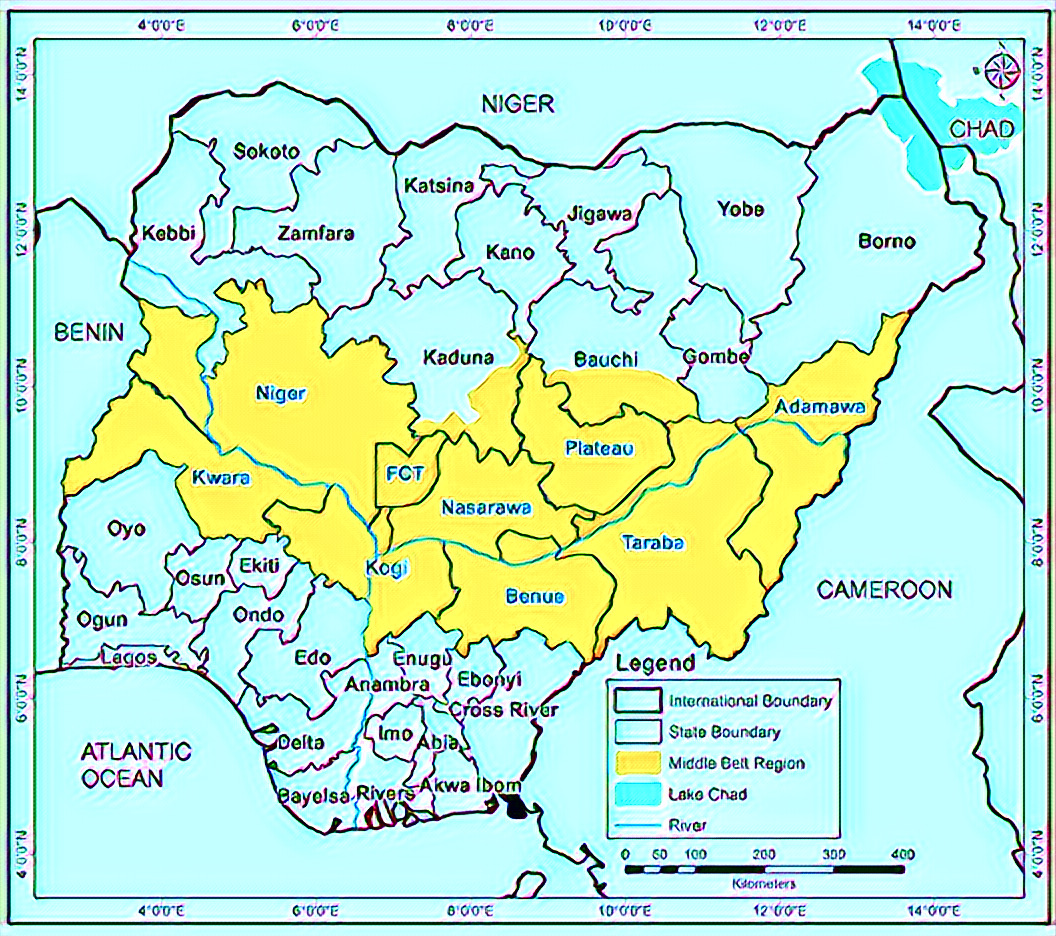
The response to my recent article, “The Middle Belt Must Choose Its Alliances Wisely,” has been deeply encouraging. Statesmen, professionals, traditional leaders, clergy and ordinary citizens across the Middle Belt have commended it as a timely intervention.
I am grateful.
But I must confess that commendation is no longer enough. The Middle Belt has never lacked eloquent voices. It has never lacked intellectuals capable of describing its wounds with painful accuracy. It has never lacked scholars who can analyse its predicament or leaders who can issue powerful communiqués after every tragedy.
What it has lacked is a corresponding strategic action. The Bible says, _”Faith without works is dead.”_ (James 2:17). Many of us quote this verse as though it refers merely to verbal confession. It does not.
Biblical faith is demonstrated through courageous action. Without action, faith becomes religious poetry. The Middle Belt is often described as the House of Faith. Yet for too long, the door of that house has remained locked against the practical expression of faith.
The region prays. The region mourns. The region buries its dead. The region writes memoranda. The region organises conferences. Then it waits… Hoping that those responsible for its pain will someday experience a change of heart.
_History has never rewarded such hope. History rewards organised people. History rewards strategic people. History rewards courageous people._
Perhaps nowhere is this lesson illustrated better than in the story of the four lepers outside the gates of Samaria. They were the least qualified people to become national deliverers. Rejected by society. Excluded from the city. Victims of circumstances beyond their control. Yet while everyone else remained trapped by fear, they asked one simple question:
_”Why sit we here until we die?” (2 Kings 7:3)_
That question changed history. Their situation offered only three possibilities. Remain where they were and die. Return to the city and die. Move towards the Syrian camp and perhaps die.
_But they recognised something profound:_
Doing nothing guaranteed death. Action at least created possibility. So they moved. Unknown to them, God amplified the sound of their footsteps until a mighty army fled in panic.
Their movement produced a miracle. Their courage delivered an entire nation from famine.
_The miracle did not begin in heaven. It began with four ordinary men deciding that paralysis was no longer an option._
That story should trouble every patriotic son and daughter of the Middle Belt. For decades the region has endured killings, displacement, destruction of communities, abandoned farmlands, attacks on places of worship and the erosion of confidence in the capacity of the Nigerian state to protect its citizens.
Yet after every tragedy, the pattern repeats itself. Another press statement. Another condolence visit. Another committee. Another conference. Another declaration.
Then silence.
I therefore ask, respectfully but directly, the President of the Middle Belt Forum, Dr. Bitrus Pogu:
_Where are the four lepers of the Middle Belt?_
Not four desperate men.
Four courageous leaders.
Four strategic thinkers.
Four patriotic citizens willing to move beyond lamentation into coordinated action within the framework of the Constitution.
Where are those prepared to organise rather than merely complain? Where are those prepared to build institutions rather than issue endless communiqués? Where are those prepared to convert grief into strategy?
This is not a criticism of Dr. Pogu or the Middle Belt Forum. The MBF has remained one of the most consistent voices speaking for the region. Its interventions have kept national attention on the suffering of Middle Belt communities.
That work is valuable.
But advocacy must now mature into strategy. Every great movement reaches a point where speeches alone can no longer carry the burden of history. The Middle Belt has also produced men and women whose sacrifices have helped preserve Nigeria itself. One cannot discuss national service without recalling the immense contributions of Middle Belt officers and soldiers who defended Nigeria during the Civil War and in subsequent national security operations. Many paid the ultimate price. Others carried physical and emotional scars for life. Their patriotism helped preserve the territorial integrity of the country.
Among those who have consistently demonstrated uncommon courage is General T. Y. Danjuma. Whether as a soldier, public servant, philanthropist or elder statesman, he has repeatedly spoken when silence would have been more convenient. His call for vulnerable communities to take lawful responsibility for their own protection reflected a painful reality confronting many citizens who had lost confidence in existing security arrangements. History will judge his words in their proper context. But no one can deny that they emerged from deep concern for human life.
The Middle Belt today possesses one of the largest concentrations of retired military officers, security professionals and disciplined veterans in Nigeria. It also has accomplished academics. Experienced civil servants. Entrepreneurs. Traditional rulers. Church leaders. Youth organisations. Women’s organisations. Professionals across every sector.
_The question therefore is not whether capacity exists. The question is whether there is collective resolve. The future of the Middle Belt will not be secured merely because others finally understand its pain. It will be secured when its people organise around a shared security agenda, an economic agenda, a constitutional agenda and a leadership agenda._
**The region must deliberately invest in security intelligence, community resilience, agricultural renewal, economic cooperation, civic education, youth leadership development and constitutional advocacy.*
*It must build strategic alliances with every part of Nigeria that believes in justice, federalism, accountability and equal citizenship.*
*Above all, it must stop outsourcing its destiny.*
The four lepers did not possess weapons. They did not command armies. They did not hold political office. They simply refused to remain where death had confined them. That decision altered the destiny of a nation.
Every generation is presented with its defining question. For the Middle Belt, that question is no longer:
_”Who understands our pain?”_
Neither is it:
_”Who will speak for us?”_
The defining question now is:
_Who will move? Who will organise? Who will innovate Who will build? Who will lead? Who will inspire a generation to replace fear with strategy? Who will transform victims into nation builders?_
*The Middle Belt stands again before history. It can continue writing beautiful communiqués about its suffering. Or it can produce its own four lepers – ordinary men and women whose extraordinary courage will redirect not only the destiny of the Middle Belt but also the future of Nigeria.*
_The four lepers were never remembered because they were powerful. *They were remembered because they MOVED.*_
May history never say that a region blessed with courage, intellect, faith and sacrifice lacked only one thing – *the will to rise.*
The time for admiration has passed. The time for action has come. The Middle Belt does not merely need more voices.
*It needs its four lepers.*








Leave a comment