19 July, 2026.
When did Nigeria officially divide children into Premium Children and Almajiri Children? Which section of the Constitution says the value of a kidnapped child depends on geography? When did our security doctrine become “Rescue in the South, negotiate in the North”? If no such law exists, why does the same crime receive two completely different responses?
Welcome to this edition of Sarcastic Sunday with Mohammed Bello Doka where we study Nigeria’s political gymnastics sarcastically because doing otherwise will choke us to death.
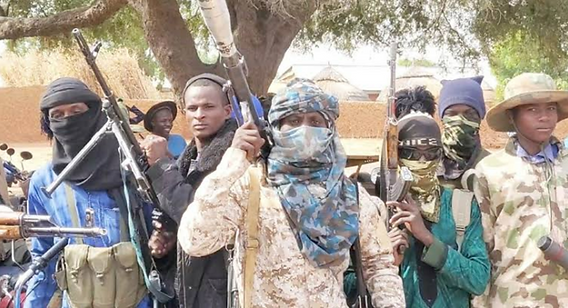
This is not just about Borno. It is about every Northern child abducted from Borno, Niger, Kebbi, Zamfara, Kaduna and beyond. In the North, kidnappers collect ransom, grow richer and return for more victims. In the South, governments reject negotiations, deploy intelligence, dismantle criminal networks and rescue victims. Apparently Nigeria operates two security policies—one that defeats kidnappers and another that finances them.
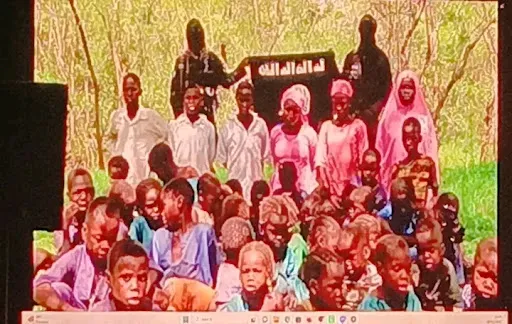
On May 15, 2026, gunmen kidnapped forty-four pupils and teachers from schools in Oriire Local Government Area of Oyo State. On the same day, Boko Haram terrorists abducted forty-two pupils, including toddlers, from Mussa Primary and Junior Secondary School in Askira-Uba, Borno State.
Same day.
Same crime.
Same country.
Different response.
Perhaps the biggest difference is that Oyo children are treated as human beings. Borno children—and countless others kidnapped across Northern Nigeria—are treated as statistics. They disappear into security briefings while the nation moves on.
Another difference is that Oyo appears to have a government. Its leaders demanded action, created pressure and refused silence. Across much of the North, governments seem content with sympathy, promises and patience while children remain in captivity.
There is also the miracle of intelligence. In Oyo, the DSS, Military Intelligence, the police and other agencies suddenly became remarkably effective. Intelligence was gathered, informants identified, hideouts raided and the kidnappers’ network dismantled. In the North, however, we are told that “Yan Agaji” and local realities make intelligence almost impossible. Apparently Nigeria’s security agencies lose their superpowers once they cross the Niger.
Then there are the governors.
Governor Seyi Makinde confronted.
Governor Babagana Zulum thanked.
Makinde demanded accountability and generated pressure. Zulum has largely focused on appreciation and political diplomacy while the 2027 calculations continue. One governor spoke loudly. The other chose loyalty. The results speak for themselves.
The people of Oyo even rejected bags of rice. They told government officials they wanted their children, not palliatives. Northern parents never had the opportunity to reject rice because no rice arrived. They were left with promises instead.
The federal response to Oyo was immediate. President Tinubu dispatched a high-powered delegation led by Chief of Staff Femi Gbajabiamila alongside the National Security Adviser, the Inspector-General of Police and the Chief of Defence Staff. Special security operations followed. Fifty-six days later, all forty-four victims regained their freedom.
Borno received no comparable response. No presidential delegation. No National Security Adviser. No Inspector-General. Only the state Commissioner for Education. More than two months later, parents are still asking whether their children are alive. A fifteen-second proof-of-life video became their only comfort. Then another thirty-six students were abducted from Lassa, raising the number of children still in captivity.
Former DSS Assistant Director-General Mohammed Ngoshe explained that every operation has “different dynamics.” Indeed it does. One dynamic rescues children. The other explains why they cannot be rescued.
Perhaps the greatest irony is political. The President reportedly appears to view some Northern governors—even within his own party—as political rivals who benefit whenever insecurity makes his administration look weak. His Southern allies pose no such political threat. If politics influences urgency, then perhaps geography is not the real issue after all.
Then came the entertainers.
Davido used a global stage to draw attention to the Oyo victims, forcing the world to notice their plight.
Rarara, on the other hand, attacked the messenger instead of the tragedy. Perhaps modern patriotism means protecting the government’s image rather than demanding the rescue of missing children.
Even disaster relief seems to follow geography. Oyo quickly received massive federal financial support after the Bodija explosion. Following the devastating Alau Dam floods in Borno, the emphasis shifted to rebuilding infrastructure. Concrete appeared to receive more certainty than displaced families.
So let us ask the uncomfortable questions.
Why does intelligence succeed in Oyo but surrender in Borno?
Why are kidnappers dismantled in one region but enriched in another?
Why does confrontation attract action while gratitude attracts promises?
Why can one governor speak boldly while another must speak carefully?
Why can Davido expose Nigeria while Rarara must protect Nigeria from embarrassment?
Why could Oyo parents reject rice while Northern parents never even saw the rice?
Most importantly, why are some children treated as national emergencies while others become forgotten statistics?
Seventy-eight children remain in captivity.
Parents continue to wait.
Officials continue to explain.
Politicians continue to calculate.
And Nigeria continues to perfect the art of treating identical tragedies differently.
And so we end this edition of Sarcastic Sunday with Mohammed Bello Doka where we study Nigeria’s political gymnastics sarcastically because doing otherwise will choke us to death.
Because somewhere between rice and rants, between intelligence and excuses, between confrontation and gratitude, Nigeria quietly decided that not every child deserves the same urgency.
Mohammad Bello Doka can be reached via bellodoka82@gmail.com
Advertisement