By Ibrahim Bunu
ibrahimbunu2520@gmail.com
How Insecurity, Electoral Mathematics, Ethnic Reawakening, Opposition Fragmentation, and Strategic Governance May Determine Nigeria’s Most Consequential Election Since 1999
For decades, Nigerian politics rested upon one of the most powerful assumptions in the country’s electoral history: that Northern Nigeria could largely act as a unified political force whenever its strategic interests were threatened.

That assumption is now facing perhaps its greatest test since independence.
Across villages in Zamfara, farms in Katsina, communities in Kaduna, settlements in Sokoto, and conflict zones stretching into the Middle Belt, a painful question is increasingly being asked:
“What happens when communities that have historically voted together no longer trust each other?”
The answer to that question may determine not only who occupies Aso Rock in 2027 but also whether the political architecture that has defined Northern Nigeria for more than a century survives the coming decade.
The story unfolding today is not merely about elections.
It is about identity.
It is about power.
It is about security.
It is about survival.
And above all, it is about whether the old political formulas that governed Northern Nigeria can still function in an era defined by mass displacement, banditry, terrorism, economic hardship, and growing distrust among communities once considered inseparable.
One of the most misunderstood concepts in Nigerian politics is the phrase “Hausa-Fulani.”
Many Nigerians speak of Hausa-Fulani as though it were a single ethnic group.
Historically, however, reality is more complex.
The Hausa and Fulani peoples have distinct origins, histories, and social structures.
The Hausa built some of West Africa’s most sophisticated city-states, including Kano, Katsina, Zaria, Gobir, Daura, and Rano, long before colonial rule.
The Fulani, meanwhile, spread across West Africa through migration, trade, scholarship, and Islamic reform movements.
The emergence of the Sokoto Caliphate in the nineteenth century dramatically altered Northern political structures.
The jihad led by Usman dan Fodio created a governing system in which Fulani ruling elites became dominant across many Hausa territories.
Later, British colonial administrators strengthened this arrangement through indirect rule.
Rather than dismantling existing emirate structures, colonial authorities relied upon them.
This decision created a political order that survived colonialism and influenced post-independence politics.
What emerged was less an ethnic fusion and more a political compact.
The Fulani elite often occupied traditional and administrative leadership positions.
The Hausa population provided demographic strength, economic activity, and electoral numbers.
For decades, this arrangement worked because it appeared mutually beneficial.
Today, many argue that this relationship is being questioned at the grassroots level.
Political alliances rarely collapse because of ideology alone.
Most collapse because of pain.
Across large parts of Northern Nigeria, insecurity has transformed from an occasional challenge into an existential crisis.
Entire communities have been displaced.
Schools have been attacked.
Farmers have abandoned land.
Rural economies have been devastated.
Kidnapping has become normalized in many regions.
The psychological consequences are enormous.
When people lose relatives, livelihoods, and ancestral lands, they begin to ask difficult questions.
Who protects us?
Who speaks for us?
Who benefits from our suffering?
Who should be held accountable?
These questions are now influencing political attitudes more than party manifestos.
The result is a gradual shift from traditional political loyalty toward security-based voting behavior.
Many communities increasingly evaluate leaders through one lens:
Can you keep us alive?
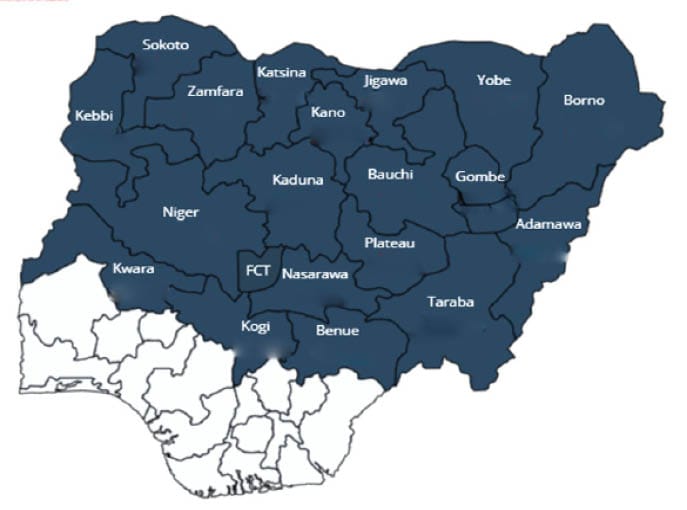
Any analysis of 2027 that ignores the Middle Belt is incomplete.
For decades, political strategists often treated Northern Nigeria as a single electoral bloc.
The Middle Belt repeatedly challenges that assumption.
Communities across Plateau, Benue, Nasarawa, Kogi, Niger, and parts of Kwara possess distinct historical experiences and political priorities.
For many Middle Belt communities, voting behavior is increasingly driven by security concerns, land disputes, representation, and cultural identity.
This means that presidential candidates who assume automatic northern solidarity may be operating with outdated assumptions.
The Middle Belt has become one of the most strategic battlegrounds in Nigerian politics.
Whoever wins significant support there gains a major advantage in any national coalition.
A serious political analysis must acknowledge something many commentators ignore:
Incumbency remains one of the strongest advantages in Nigerian politics.
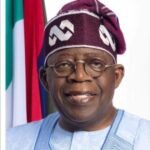
President Bola Ahmed Tinubu enters 2027 with several structural advantages.
Control of government institutions, broader political networks, relationships with governors, policy-setting powers, and nationwide visibility place him in a position that every challenger must overcome.
The greatest advantage of an incumbent is often not popularity but the inability of opponents to unite.
If opposition forces remain divided among multiple presidential ambitions, the electoral mathematics become increasingly favorable to the sitting president.
The road to victory in Nigeria is rarely built on emotion alone.
It is built on coalition management.
It is built on voter turnout.
It is built on strategic state-by-state calculations.
It is built on a political organization.
This is where Tinubu’s long-standing reputation as a coalition builder becomes relevant.
For more than three decades, he has demonstrated an ability to assemble alliances across ethnic, religious, and regional lines.
Whether critics agree with his policies or not, even opponents often acknowledge his political organizational skills.
As 2027 approaches, another factor may shape public perception.
Many supporters of the administration argue that some of the government’s most important reforms are long-term projects whose benefits may not yet be fully visible.
Supporters point to ongoing infrastructure expansion, fiscal reforms, efforts to increase state revenues, security restructuring, energy-sector reforms, debates over local government autonomy, digital economy investments, and attempts to reposition Nigeria’s public finances.
They argue that while many reforms have imposed short-term pain, governments are often judged not only by the sacrifices they ask of citizens but also by the results those sacrifices eventually produce.
Supporters further contend that security operations against banditry, oil theft, kidnapping networks, and terrorist groups have become more coordinated than in previous years, even though challenges remain significant.
Their argument is simple:
Changing the trajectory of a nation of more than 200 million people cannot happen overnight.
They believe continuity may offer a better opportunity to consolidate reforms already underway than to begin a completely new political experiment.
The opposition, however, faces a different challenge.
Beyond criticizing the government, it must convince Nigerians that it possesses a more credible alternative.
It must explain how it would improve security faster.
It must explain how it would stabilize the economy.
It must explain how it would manage Nigeria’s complex regional balances.
And most importantly, it must demonstrate unity.
History shows that fragmented opposition movements rarely defeat incumbents.
Disciplined coalitions defeat them with a clear national message.
As the nation moves steadily toward 2027, the central political question may no longer be whether Nigerians desire change.
The real question is what kind of change Nigerians want, who can deliver it, and whether the available alternatives inspire enough confidence to replace the incumbent administration.
For now, President Tinubu appears to possess significant structural advantages that any serious political analyst cannot ignore.
A fragmented opposition, divided regional interests, the power of incumbency, strong political networks, and ongoing government reforms collectively could favor his re-election.
Whether that pathway ultimately succeeds will depend on one decisive factor:
The extent to which ordinary Nigerians feel safer, more prosperous, and more hopeful by the time they cast their ballots in 2027.
In the end, elections are not won by headlines.
They are won by confidence.
And whichever political force successfully convinces Nigerians that it offers the safest path to security, stability, prosperity, and national unity will likely determine the next chapter of Nigeria’s democratic journey.