
by Akin Awofolaju, PhD, CFP, CSP, CFE
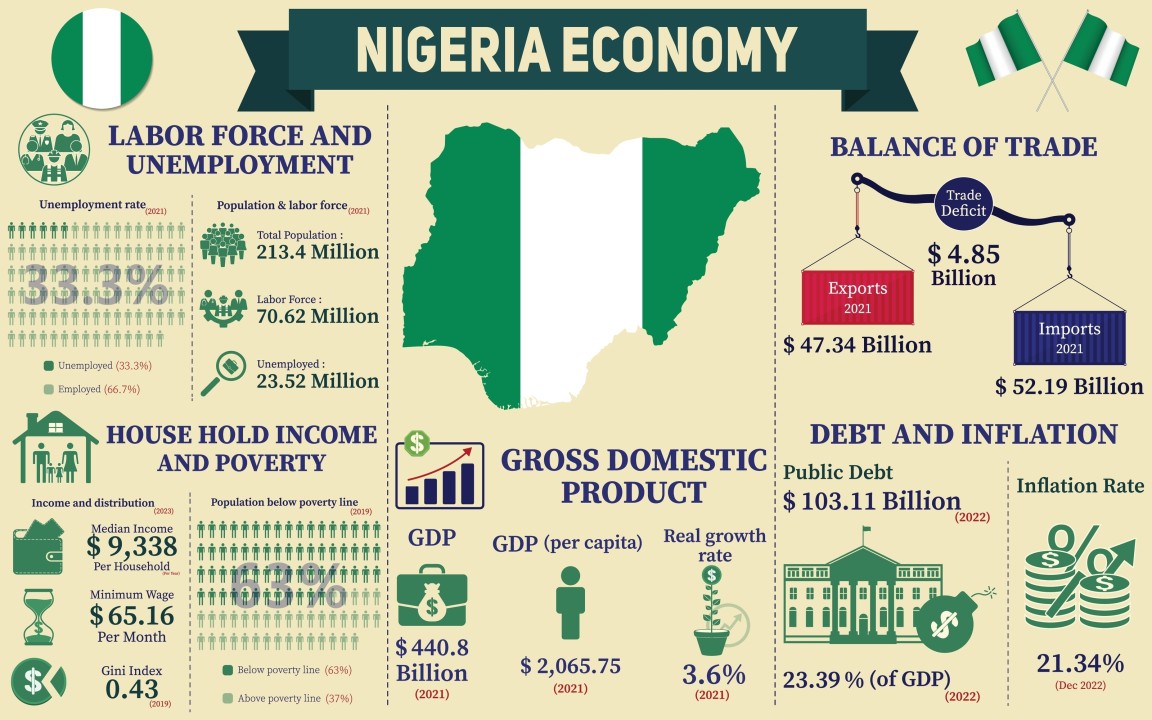
Nigeria is one of the most blessed nations on earth. With over 230 million people, vast natural resources, fertile agricultural land, a vibrant entrepreneurial population, and one of Africa’s largest economies, the country possesses every ingredient necessary for greatness. Yet, despite these advantages, millions of Nigerians continue to struggle with poverty, unemployment, insecurity, poor infrastructure, religious tensions, and deep societal divisions.
The challenge facing Nigeria is not a shortage of talent, resources, or potential. It is a shortage of effective governance, institutional discipline, and long-term national vision.
History has shown that nations do not rise because of speeches, political slogans, ethnic superiority, or religious dominance. They rise because leaders and citizens collectively build institutions that outlive individuals.

The question therefore is not who should rule Nigeria, but what it takes to rule Nigeria successfully.
1. A National Vision Beyond Tribe, Religion, and Region
Successful nations are built around a shared national purpose.
Countries such as Singapore, South Korea, and Rwanda transformed themselves by creating a national identity stronger than ethnic or regional loyalties. Their leaders understood that citizens cannot move forward together while constantly looking at one another through tribal or religious lenses.
Nigeria’s first requirement is a renewed national compact based on citizenship rather than ethnicity.
The child from Sokoto, the trader from Onitsha, the farmer from Benue, the entrepreneur from Lagos, and the fisherman from Bayelsa must all believe that Nigeria belongs equally to them.
No nation can prosper when appointments, opportunities, and public resources are perceived primarily through ethnic calculations.
Unity is not achieved through political speeches; it is achieved when justice is seen to be fair and opportunities are broadly accessible.
2. Fighting Poverty Through Production, Not Palliatives
One of Nigeria’s greatest challenges is poverty.
While social interventions may provide temporary relief, sustainable prosperity comes from production.
A successful Nigerian government must focus on creating wealth rather than distributing scarcity.
This requires:
– Modernizing agriculture
– Supporting small businesses
– Expanding manufacturing
– Encouraging technology innovation
– Investing in vocational education
– Creating export-oriented industries
Countries become wealthy when they produce more than they consume.
Nigeria possesses enormous opportunities in agriculture, mining, renewable energy, tourism, technology, and creative industries. These sectors can create millions of jobs if supported by consistent policies and access to financing.
The ultimate anti-poverty program is meaningful employment.
3. Infrastructure as the Foundation of Development
No nation develops without infrastructure.
Roads, railways, ports, power generation, water systems, hospitals, schools, and digital connectivity form the backbone of economic growth.
Nigeria loses billions annually due to inadequate infrastructure.
Businesses spend excessive amounts generating their own electricity. Farmers struggle to move products to markets. Manufacturers face high transportation costs. Students and healthcare facilities suffer from poor public services.
A successful government must prioritize:
– Reliable electricity
– Modern transportation networks
– Broadband internet access
– Water infrastructure
– Urban planning
– Affordable housing
Infrastructure should be viewed not as political projects but as national investments that generate economic returns.
4. Security Through Intelligence, Technology, and Economic Opportunity
No society can prosper under insecurity.
Terrorism, banditry, kidnapping, communal conflicts, and organized crime have imposed enormous human and economic costs on Nigeria.
Security solutions must go beyond military responses.
Effective security requires:
– Modern intelligence gathering
– Technology driven surveillance
– Professional policing
– Community participation
– Judicial efficiency
– Youth employment opportunities
Many security threats thrive where poverty, hopelessness, and weak institutions exist.
A secure Nigeria will emerge when law enforcement is strengthened and citizens have legitimate pathways to economic advancement.
5. Education: The Most Important National Investment
The most valuable natural resource in any country is not oil, gold, or minerals.
It is human capital.
Countries that invest heavily in education consistently outperform those that rely solely on natural resources.
Nigeria must transform its educational system by:
– Improving teacher quality
– Expanding technical education
– Supporting scientific research
– Strengthening universities
– Promoting digital literacy
– Aligning education with labor market needs
The nations dominating the 21st century are not those with the most natural resources but those with the most skilled populations.
The future belongs to knowledge driven economies.
6. Building Strong Institutions Instead of Strong Men
One of the greatest lessons from successful nations is that institutions matter more than individuals.
Strong leaders may inspire change, but strong institutions sustain it.
Nigeria’s progress depends on:
– An independent judiciary
– Professional civil service
– Transparent procurement systems
– Effective anti-corruption agencies
– Accountable public finance management
– Electoral integrity
When institutions work properly, national progress continues regardless of changes in political leadership.
A nation should never depend solely on the character of one leader.
It should depend on systems that reward competence and punish misconduct.
7. Religious Harmony Through Mutual Respect
Religion remains a powerful force in Nigerian society.
However, no country can thrive when religious differences become sources of conflict.
Government must remain impartial while protecting the rights of all faith communities.
Religious leaders also bear responsibility for promoting peace, tolerance, and national cohesion.
The true test of faith is not domination over others by religion or commerce but service to humanity.
Nations flourish when diversity becomes a source of strength rather than division.
8. Economic Diversification Beyond Oil
For decades, Nigeria’s dependence on oil revenues has exposed the economy to global price fluctuations.
Long term prosperity requires diversification.
Future growth will likely come from:
– Agriculture
– Science and Technology (FinTech Digital & Financial Engineering)
– Manufacturing
– Renewable energy
– Tourism
– Mining
– Creative industries
The countries leading the modern world generate wealth primarily through innovation, productivity, and human ingenuity.
Nigeria must embrace the same path.
9. Leadership by Example
Citizens often mirror the behavior of their leaders.
When leaders demonstrate integrity, discipline, accountability, and service, these values spread throughout society.
Successful leadership requires:
– Personal sacrifice
– Transparency
– Competence
– Emotional intelligence
– Strategic thinking
– National-mindedness
Leadership is not about power.
It is about stewardship.
The greatest leaders leave behind stronger institutions than the ones they inherited.
10. The Unifying Power of our Naija Football spirit and Nollywood
While politicians often struggle to unite Nigerians, two institutions have consistently succeeded where politics frequently fails: football and entertainment.
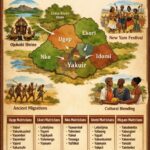
Whenever the Nigerian national football team steps onto the field, tribal, religious, and regional differences temporarily disappear. Whether one is Yoruba, Hausa, Igbo, Edo my in- laws, Ijaw, Tiv, Kanuri, Ibibio, or Fulani, every Nigerian becomes part of a single team.
The green-white-green flag becomes more important than ethnic identity.
Football creates a shared emotional experience. Victories are celebrated collectively, and defeats are mourned together. In those moments, Nigerians see themselves not as members of separate tribes but as citizens of one nation.
The same phenomenon occurs through Nollywood.
Today, Nollywood stands among the world’s largest film industries, telling stories that resonate across every corner of Nigeria and throughout Africa. Nigerian movies worldwide showcase our diversity while simultaneously highlighting our common humanity. They allow audiences to laugh together, cry together, and appreciate cultures different from their own.
A Hausa family can enjoy a Yoruba-produced movie. An Igbo viewer can celebrate a northern actor. A Christian can admire a Muslim performer. Through storytelling, Nollywood creates bridges where politics sometimes builds walls.
These industries offer an important lesson for governance: people unite more effectively around shared aspirations than around shared grievances.
A wise government should therefore invest strategically in sports and the creative economy, not merely as entertainment but as tools of national integration.
This means:
– Modern sports academies in every geopolitical zone.
– Revitalized school sports competitions.
– Increased funding for youth football development.
– Support for Nollywood filmmakers, writers, actors, and producers.
– Expansion of cultural exchange programs among states.
– Development of creative industry hubs that employ millions of young Nigerians.
The economic benefits are substantial.
Football and entertainment generate employment, attract investment, promote tourism, and enhance Nigeria’s global image.
More importantly, they create a sense of national belongingness.
When Nigerians celebrate a goal scored for the Super Eagles or a Nollywood production that captures international acclaim, they are reminded that their shared identity is larger than their differences.
The future of Nigeria will not be secured solely through government policies and economic reforms.
It will also be strengthened through the cultural and sporting institutions that inspire citizens to dream together.
In many ways, football and Nollywood demonstrate the Nigeria we aspire to become: diverse but united, competitive but cooperative, and proud of its many cultures while committed to a common destiny.
Conclusion:
Nigeria’s Future Is a Choice
Nigeria’s challenges are real, but they are not insurmountable.
Many countries have faced poverty, insecurity, ethnic divisions, and weak infrastructure and emerged stronger. Their success was not the result of miracles. It was the result of deliberate choices, disciplined leadership, and collective national commitment.
Nigeria does not need more rhetoric, fear mongering, awful shenanigans, tribal inferiority complex of timid super imposed superiority complexes.
It does not need more induced silent and dangerous tribal politics.
It does not need more religious polarization.
What Nigeria needs is a governing philosophy rooted in justice, fairness through merits, productivity, competence, accountability, and national unity.
The future of Nigeria will not be determined by its problems.
It will be determined by how courageously and intelligently its leaders and citizens choose to solve them.
The path to national greatness has never been a mystery, but walking through our problems like a man in the arena, whose face is marred by dust and sweat and blood, who strives valiantly, who errs, not oerfect but someone who comes short again and again, because there is no efforts without errors and shortcomings but who does actually strive to do the deeds, tge needful, someone who knows great enthusiasm to do the best for us all not few of us, someone in the face of stark obstructions and condemnation but with great self devotions, but spends himself in a worthy cause, who at the best knows in the end that the triumph of high achievements and who at the worst, if he fails, at least fails while daring greatly the powerful invisible or visible cabals there is, “so that his place shall never with those cold and timid souls of the past, who neither in know victory or defeat” in our self made dark tunnel for the past six decades of our history, so we can see the light at end of this tunnel called Nigeria.
The challenge has always been finding the will to walk it.
My Nigeria!!! My Dreams!!! Arise All.