
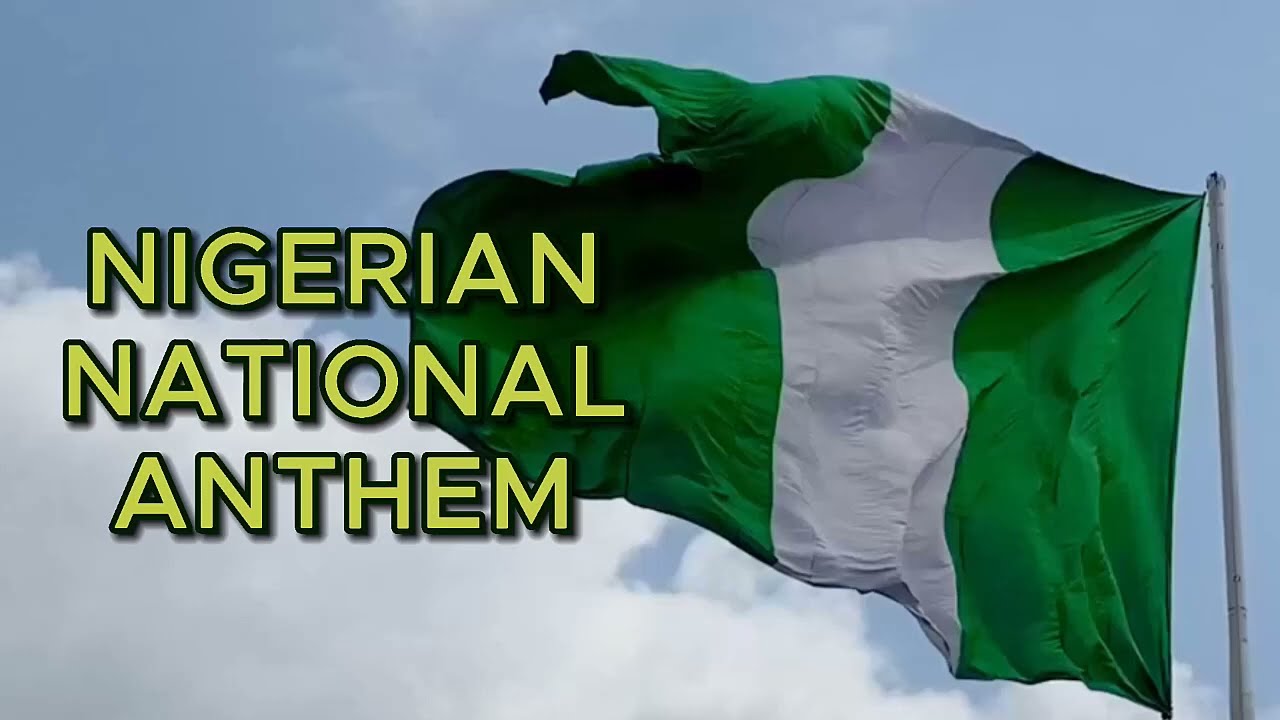

By Evangelist (Dr.) Noyo Anthonia Kubeyinje-Edem, Hope For the Family.
Nations have their national anthems and pledges of allegiance to their flags which the citizens and foreigners residing in those nations learn and recite at important national events and other important gatherings of people. The children sing the anthems and recite the pledges of allegiance at their school assemblies. Noteworthy, the lyrics of the national anthems and pledges embody the people’s struggle for independence while echoing the frustration, fear, hopelessness, loss, and victory shouts citizens experience during tough times in their history.
Therefore, the national anthems and the pledges of allegiance to the flags of nations are historic statutes of actual life events that these nations passed through and their resolve to remember the heroes who fought gallantly to earn independence for their nations. Some heroes died in the battles that ensued as a result of fighting for their nations’ struggles to attain independence.
We should see the national anthems and pledges of countries as oaths that the citizens take to defend their countries by agreeing to obey the laws and being responsible citizens who contribute to their country’s development. They also acknowledge the sacrifices of people who died for their independence.
I was recently reflecting on how Nigerians view the national anthem and pledge of allegiance to the Nigerian flag. Do we actually think about the meaning of the words that we sing and recite or do we merely just sing along without reflecting on what we are doing? I have had the privilege of observing Americans sing their national anthem and recite the pledge of allegiance to the American Flag. Apart from the occasion being a very emotional experience for everyone as they remember how passionately their soldiers fought for their independence, one can feel the sacredness of the moment and the resolve of the citizens to protect their union and serve their country.
My purpose in referring to the American approach to singing the American national anthem and reciting the pledge is to highlight something good that I believe that Nigerians should emulate with a resolve to embark in serious nation-building. We must sincerely demonstrate the willingness to protect the sovereignty of our union, and the territorial integrity of Nigeria as our contribution to the sacrifices of our “heroes past.” The national anthem and pledge are oaths that should be taken with the seriousness they deserve. When a person takes an oath, the expectation is that the person understands the implication of what they are doing and they are obligated to fulfill the terms of the oath. Therefore, each time we sing the Nigerian national anthem and recite the pledge of allegiance we are intentionally and understandably agreeing that we as a people will abide by the oath that we are taking. This implies that we will protect the country; contribute our quotas to nation building and be law abiding citizens of the country.
Furthermore, we agree that we will not mismanage or embezzle the commonwealth of the nation. It is necessary for us to re-examine our understanding of what we do when we sing the national anthem and say a pledge of allegiance. There is a need for a public enlightenment campaign on this topic in order to ensure that we all understand the meaning of the national anthem and the pledge of allegiance to the Nigerian flag. To build a God fearing, stable, peaceful, and progressive nation of leaders and citizens, there is a need for Nigerian codes of conduct reflective of the Nigerian national anthem and pledge of allegiance. This is an effort that can unite us as a country with a diversity of religions, traditions, and cultural beliefs. While we see ourselves as people from different ethnic, cultural and religious backgrounds, the national anthem, and pledge of allegiance encourage us to see ourselves as united in brotherhood. Our strength as a people is in standing on this brotherhood; therefore Nigerians should not be divided on the basis of ethnicity or any other considerations that negate our ability to dwell peacefully amongst one another as one united country and people.
We have not demonstrated that we understand the Nigerian national anthem or have any respect for the pledge of allegiance when we impose three ethnic groups, namely Hausa/Fulani, Igbo, and Yoruba on the rest of the country. Nigeria is a country of more than 250 nations, so how did we arrive at the concept of three major ethnic groups controlling the leadership of the country?
I believe that if we consciously enshrine the national anthem and pledge of allegiance into our daily living, we will have citizens who understand their civic responsibilities to the country and its citizens. Hopefully, we may see a reduction in the vandalization of public properties, public officials embezzling public funds and all the societal vices with which we have been battling. Until we try a new initiative geared toward the progressive growth of our country and its citizens, we may never know the best option or approach that can resolve some of the problems confronting us. In conclusion, the next time that we sing the Nigerian national anthem and recite the pledge, let us do so with the seriousness with which an oath is taken and make up our minds to do what we as a people have agreed to do.














Leave a comment