

A Special Report by the Pioneers of Nigerian Journalism
They built it from nothing.
Four journalists, all of them young enough to believe that Nigeria deserved a press that told it the truth, sat down in 1984 and decided to create something permanent. Dele Giwa. Ray Ekpu. Dan Agbese. Yakubu Mohammed. What they produced was not merely a magazine. Newswatch, which distributed its first edition on January 28, 1985, changed the format of print journalism in Nigeria and introduced bold, investigative formats to news reporting in a country that had been fed propaganda for decades.
Dele Giwa paid for that boldness with his life. He was killed by a mail bomb delivered to his home in Ikeja, Lagos, on October 19, 1986. Nobody was ever prosecuted. Nobody ever answered for it. The remaining three founders did not shut the magazine down. They kept publishing. That tells you everything you need to know about what Newswatch meant to the men who built it.
For nearly three decades, the magazine survived military repression, economic hardship, and the slow death of Nigeria’s print industry. It survived because its founders refused to let it die on their watch. What they could not survive was the man who arrived in 2011 with a briefcase, a silk agbada, a Harvard LLM, and a smile wide enough to blind a room.
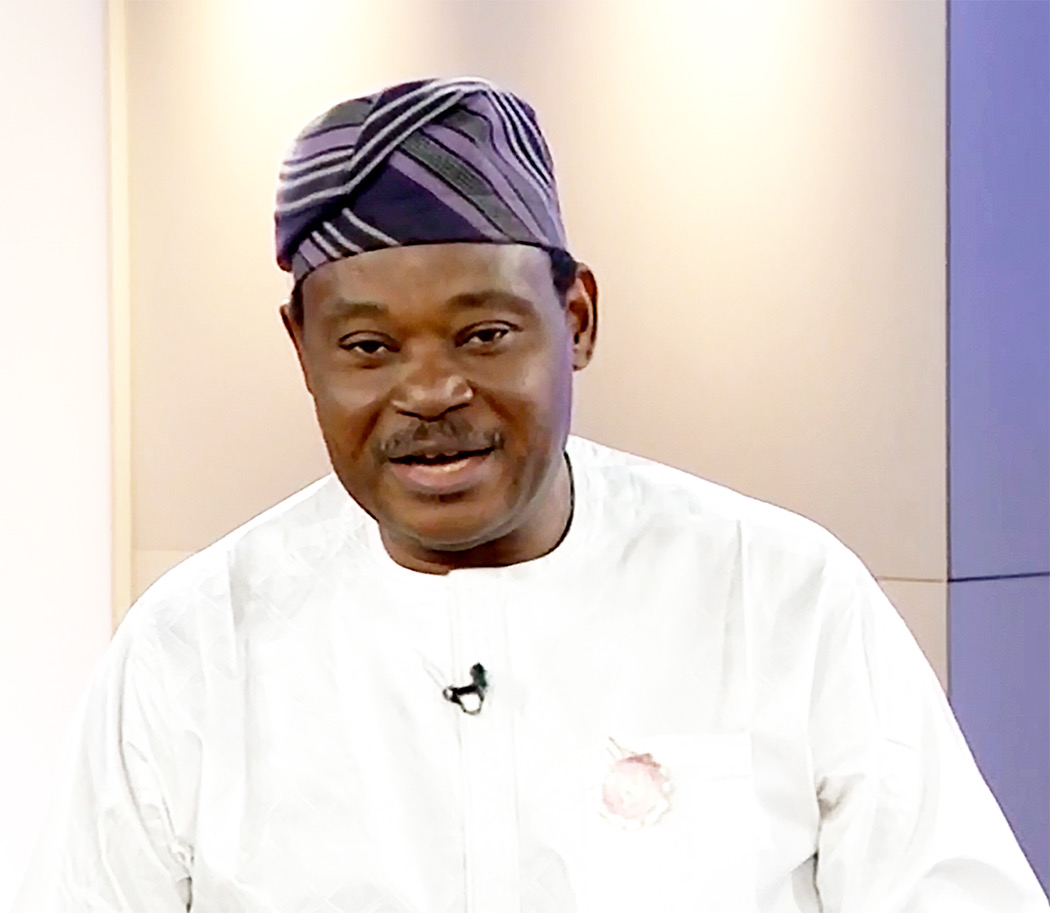
His name was Jimoh Ibrahim.
THE HANDSHAKE THAT BECAME A DEATH WARRANT
One of their own advertisement managers, Bankole Makinde, introduced Ibrahim to the founders as a possible core investor. Ray Ekpu, Dan Agbese, Soji Akinrinade, and Yakubu Mohammed walked into the warm embrace of Barrister Jimoh Ibrahim in May 2011.
They were not naive men. They had survived Abacha’s detention cells. They had buried Giwa. They had navigated the treacherous politics of Nigerian media through five military governments. But nothing in their experience prepared them for the particular kind of destruction that Jimoh Ibrahim carried into a room.
There was nothing to indicate to them that they were about to sign the death warrant of their company. They did not anticipate that any fate worse than their 13-day ordeal in Abacha’s gulag would come their way again. But the calamity that befell them after a handshake with Jimoh Ibrahim was, in Yakubu Mohammed’s own words, as painful as death.
The agreement looked straightforward. On May 5, 2011, the directors of Newswatch Communications Limited signed a Share Purchase Agreement with Jimoh Ibrahim and his Global Media Mirror Limited for the sale of 51 percent of the shares of Newswatch Communications Limited. The share purchase price was N510 million, which he was to pay no later than May 5, 2011, the date of the completion board meeting.
He came to the newsroom that same day. He introduced himself to the staff as the new chairman. He announced that the founders were being retained as consulting editors and non-executive directors. The news ran in several newspapers the following morning, including Ibrahim’s own National Mirror. For the 15 months that the magazine was published with him as chairman, their names were listed every week as directors of the company.
What nobody told the staff that day was one simple fact. Ibrahim had not paid a naira.
Ibrahim never paid the N510 million before that day. He never paid it on that day. He never paid it after that day. The founders state that up to this day, he has not paid for the said shares. Yet he tried by every means to own the shares of a company he never paid for.
To this day, Jimoh Ibrahim has never presented a receipt in any court proceeding. He has never produced a share certificate. He has never answered the three questions that the founders posed publicly and repeatedly: To whom did he pay? When did he pay? By what means did he pay?
THE EVICTION
Ibrahim moved fast once he was inside the building.
Within a couple of months, Ibrahim did away with the quartet before they knew what was happening. They were humiliated out. The men who had defined Nigerian journalism for three decades were pushed out of their own magazine by a man who had not paid for it.
In August 2012, the founding directors of Newswatch stated publicly that they would act to forestall the publication’s destruction after Ibrahim closed the magazine down. It was too late. The magazine that had once printed 100,000 copies weekly was off the streets. The staff were stranded. The archives went dark.
Ibrahim then went further. He took Ray Ekpu, Dan Agbese, Yakubu Mohammed, and Soji Akinrinade to the Federal High Court in Lagos, claiming that they had retired from the company on May 5, 2011, and were no longer directors. He sued the men he had displaced. He sued them to finish what the unpaid acquisition had started.
Nigeria watched. And said nothing loud enough to matter.
THE COURT FIGHTS
The founders fought back. For years.
Three founders of Newswatch obtained a judgment against Ibrahim at the Federal High Court in Lagos, before Justice Ibrahim Buba. The court granted the petitioners’ prayers and ruled that Ibrahim’s actions were unjust, unfair, and unlawful, and violated the terms agreed between him and the owners of the publication.
The judge set aside the contract based on the Share Purchase Agreement and awarded special damages against Ibrahim and his company for loss of business profit since August 2012. He also gave an order of perpetual injunction restraining Ibrahim and his company from further interfering in or assuming management and control of Newswatch.
Ibrahim’s response was immediate and revealing. Immediately after the judgment by Justice Buba, Ibrahim registered a new company called Newswatch Times Limited to circumvent the judgment of the court, in an attempt to publish a newspaper with the name Newswatch, which the court had asked him to stop publishing.
He renamed it Daily Newswatch. Then Newswatch Times. New shells, same ambition. The legal battles continued across multiple courts, multiple years, multiple filings. While lawyers argued, the magazine stayed dead.
WHAT DIED WITH THE MAGAZINE
Dan Agbese, co-founder of Newswatch, died in November 2025. Yakubu Mohammed, another co-founder, died in the early hours of January 14, 2026, after battling an undisclosed ailment. Until his death, Mohammed was fully involved in the legal battles to reclaim Newswatch from Senator Jimoh Ibrahim. With Mohammed’s passing, only Ray Ekpu remains alive of the original founders.
They fought this battle until they died. That is the sentence that should be carved above every journalism school in this country. They built something lasting, watched a man take it without paying for it, and spent their remaining years in courtrooms trying to get it back.
They died fighting.
Yakubu Mohammed told the story himself before he went. He said the calamity that followed the handshake with Jimoh Ibrahim was as painful as death. He said Newswatch had been off the streets for 13 years at the time he wrote those words. He had not seen his life’s work on a newsstand in over a decade.
That is what Ibrahim took from him. Not just shares. Not just a masthead. He took the last chapter of a man’s professional life and replaced it with courtrooms and grief.
A FINAL WORD FROM THE FOUNDERS’ LEGACY
What Newswatch represented was not nostalgia. It was proof. Proof that Nigerians could build institutions of genuine national consequence from nothing but vision, courage, and relentless professional standards. Dele Giwa gave his life for that proof. Agbese gave his last years. Mohammed spent his final breath still in legal battle for what they built together.
Jimoh Ibrahim walked into that history in May 2011 and paid nothing for it. Not the N510 million he owed. Not the debt to the founders’ legacy. Not a single naira of reckoning for what he took from a generation that had already sacrificed too much.
Behind every corporate collapse orchestrated under Ibrahim’s tenure are the wrecked lives of real Nigerians. The Newswatch story makes that personal in a way that balance sheets cannot. These were not anonymous depositors. These were the men who taught Nigeria what a free press looks like.
Their magazine is gone.
Two of them are gone.
The man who took everything from them now sits in the Senate and has been nominated to represent Nigeria at the United Nations.
If that does not tell you something precise and painful about where Nigeria stands right now, read it again. Read it slowly. Because the story is not finished, and the record never lies.
The record stands. The silence is Nigeria’s to own.





Leave a comment