

By Okoi Obono-Obla
Great Imo Jonathan has written a long reply to my article. It is long on abuse, long on quotations, and long on red herrings. It is short on one thing: an answer.
He does not answer the point of substance.
My point was simple, and I repeat it so that it cannot be evaded again: an opposition that has no policy, no alternative vision for security, the economy, jobs, education and national unity, and which instead preaches Rig and Die to electoral officials and fellow citizens, is purposeless, rudderless, and dangerous.
Jonathan has not told Nigerians what the opposition will do differently on insecurity. He has not told Nigerians its economic programme. He has not told Nigerians its plan for power, for jobs, for fiscal federalism, for education. He has not told Nigerians how it will govern.
Instead, he says: APC said it too.
That is not a rebuttal. That is the fallacy of tu quoque, you too. Even if every quotation he assembled were true, accurate and in context, it would not prove that Rig and Die is right, lawful or wise. It would only prove, at most, that others have also spoken irresponsibly in the past. Two wrongs do not make a right. A past error does not license a present threat.
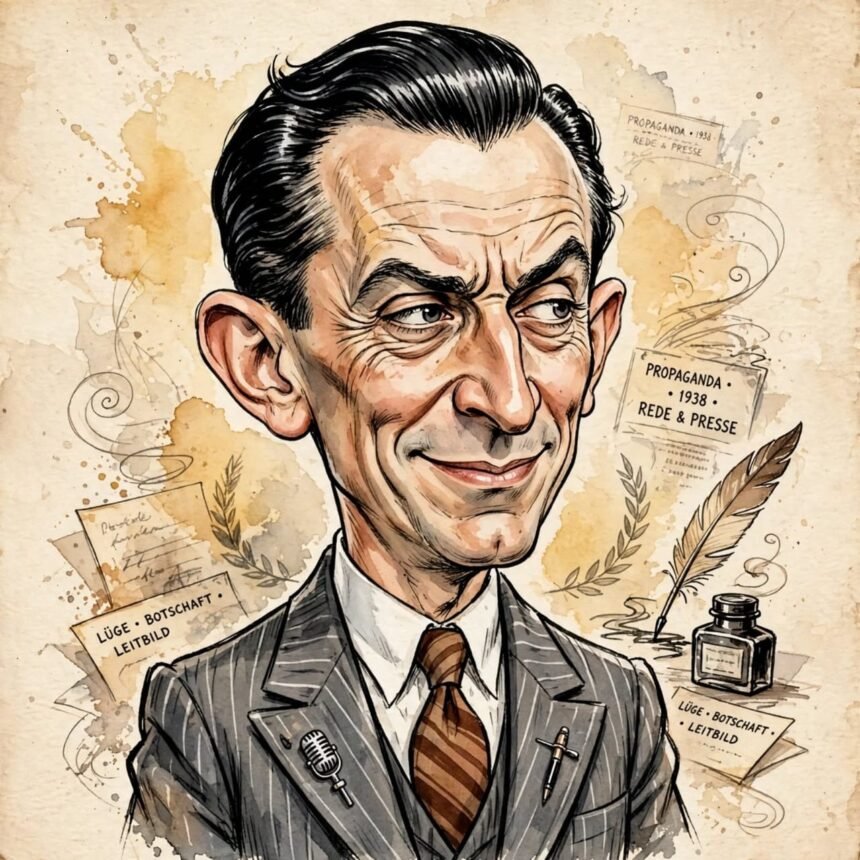
1. Abuse is not argument. It is Goebbels method.
Rather than answer my argument, Jonathan resorts to abuse. He abuses lawyers as liars. He calls me the lying lawyer and APC propagandist. He brands, he labels, he sneers.
That is not debate. That is propaganda.
And it is Jonathan, not me, who is in the mould of Joseph Goebbels of the Third Reich.
Goebbels did not engage his opponents. He caricatured them. He repeated a big lie until repetition made it sound like truth. He turned every opponent into a liar, an enemy, a propagandist, so that no one would pause to hear what the opponent actually said. He substituted slogans for substance, frenzy for facts, and hatred for reasoning.
That is exactly what Jonathan is playing today.
Call your opponent a liar often enough, and you hope Nigerians will stop asking whether what he said is true. Call him a propagandist often enough, and you hope Nigerians will stop asking what your own programme is. Shout lying lawyer loudly enough, and you hope no one will notice that you have not answered a single proposition in my article.
It will not work. Nigerians are not that easily fooled. Abuse is the confession of a man who has no argument.
I did not write about personalities. I wrote about principle: Nigeria cannot build democracy on threats of death. Jonathan cannot answer that principle, so he attacks the person. That is Goebbels, not debate.
2. Rig and Roast is not Rig and Die.
Jonathan himself quotes Tinubu in 2014 as saying: be ready to protect your votes. Protecting votes is lawful civic vigilance. It is what party agents, observers and citizens at polling units are meant to do.
Rig and Die, as preached by the opposition today, is not a call to protect votes. It is a threat addressed to those who conduct elections and to fellow citizens: if you are perceived to have rigged, you will die. That is not vigilance. That is intimidation. That is jungle justice dressed up as democratic rhetoric.
To collapse the two into one is intellectual dishonesty.
3. A metaphor is not a marching order.
Grab it, snatch it and run with it was, in its context, a metaphor for political determination, do not sit back and expect power to be handed to you. Jonathan strips the metaphor of context and converts it into a literal instruction to steal elections.
Similarly, All is fair in politics is a statement about the competitiveness of politics, not a licence for murder. Jonathan’s leap, If all is fair, then killing opposition members is fair, is his own invention. It is not logic. It is a straw man.
If Jonathan has evidence that the President ordered any killing, let him produce it. He has none. He has inference piled upon innuendo.
4. Allegation is not proof.
Jonathan lists attacks in Delta, Benue, Edo, Enugu, Kano and elsewhere, and the tragic deaths in Uduere, Ughelli North, including Moses Anaughe and Akima Efemena Umukoro.
Every unlawful killing in Nigeria must be investigated, and every perpetrator prosecuted, whoever they are. No decent Nigerian will celebrate the death of a new father or any citizen on a campaign trail.
But Jonathan uses those deaths as a shield. He does not ask the obvious question: does the killing of opposition supporters justify the opposition threatening to kill others?
Does one alleged crime license another threatened crime? If Jonathan answers yes, he has abandoned the rule of law. If he answers no, his entire essay collapses.
More than that, Jonathan begs the central question of attribution. An allegation by a party spokesman is not a judicial finding. A viral video is not proof of sponsorship. Many of the incidents he cites are contested, are under investigation, or involve rival groups, cult clashes, communal disputes and criminal gangs that have no party card.
Jonathan does not wait for investigation. He does not distinguish between APC members, APC supporters, hired thugs, local rivals and common criminals. He lumps them all together and writes: APC did it.
That is not analysis. That is propaganda.
Some of these allegations of violence cannot be pinned on the APC at all. Others are the product of local rivalries and criminality that no serious investigator would attribute to a national party without evidence. Jonathan’s method is to collect every tragedy in Nigeria, attach the APC label to it, and then claim he has proved a pattern. That is not proof. That is labelling. That is Goebbels again: repeat the label until it sticks.
5. The hypocrisy of selective grief: Ogoja exposes it.
Nothing exposes Jonathan’s method more clearly than Ogoja.
And I speak here not from newspaper reports alone. I speak from what I saw with my own eyes.
On 27 November 2026, in Ugep, Yakurr Local Government Area of Cross River State, I ran into my relative, Mrs Lovina Eteng. She was limping, with a broken leg.
I asked her what had happened.
She told me she was a victim of the horrendous attack on the wife of the Governor of Cross River State and on women in Ogoja.
Let Jonathan sit with that image: a woman, a relative, limping in Ugep with a broken leg, because she went to an empowerment programme for women in Ogoja and came back broken.
The public reports of that day, 22 October 2026, at Bishop MacGetrick Institute of Technology, Ogoja, speak of a stampede as a crowd scrambled for empowerment items at the programme of the wife of the Governor, Bishop Eyoanwan Bassey Otu, for women from Ogoja, Yala, Obudu, Bekwarra and Obanliku. The police confirmed the death of Mary Christiana Oga of Imaje, Yala LGA. Another victim, Rose, later died. Several others were injured.
Mrs Eteng’s account tells us what those dry reports conceal: for the women who were there, this was not an abstraction. It was an attack on their bodies. It was terror at a programme meant to empower them.
Where was Jonathan’s sober mourning then? Where was his demand for restraint, for investigation before attribution, for respect for the dead and the injured?
Instead, Ogoja was swiftly turned into a campaign weapon against the Governor’s wife. Grief became politics. The dead became talking points. A woman with a broken leg became an inconvenience to a narrative.
Yet when deaths are alleged at an opposition event, Jonathan demands national mourning, instant condemnation, and instant attribution to the APC, without investigation, without evidence, without waiting for the police.
That is the hypocrisy at the heart of his essay: violence is glossed over, weaponised, or politicised when it touches APC programmes and APC supporters, and then treated as a national emergency demanding frenzy when it is alleged against the opposition.
If we are serious about ending violence, we must condemn all violence, violence against the opposition, violence against the ruling party, violence against ordinary citizens who are neither. And we must insist on investigation before attribution.
Jonathan will not do that, because a balanced condemnation would deprive him of his only argument: that the APC is uniquely violent, and therefore the opposition is entitled to threaten Rig and Die.
It is not entitled to do so. No party is entitled to answer alleged violence with threatened violence.
6. Rig and Die cannot be redefined after the fact.
When caught preaching death, Jonathan now says: It means if you rig, your rigging will die. If you rig, the people’s patience will die.
That is revisionism. If that was what the opposition meant, it would have said: Rig and Fail. It would have said: Rig and Be Prosecuted. It would have said: Rig and Face the Law.
It did not. It said: Die.
Words have meaning. In a country with a history of electoral violence, Die is not a metaphor. It is a threat. And threats directed at electoral officials, security personnel and rival supporters chill participation, discourage honest citizens from serving as ad hoc staff, and invite reprisals.
Jonathan cannot preach Die on Monday and reinterpret it as poetry on Tuesday.
The question remains, and Jonathan has run away from it:
What is the opposition for?
What is its alternative to the present government’s economic reforms? What is its alternative security architecture? What is its plan for state police, for local government autonomy, for power, for agriculture, for youth employment?
Until the opposition answers those questions, it will remain what I called it: purposeless and rudderless, loud on slogans, silent on policy.
And until it retracts Rig and Die, it cannot claim to be a victim of violent rhetoric while practising violent rhetoric itself.
To call me an APC propagandist or a lying lawyer begs the question. It does not answer the argument.
If Jonathan disagrees, let him defend Rig and Die on its merits. Let him say plainly: Yes, we mean that those who rig should die. Let Nigerians hear him and judge him.
He will not say it, because he knows it is indefensible.
That evasion is the real confession in his essay.
Let the opposition drop the gospel of death. Let it present a programme. Let it trust the courts, the ballot, and the law.
That is how democracies are built. Not by Rig and Die. Not by Rig and Roast. Not by any language of blood.
Our votes must count. Our people must live.