by Jacobs Chimezie Happiness (Hapijo)
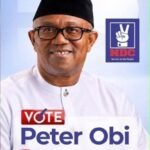
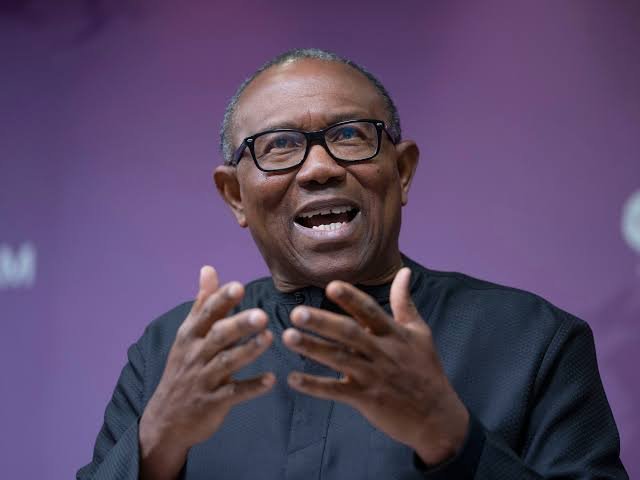
There are certain lines a person aspiring to lead a country must never cross, and one of them is showing contempt for the national symbols that embody the sovereignty, identity, dignity and collective aspirations of that country. Unfortunately, Peter Obi, a man who wants to occupy Nigeria’s highest political office, has demonstrated an astonishing lack of appreciation for this fundamental responsibility.
At the Nigeria Democratic Congress (NDC) town hall meeting in Lagos on Thursday, November 12, 2026, Peter Obi reportedly remained seated when the officially recognised Nigerian National Anthem, “Nigeria, We Hail Thee”, was to be recited, only to stand when the former national anthem, “Arise, O Compatriots”, was subsequently rendered. The incident, captured in a video that has since attracted widespread attention, is not merely an embarrassing political spectacle; it raises serious questions about his understanding of national loyalty, constitutional responsibility and the dignity of the Nigerian state.
What exactly was Peter Obi attempting to communicate by such a theatrical and disgraceful display? Is the national anthem now subject to his personal political preferences? Has Nigeria become a country whose national symbols can be selectively respected or discarded according to the convenience of an aspiring presidential candidate?
This is the height of political arrogance and an unacceptable demonstration of selective patriotism.

Nigeria is not Peter Obi’s personal property, neither is the national anthem an instrument for expressing political grievances or advancing partisan interests. The national anthem belongs to every Nigerian, irrespective of political affiliation, ethnicity, religion, social standing or personal preference. It represents the sovereignty of our country and the collective identity of more than 200 million citizens.
The law on this matter is unequivocal.
The National Anthem Act, 2024, signed into law by President Bola Ahmed Tinubu on May 29, 2024, restored “Nigeria, We Hail Thee” as Nigeria’s official national anthem.
Section 1 of the Act expressly establishes “Nigeria, We Hail Thee” as the National Anthem of the Federal Republic of Nigeria. Section 2(1) recognises the anthem as a national symbol and sign of authority, while Section 2(2) expressly requires all persons, individuals and corporate entities to respect the anthem and preserve its dignity.
More importantly, Section 5(a) of the same Act provides that whenever the national anthem is performed or sung, those present shall stand and conduct themselves respectfully.
Furthermore, Section 24(a) of the 1999 Constitution of the Federal Republic of Nigeria, as amended, expressly provides that it shall be the duty of every citizen to abide by the Constitution, respect its ideals and institutions, the National Flag, the National Anthem, the National Pledge and legitimate authorities.
Consequently, Peter Obi’s reported conduct raises legitimate questions about his commitment to the constitutional duties expected of every Nigerian citizen. A man who seeks to become President should be setting the highest example of respect for the Constitution and national institutions, not conducting himself in a manner that appears to undermine them.
A presidential candidate must understand that patriotism is not a costume worn at political rallies. It is not a slogan deployed when convenient, nor is it a political commodity to be manipulated for applause. Patriotism demands respect for the country, its laws, institutions, national symbols and constitutional order, even when one disagrees with the government in power.
The national anthem is not the personal property of President Bola Ahmed Tinubu. Neither is it an APC anthem. It is the anthem of the Federal Republic of Nigeria. Respecting it is not an endorsement of Tinubu’s administration, just as standing for it does not amount to supporting the APC. It is an affirmation of one’s allegiance to Nigeria.
This is precisely why Peter Obi’s reported conduct is so disturbing. It suggests a dangerous confusion between political disagreement and national responsibility. A man seeking the presidency must be able to distinguish between his personal political preferences and the enduring symbols of the Nigerian state.
If he disagrees with the restoration of “Nigeria, We Hail Thee”, there are constitutional and democratic avenues through which such disagreement can be expressed. He can make his arguments, canvass public opinion and pursue legislative change through the appropriate democratic institutions. What he cannot reasonably expect is that the laws and symbols of the country should bend to his personal preferences.
There is also something deeply contradictory about selectively celebrating an anthem that is no longer officially recognised while refusing to accord the same respect to the anthem that the law currently prescribes. The old anthem may evoke nostalgia for some Nigerians, but nostalgia does not supersede legislation. A democracy operates on the supremacy of law, not sentimental attachments or individual preferences.
Peter Obi must understand that the presidency is not a platform for personal theatrics, political symbolism or emotional grandstanding. It is an office that demands discipline, maturity, sound judgment and an unwavering commitment to the Nigerian state.
Nigeria does not need a president who treats national symbols as instruments of political convenience. It needs a leader who understands that national unity must transcend personal ambition and partisan calculations.
The question Nigerians should ask is simple: If Peter Obi cannot demonstrate the elementary courtesy and constitutional respect expected of a citizen during the national anthem, what assurance does he offer that he will uphold the dignity and authority of the Nigerian state as President?
This is not about whether one prefers the old anthem or the restored anthem. It is about whether one respects the authority of the law and the sovereignty of one’s country.
Peter Obi owes Nigerians an explanation. More importantly, he owes the Nigerian state an apology for the impression created by this unfortunate incident.
The presidency is not a reward for political popularity, nor is it an entitlement for anyone who wishes to occupy Aso Rock. It is a solemn national responsibility that demands unquestionable respect for the Constitution, the national institutions and the symbols of our collective identity.
A man who seeks to govern Nigeria must first demonstrate that he respects Nigeria.
Anything less is an affront to the dignity of the Nigerian nation.
—Jacobs Chimezie Happiness (Hapijo)