By Okoi Obono-Obla
Kwara State was created during the 1967 state creation exercise, at a time when the country was torn apart by a tragic national crisis that pushed it to the brink of collapse. The young military leader, General Yakubu Gowon, supported by able and competent civil servants trained in the best traditions of the firm but restrained British civil service, came up with a shrewd manoeuvre to pull the country back from the brink. He galvanized the populace to support the move and came up with a masterstroke: the creation of 12 states, especially in minority areas that had been suppressed and marginalized by the suffocating political system left behind by the departing colonialists in 1960 — a system whose contradictions found expression when the military toppled the civilian government.
Geographically, Kwara found itself in Northern Nigeria from the time when the colonial powers were plotting at the Berlin Conference of 1884-1885, convened by the European powers at the behest of the German Chancellor, Otto von Bismarck, to forge an agreement on how to regulate and share Africa among themselves. Kwara was in that part of Northern Nigeria where British and French colonialism embarked on a sort of rat race to appropriate Nikki, which today lies on the border between Nigeria and the Republic of Benin, where the Bariba (Baatonu or Borgu) ethnic group predominates. At creation on May 27, 1967, the state was made up of the former Ilorin and Kabba Provinces of the then Northern Region and was initially named the West Central State.
This history explains Kwara’s enduring identity crisis. The state is ethnically and culturally torn between the South-West and North-Central geopolitical zones, and its politics has always been a contest between forces that represent the progressivism of the South-West and the conservatism of Northern Nigeria.

In the First Republic, Chief Obafemi Awolowo of the Action Group struggled to establish a foothold in the Ilorin and Kabba Provinces. He wanted the Yoruba of the North to be merged with the West, but he could not really succeed, and they remained in the orbit of influence of the Northern Peoples Congress (NPC), which dominated the Northern Region.
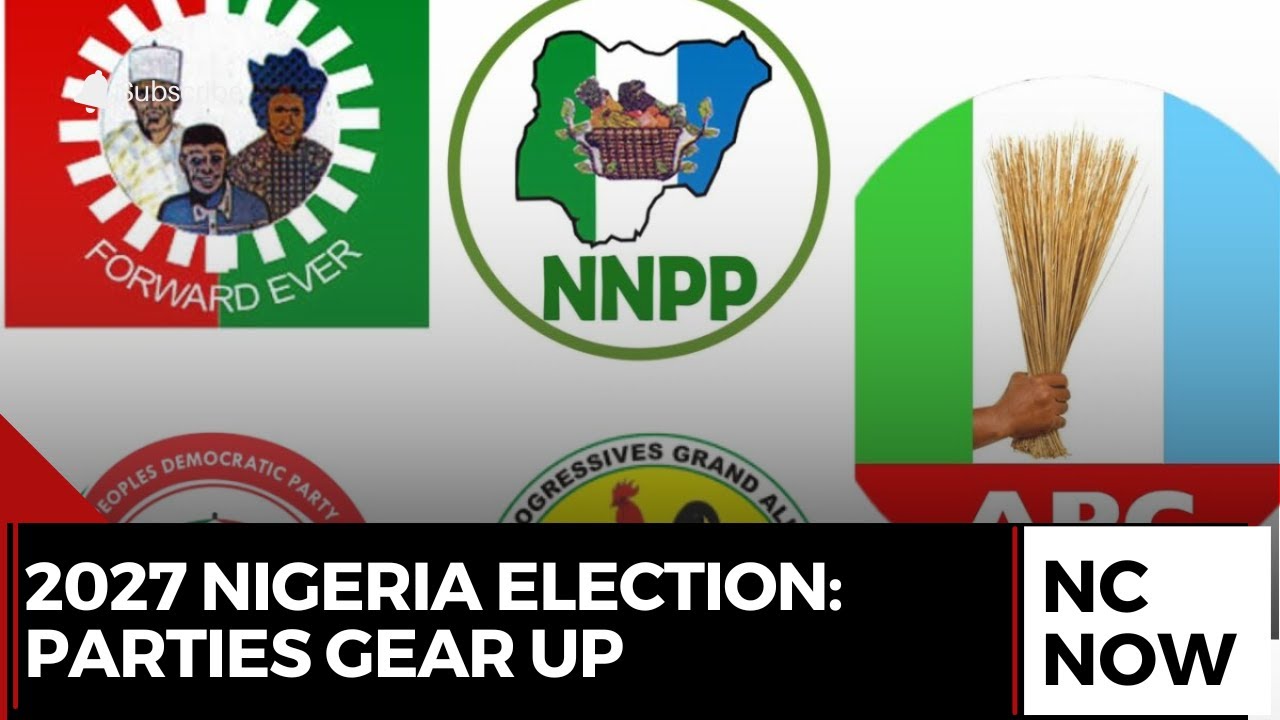
After a long and frustrating bid by progressive politicians to take Kwara out of the conservative circle, it finally succeeded in 2015 when the newly formed All Progressives Congress (APC), basking in enthusiastic support for the candidacy of President Muhammadu Buhari, won overwhelmingly in Kwara State.
Today, the governorship candidate of the APC in Kwara State for the 2027 election has been chosen from the Bariba ethnic nationality — Engr. Yakubu Danladi Salihu of Gwanara, Baruten LGA, the current Speaker of the Kwara State House of Assembly. His emergence is historic, as he is the first candidate from the Borgu Kingdom to secure a governorship ticket from a ruling party since Nigeria’s return to democracy in 1999.
THE 2023 AND 2027 PERMUTATIONS
In the 2023 governorship and presidential elections, the APC won in Kwara State. Bola Ahmed Tinubu (APC) polled 263,572 votes against Atiku Abubakar’s 136,909, while Governor AbdulRahman AbdulRazaq was re-elected with 273,424 votes, winning all 16 LGAs.
From all available trends and permutations, the APC is expected to win Kwara State in 2027. Kwara has a voting strength of about 1.8 million voters — INEC listed 1,695,927 registered voters in 2023 and 1,916,376 for 2027. All the factors that enhance the fortunes of the APC — such as the incumbent governor’s control of all the grassroots structures, systems, apparatuses and the people that matter — are in the hands of the APC.
Peter Obi is a member and the presidential flagbearer of the Nigeria Democratic Congress (NDC) for the 2027 general election. He left the Labour Party (LP) after the 2023 presidential election and later joined the African Democratic Congress (ADC), before defecting to the NDC. He was ratified as the NDC presidential candidate at the party’s convention in Abuja and now co-chairs the party’s 155-member National Campaign Council alongside its National Leader, Senator Henry Seriake Dickson, with Rabiu Musa Kwankwaso as vice-presidential candidate.
Atiku Abubakar is now the presidential aspirant of the African Democratic Congress (ADC). The PDP, under which Atiku made a strong showing in 2023, has imploded and today is a shadow of itself, and the remaining faction of the PDP dominant in Kwara State is sympathetic to the Rainbow Coalition which has aligned with the aspirations of President Bola Ahmed Tinubu. Therefore, the 136,909 votes which Atiku garnered in 2023 may likely go to President Tinubu in 2027.
CONCLUSION AND PROJECTIONS FOR 2027
Kwara State has come full circle — from its creation as a strategic tool to manage minority fears, to its current status as a battleground between its South-West cultural affinity and North-Central political identity.
The emergence of a Bariba son is politically symbolic. It satisfies the long-standing agitation of Kwara North for the governorship, historically dominated by Kwara Central. This zoning concession is likely to solidify APC’s base in Kwara North, which gave the party 36.7% of its presidential votes in 2023.
Governorship Projection: The APC remains favourite to retain Kwara Government House due to incumbency and control of all 16 LGA structures. However, internal wrangling over imposition may reduce the margin. Projection: APC 55-60%, ADC 20-25%, NDC 10-15%.
Presidential Projection: The APC will likely win Kwara again. The implosion of the PDP means its 2023 votes will split, with a large portion going to Tinubu. The NDC and ADC, despite national profiles, lack deep ward-level structures in Kwara and will split the opposition vote to APC’s advantage. Projection: Tinubu/APC 58-62%, Atiku/ADC 18-22%, Obi/NDC 12-16%.
In short, Kwara in 2027 will likely remain APC, but the historic candidacy of a Bariba son will redefine the state’s internal power-sharing formula for the next decade.