
by Omowunmi Oladokun
Igbo customary law principles like “ebe nwa shiri lo uwa ya hiri”, a child born within a valid marriage belongs to the husband, and third-party or adulterous claims to paternity are generally unacceptable.
DNA paternity testing is legally acceptable in Nigeria to determine the real father of a Child in Nigeria.
The test may be carried out privately or based on the order of the court especially when there is a dispute on the paternity of a Child or when such questions arises for the determination of a Will or inheritance of the deceased.

Section 165 of the Evidence Act 2023, any child born during a valid statutory or customary marriage—or within 280 days after the dissolution of the marriage (the mother remaining unmarried)—is automatically presumed to be the biological child of the husband.
The Nigerian Courts in plenty of cases have depended on the presumption provided for under Section 165 of the Evidence Act in the determination of the paternity of a child.
This debatable presumption empowers the court to make some inferences as to the paternity of a child. once it is established that such a child was given birth to during the existence of a valid marriage between a man and a woman.
Section 165 of the Evidence Act also presupposes that where a married woman in the course of an extramarital affair gets pregnant and such pregnancy is accepted by the husband, if any claim by a third party is made in respect of such child, the Court is empowered under the Act to presume that the product of such extramarital affair is a legitimate child of the subsisting valid marriage.
Since there is a subsisting marriage, any child from such marriage belong to the husband and not the third party laying claim to it. It doesn’t matter whether there was an extra marital affair or not, as long as the husband accepts it.
Tony Anozia v Mrs Patricia Okwunwa Nnani & Another (2012):
The case was based on the declaration of paternity of the 2nd Defendant to wit: That the claimant is the father of the 2nd Defendant and was born in 1957 by the 1st Defendant, they got a result from the laboratory DNA test and The Court held that under common law, there is presumption of paternity of a child born during the subsistence of marriage, but that is rebuttable when scientific DNA from the hospital laboratory states otherwise.
Idahosa v. Idahosa (2020). The Court held that the statutory presumption of legitimacy under Section 165, noting that while scientific DNA testing is valid, courts will not neglect legal standing stated in S 165 as regards paternity when a marriage subsist.
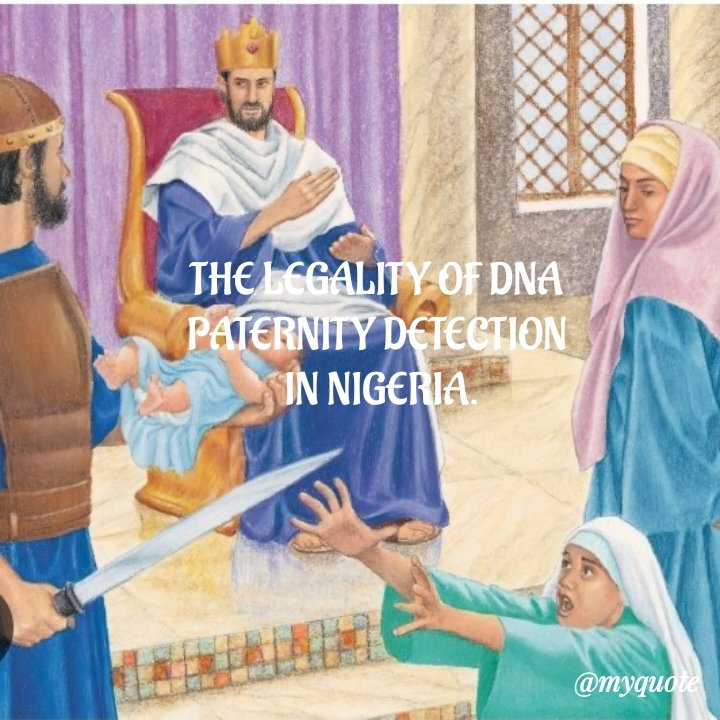
In conclusion, determining the paternity of a Child could be very important majorly due to unfaithfulness in marriage and it remains conflicting because what will the Court do when a woman had an extra marital affair while a marriage subsist and there is a clear evidence from the laboratory on DNA that the child belongs to an unknown boyfriend of the wife (third party). On a lighter mood and by the way, Maybe we follow King Solomon’s wisdom, get a knife and split the baby into two.