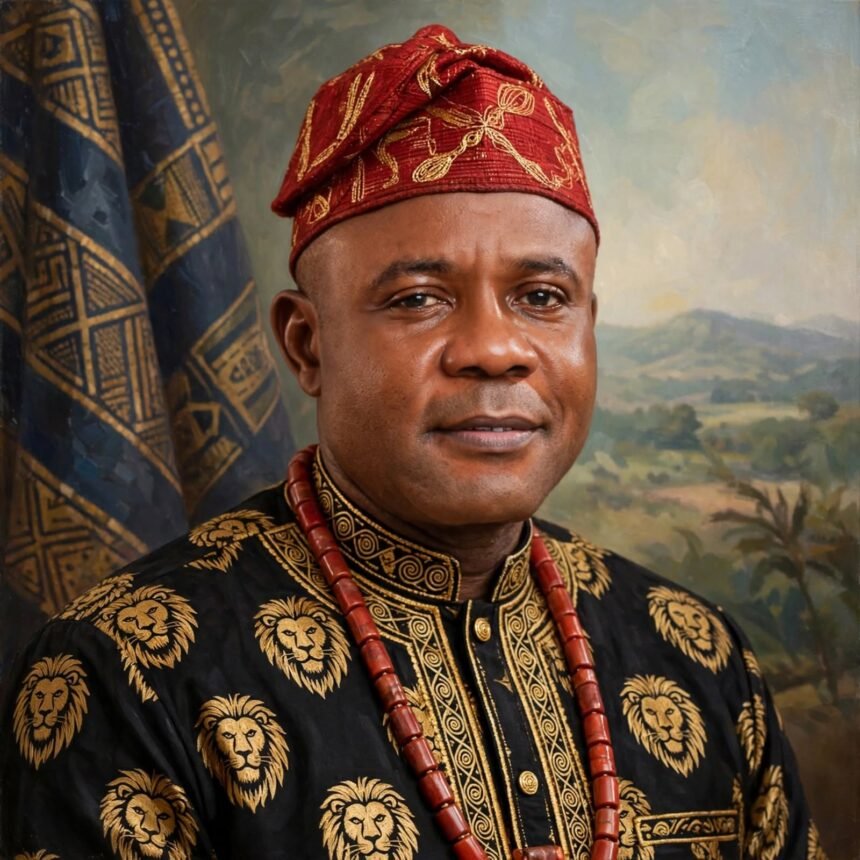
By Okoi Obono-Obla
Enugu has always been a political statement. Created from the capital of the defunct Eastern Region, it voted PDP without interruption from 1999 to 2023. That 24-year dominance ended on the morning of October 14, 2025.
Governor Peter Ndubuisi Mbah, in a statewide broadcast, announced his defection from the PDP to the All Progressives Congress. He did not defect alone. With him went his entire Executive Council, 23 of the 24 members of the House of Assembly, local government chairmen, councillors and over 80 percent of the PDP ward executives. His reason was simple: the unjust treatment of the South-East by the PDP national leadership.
What is on the ballot in Enugu in 2027 shows how total that realignment is.

What INEC Published
For Governorship, INEC cleared 16 candidates on October 11, 2026. The four visible ones are Governor Peter Mbah on the APC platform seeking re-election; former Minister of Innovation, Science and Technology, Chief Uche Geoffrey Nnaji, now flying the PDP flag and filing only his WAEC certificate after a certificate forgery scandal that forced his resignation from President Bola Tinubu’s cabinet; former Permanent Secretary Chief Chinyeaka Ohaa for the Nigeria Democratic Congress, NDC; and Chief Obodoeze Chukwuma Ocho for the African Democratic Congress, ADC. Others include Edwin Alor of Accord, Prof. Jehu Nnaji of NNPP and Okwudilichukwu Ugwu of Labour Party.
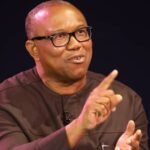
For President, INEC’s final list of 18 candidates has four major tickets: Bola Ahmed Tinubu/Kashim Shettima for APC, Atiku Abubakar/Chibuike Rotimi Amaechi for ADC, Peter Obi/Rabiu Musa Kwankwaso for NDC, and Sandy Ojang Onor/Umaru Babangida for PDP. Obi, it will be recalled, contested in 2023 under Labour, joined ADC on December 31, 2025, resigned on May 2, 2026, and was ratified as NDC candidate on May 29, 2026.
For Senate, the realignment is stark: Enugu East has Chukwu Kelvin of APC, Idoko Mechika of ADC, Asadu Patrick of NDC and Ukwueke Kingsley of PDP. Enugu West has Osita Ngwu of APC, Ani Juliet Nkechi of ADC, Eneh Kingsley of NDC and Amadi Dennis of PDP. Enugu North has Asogwa Ikeje Israel of APC, Chika Idoko Emmanuel of ADC, Asadu Patrick Oziokoja of NDC and Ezeme Nestor Chika of PDP. Senator Ngwu, the incumbent for Enugu West, is now APC.
For House of Representatives, the most telling is Enugu East/Isi-Uzo: former Labour governorship candidate Chijioke Edeoga is now APC.
For State Assembly, 286 candidates are vying for 24 seats, with 56 women. The APC screened 24 aspirants for 24 seats — effectively all 24 incumbents who moved with Mbah will fly APC unopposed.
The Permutation
Enugu in 2023 was a protest. Peter Obi won 428,640 votes, 88.7 percent, sweeping all 17 local government areas. Tinubu scored 4,772 votes. The drivers were the Muslim-Muslim ticket backlash and the pain of the naira redesign that crippled South-East commerce. The vote was moral.
Enugu in 2027 will be a bargain.
On the presidential ballot, I project NDC still wins Enugu but with a reduced margin: Obi/Kwankwaso 55-62 percent. His personal structure remains intact. Tinubu, however, will for the first time secure the constitutionally required 25 percent in Enugu, polling 28-32 percent. That jump from 1 percent to over 25 percent is Governor Mbah’s deliverable. It is made possible by Mbah’s machinery, Tinubu’s state visit of January 4, 2025 where he commissioned 30 Smart Green Schools and 60 Type 2 Primary Health Centres and praised Mbah as focused and result-oriented, and by a growing sentiment that one-dimensional voting has left the South-East politically isolated. Atiku’s ADC will struggle to reach 10 percent in Enugu, weighed down by the perception in the South that it truncates the South’s turn in the presidency. Amaechi as running mate does not change that in Enugu. PDP’s Sandy Onor will be a footnote.
Below the presidency, the pyramid inverts.
For governorship, Mbah wins, and wins big: 58-65 percent. Ohaa of NDC may take 15-20 percent from Obi loyalists who split their ticket, Nnaji of PDP 10-12 percent, Ocho of ADC 5-7 percent. PDP cannot campaign morally when its candidate is facing a forgery trial and cannot produce a degree certificate to INEC. NDC has no ward structure. APC has the entire structure plus performance.
For National Assembly, expect a near sweep: Senate 3-0 APC, House of Representatives 6-2 or 7-1 APC. With Edeoga now APC, the Labour stronghold of 2023 is gone. Only one or two urban seats in Enugu North may stay NDC.
For State Assembly, 24-0 APC. The PDP that ruled Enugu since 1999 will not have a single lawmaker.
That is the meaning of October 14, 2025. It was not just a defection. It was a change of political geography.
Enugu will likely still give Peter Obi a symbolic presidential victory out of sentiment and identity. But it will give APC the governorship, the Senate, the House of Representatives and the House of Assembly out of strategy.
In Nigerian politics, sentiment gives you headlines. Strategy gives you a seat at the table. For the first time since 2015, Enugu is choosing the table.