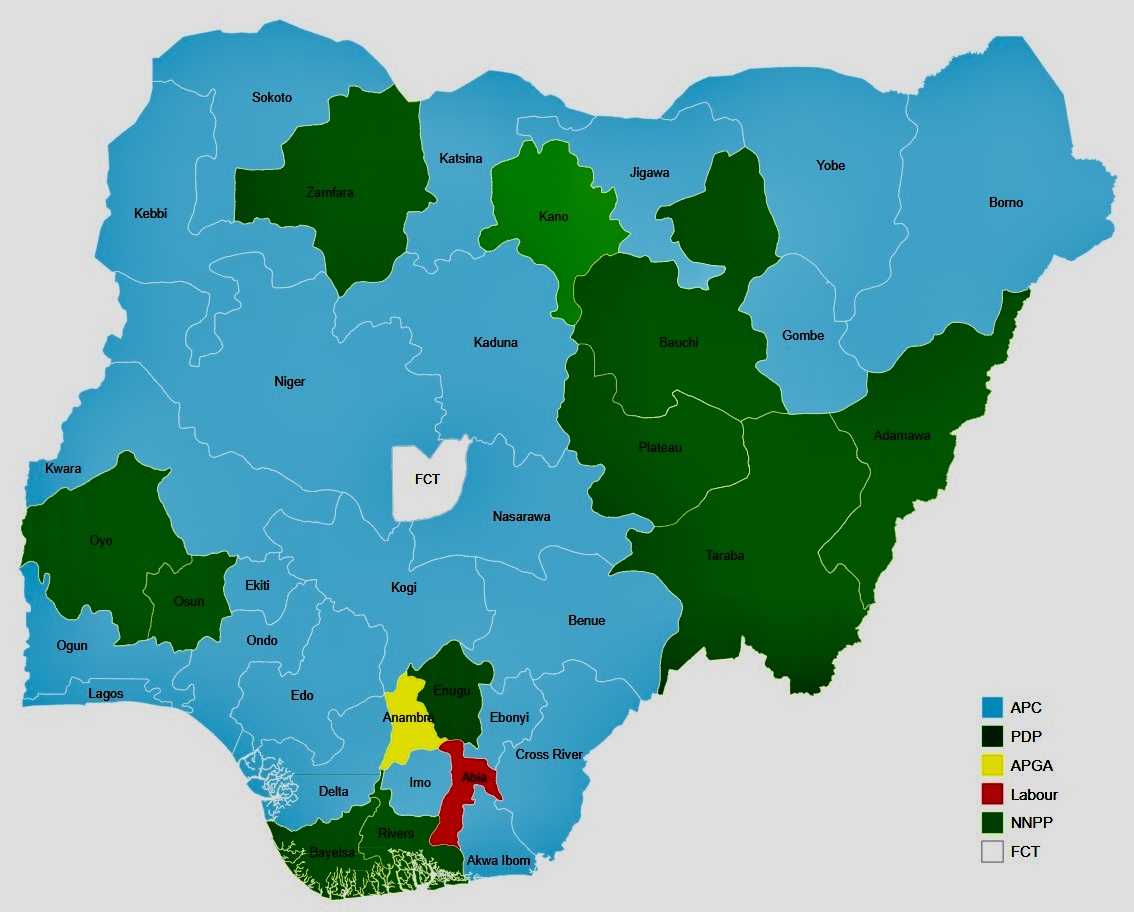
By Okoi Obono-Obla
On 24 September 2026, the Supreme Court of Nigeria, in a seven-member panel led by Justice Adamu Jauro, in SC/CV/495/2026 – INEC v Zenith Labour Party (ZLP), unanimously allowed INEC’s appeal, set aside the judgment of the Court of Appeal delivered on 16 July 2026, restored the judgment of the Federal High Court delivered on 5 May 2026, and reinstated Sections 77(5), 77(6), 77(7) and 84(2) of the Electoral Act 2026. It awarded N2 million costs against ZLP.
The implications are far-reaching for the 2027 general elections.
What the Supreme Court Restored

The Court held that the provisions are not inconsistent with Section 40 of the 1999 Constitution guaranteeing freedom of association.
Section 77(5): Only persons whose names are contained in the membership register submitted to INEC not later than 21 days before primaries, congresses or conventions are eligible to vote or be voted for.
Section 77(6): A party shall not use any other register except the one submitted to INEC.
Section 77(7): A party that fails to submit its register within time shall not be eligible to field a candidate.
Section 84(2): Nomination shall be by direct primaries or consensus.
Section 77(1) and (2) mandate a digital register containing name, sex, date of birth, address, State, LGA, ward, polling unit, National Identification Number (NIN) and photograph. In March 2026, the National Assembly further inserted Subsections 8, 9 and 10 criminalizing dual membership: “A person shall not be registered as a member of more than one political party at the same time.” The penalty is N10 million fine or two years imprisonment or both. Where dual membership is established, both memberships are void.
What INEC Has Said
The Chairman of INEC, Prof. Joash Amupitan, SAN, disclosed on Tuesday 7 October 2026 at the Commission’s World Press Conference and National Stakeholders Meeting that the Commission only received the Certified True Copy of the judgment that morning and that it is under review. He confirmed receipt of complaints from political parties, aggrieved aspirants and the National Assembly.
The more definitive policy direction came from Mohammed Kudu Haruna, National Commissioner and Chairman, Information and Voter Education Committee (IVEC), on Trust TV’s Daily Politics programme.
Haruna made three critical pronouncements:
First, that INEC will announce its final, definitive position on the implications by Tuesday, 13 October 2026, after authenticating the CTC and obtaining legal advice, because as he noted, forged judgments of even the Supreme Court have been presented to INEC before.
Second, that INEC’s position is that candidates whose names were missing from party membership registers submitted within the statutory period will be barred, and affected parties will not be permitted to substitute them. Haruna explained:
“It’s like you committed an offence. And then, you come and benefit from it. You remember cases that we had of some in Zamfara, you remember Plateau? … Once you do that kind of thing, you cannot benefit from it. You are benefiting from it, if you are able to substitute a candidate.”
Third, that INEC interviewed candidates “all the way to the Houses of Assembly” and discovered that some were not listed in their parties’ registers at the time they contested. He warned that “some parties may not be able to finish with even governorship candidates.”
This is INEC speaking as regulator, not as litigant.
The Particular Problem of NDC Candidates Who Left ADC on 3 May 2026
I am particularly concerned about the Nigeria Democratic Congress (NDC) candidates who left the African Democratic Congress (ADC) on 3 May 2026 to join NDC.
The chronology is not in dispute:
May 3, 2026: Peter Obi and Rabiu Kwankwaso, after leaving ADC, formally joined NDC at its national secretariat in Abuja and received membership cards.
May 8, 2026: INEC announced that all 22 registered political parties had submitted their membership registers.
May 10, 2026: Final extended deadline fixed by INEC for submission of registers (extended from 21 April 2026).
May 17, 2026: Obi obtained NDC presidential nomination forms.
May 30, 2026: NDC national convention ratified Obi as presidential candidate, with Kwankwaso as running mate. May 8 to May 30 is 22 days, meeting the 21-day requirement by one day.
On its face, time is on their side. They moved seven days before the 10 May deadline. There were five days between their public defection and INEC’s announcement that all parties had submitted.
But time alone does not save them. What saves them is strict compliance with deregistration procedure under the Electoral Act 2026.
Proper Procedure for Leaving ADC for NDC
Because INEC now maintains a Party Membership Portal that uses NIN to detect dual registration, a mere press statement or waving of a party card is no longer sufficient. A digital member must exit digitally.
The procedure is:
Written resignation to Ward Chairman through Ward Secretary stating full names as in digital register, NIN, polling unit, membership number, with stamped acknowledged copy, and copies to LGA, State and National Secretariats.
Formal demand for removal of name and NIN from ADC digital register, return of membership card and issuance of letter of non-membership.
Affidavit of Resignation deposed to at High Court Registry to negative knowledge of dual membership.
ADC must update its central database and reflect removal in INEC Portal.
Obtain clearance letter from ADC National Secretary confirming delisting.
Only then can fresh capture in NDC register be lawful before 10 May 2026.
The haziness surrounding the NDC candidates who left ADC on 3 May is whether this procedure was scrupulously followed. If they merely announced defection but ADC did not remove their NINs before 10 May, and NDC added them, then as at 10 May 2026 their NINs were active in two INEC-verified registers.
The legal consequence is severe: under Section 77(8)-(10), dual membership is void. They cease to be valid members of any party. Their nomination is built on a register in breach of Section 77(6). INEC under Section 84(13) may refuse to include them.
Is INEC Subject to the 14-Day Timeline?
A misconception has emerged that INEC is also bound by the 14-day pre-election timeline.
It is not.
Section 285(14) of the Constitution and Section 84(14) of the Electoral Act provide that a pre-election matter must be filed within 14 days of the primary by an aspirant who participated in that primary. Only such aspirant has locus standi. A rival party like APC or ADC has no locus at pre-election stage.
Section 138 of the Electoral Act, as interpreted by the Supreme Court in Onor v INEC (2024), bars conversion of membership and nomination issues into post-election petitions. Section 138(3) imposes N5 million cost on counsel and N10 million on petitioner who does so.
These timelines bind litigants, not the regulator.
INEC’s power is administrative under Sections 77 and 84(13): to verify whether the name submitted in NDC register was there as at 10 May, and whether ADC register had delisted the NIN. INEC can audit its own portal and refuse to include a candidate in its final list. That is why the final list for governorship and House of Assembly scheduled for 10 October has been held back for Haruna’s definitive announcement on 13 October.
If INEC fails to enforce administratively, then the loophole emerges: only an aggrieved NDC aspirant who participated in the May 30 convention could have challenged within 14 days. That window has closed. Rival parties cannot challenge, and tribunal is barred by Section 138.
Therefore, for those who defected on 3 May 2026, their fate depends on two narrow windows: whether INEC enforces Section 77 administratively using its NIN portal, and whether any internal NDC aspirant challenged within 14 days. If neither happened, the illegality becomes insulated and may survive to the general election, not because it is lawful, but because the Constitution has closed the doors for external challenge.
The lesson is clear: under Electoral Act 2026, the era of nomadic defection by press conference is over. You must exit the digital register before you enter another.