By Okoi Obono-obla
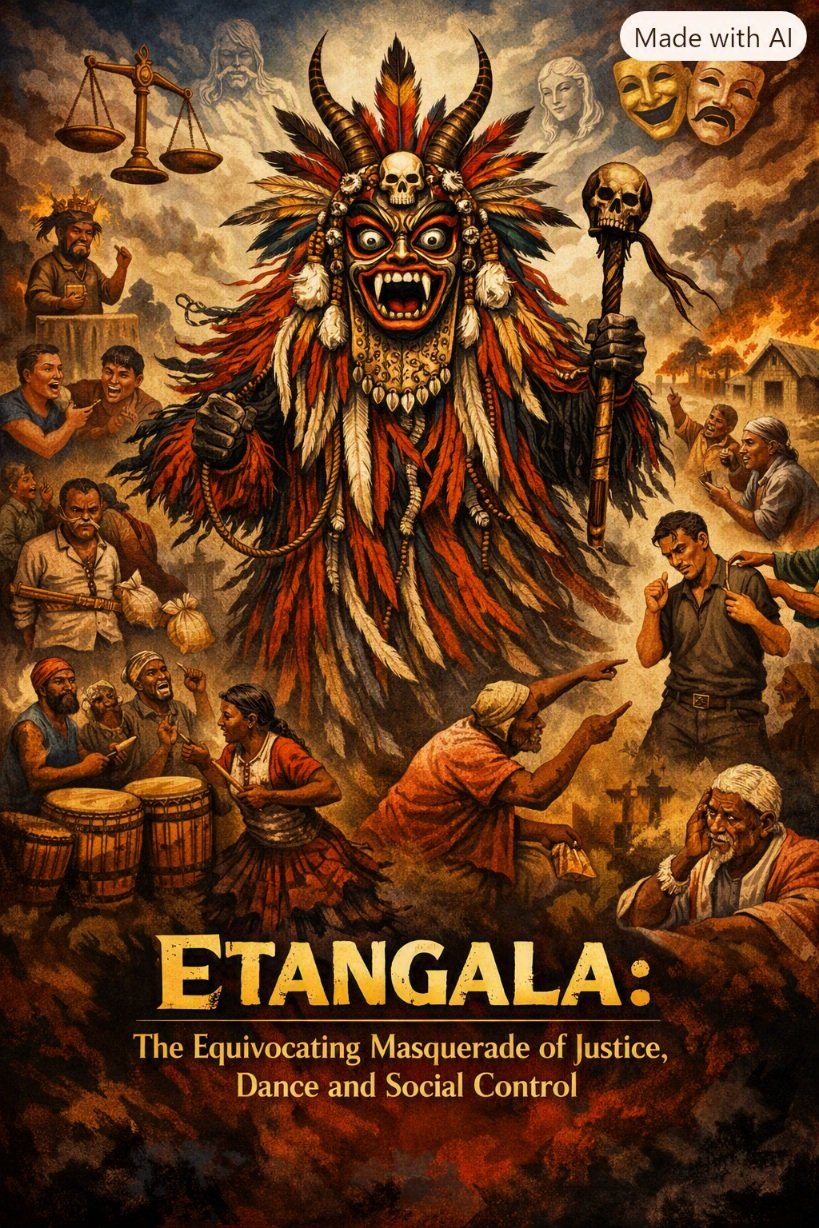
One thing we must know is that Etangala is not merely a majestic and esoteric masquerade that appears only once a year.
The suspense, excitement, exhilaration, drama and dancing generated by Etangala are unparalleled. As it emerges, frenzied crowds throng the arena, and in their uncontrollable ecstasy, they seize a rare, sacred opportunity to speak truth to power. The riotous crowd embarks on rebellious criticisms – taunting, deriding, ridiculing, and pouring scorn and disdain upon anyone who, in the preceding year, has engaged in conduct considered anti-social, abnormal, or forbidden by custom and community norms.
No one is spared, no matter how highly placed in society. Neighbouring communities that have incurred the wrath of the community are not spared the tongue-lashing. Even the traditional institution itself is not spared.

In essence, Etangala is a potent instrument of social control and public shaming in a traditional society.
This can be best understood through the work of the French sociologist, Émile Durkheim, in his seminal work, The Division of Labour in Society (1893). Durkheim argued that traditional societies are bound together by what he called mechanical solidarity – a solidarity founded on likeness, a strong collective conscience, shared beliefs and kinship. In such societies, whatever you do, even in the inner recesses of your household, attracts the attention of everyone. The community rises as one to criticize and shame you, to deter you from such anti-social conduct in the future and to reaffirm its shared values.
This stands in sharp contrast to modern, industrialized societies which Durkheim said are held together by organic solidarity. There, people are individualized, specialized, and interdependent like the organs of a living body, but hardly care about what their neighbour does. The communal moral policing that Etangala represents is therefore absent.
Etangala is thus an octopus of a cultural event, combining a variety of social themes into one magnificent whole: physicality and athleticism, social criticism, dance, drama, the mysticism of the masquerade, laughter and comic relief, all rolled into one.
As William Shakespeare wrote in Macbeth through the Porter, “drink is an equivocator” – it provokes and unprovokes; it equivocates several things. So too is Etangala. It is an equivocator of several things – at once sacred and satirical, entertaining and chastising, mystical and political.