by Femi Awosuru
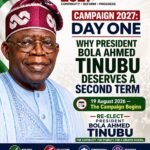
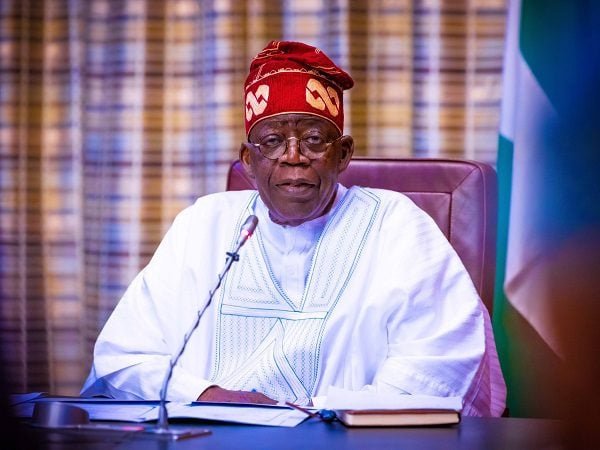
As they did in 2023, my position is unequivocal: I stand with President Bola Ahmed Tinubu.
And I intend to defend that position vigorously.
Not because I believe a president should be worshipped. Not because I think Tinubu is incapable of making mistakes. And certainly not because I have surrendered my right to question government.

I support him because, after examining the direction of this country since 1999, I have come to a very clear conclusion:
Bola Ahmed Tinubu has been the most consequential president of the Fourth Republic in terms of the scale and decisiveness of the structural reforms he has undertaken.
Whether one agrees with every policy or not, pretending otherwise is intellectual dishonesty.
*1. Tinubu Did What Others Kept Postponing*
For decades, Nigerians attended conferences. Governments produced seven-point agendas, fifteen-point agendas, transformation agendas, economic blueprints and countless policy documents.
We knew what was wrong.
We knew the subsidy regime was unsustainable.
We knew the foreign-exchange system was distorted.
We knew government revenue was dangerously inadequate.
We knew our tax system was fragmented.
We knew the banking sector needed strengthening.
We knew infrastructure was inadequate.
We knew our security architecture needed fundamental reform.
We knew our universities, technical institutions and student-financing systems needed intervention.
We knew all these things.
The problem was always the political courage to act.
Then Tinubu arrived and started pulling at the structural knots.
The removal of the petrol subsidy was painful. I have never pretended otherwise. But it was also a decision that successive administrations had repeatedly postponed because of its political cost.
The same applies to the foreign-exchange reforms.
The old system created opportunities for arbitrage, speculation, multiple windows and round-tripping. The administration moved towards a more market-driven system and began the difficult process of restoring credibility to the Forex market.
These are not cosmetic changes.
They are attempts to reset the operating architecture of the Nigerian economy.
*2. The Economic Reset*
The Tinubu administration has pursued an unusually broad economic reform programme: fiscal consolidation, monetary and foreign-exchange reforms, tax restructuring, investment incentives, industrial policy and measures designed to expand access to credit.
The tax reform programme is particularly significant.
From 1 January 2026, the new tax framework came into effect, consolidating and modernising Nigeria’s tax administration architecture. The Federal Ministry of Finance describes the reforms as aimed at creating greater clarity, fairness, administrative certainty and a more efficient revenue system.
And this is important:
A serious country cannot continue financing twenty-first-century ambitions with a twentieth-century revenue system.
The objective is not to simply squeeze more money from existing taxpayers. It is to broaden the tax base, simplify compliance, reduce fragmentation and build a system in which economic growth translates into sustainable public revenue.
That is the direction of the reform.
*3. The Central Bank Had To Be Reset*
For years, the Central Bank of Nigeria was expected to do too many things simultaneously while the monetary environment became increasingly distorted.
Under the Tinubu administration, the CBN has been repositioned towards its core monetary and financial-stability responsibilities, with reforms aimed at improving transparency, strengthening the banking system and restoring confidence in the financial sector.
The banking recapitalisation policy is another major game changer of the Tinubu administration.
The objective is straightforward: Nigeria needs banks with enough capital to finance a modern economy and compete effectively in an increasingly global financial system.
The CBN continues to publish monetary-policy and financial-sector reforms under Governor Olayemi Cardoso, including measures aimed at strengthening confidence and stability in the financial system.
*4. Oil & Gas: Stop Talking, Start Reforming*
The oil and gas sector, for decades the country’s economic lifeline, has also undergone significant regulatory and policy changes.
The administration has continued implementation of the Petroleum Industry Act framework, pushed investment in the sector, strengthened regulatory clarity and pursued reforms designed to improve production and investment.
In February 2026, the Federal Government also announced an executive order intended to safeguard federation oil-and-gas revenues and improve regulatory clarity.
The national refineries is undergoing an audit to find a lasting and permanent solution to its dysfunctionality.
Again, the argument is not that every problem has disappeared.
It is that the architecture is being changed.
*5. NELFUND: Education Funding Finally Moves Beyond Slogans*
One of the most consequential social interventions of this administration is the Nigerian Education Loan Fund.
For decades, Nigerian students from poor and working-class families struggled with tuition, accommodation, feeding and other educational expenses.
NELFUND represents an attempt to create a sustainable financing mechanism through which students can access higher education without their families having to shoulder the entire burden upfront.
That is a fundamentally different approach from simply announcing that education is important.
It is putting a financing mechanism behind the policy.
And the Tinubu administration has simultaneously expanded attention to technical and vocational education, including tuition support and student monthly stipends under the government’s TVET initiatives.
A country that wants to industrialise cannot treat technical education as education for those who failed academically.
That mentality must die.
*6. Infrastructure: Nigeria is Under Construction*
Look around Nigeria.
Roads.
Bridges.
Rail.
Ports.
Airports.
Expressways.
Regional connectivity.
The sheer scale of infrastructure projects underway across different parts of the country is difficult to ignore.
This is not merely about constructing roads.
Infrastructure is economic policy.
A road connects farmers to markets.
A railway moves people and freight.
A functional port reduces logistics costs.
A bridge opens communities to commerce.
A highway shortens travel time and expands economic possibilities.
The Lagos-Calabar Coastal Highway, Badagry-Sokoto Highway, Abuja-Kaduna-Kano corridor, major road rehabilitation projects, rail development and other federal infrastructure projects form part of a broader attempt to address Nigeria’s enormous infrastructure deficit.
And yes, I will challenge anyone who says they want to become president of Nigeria while casually proposing that major strategic infrastructure projects should simply be stopped.
If you want to stop a project, fine.
Tell us why.
Tell us what you will do instead.
Tell us the cost.
Tell us the alternative.
Tell us how stopping it advances Nigeria’s economic interests.
This is no longer the era when politicians can throw slogans into the air and expect Nigerians to clap.
*7. Development Commissions For The Six Zones*
Another important development is the establishment of regional development commissions designed to address the peculiar developmental needs of Nigeria’s six geopolitical zones.
That is a recognition of a reality Nigeria has ignored for too long:
Development cannot be one-size-fits-all in a country as geographically, culturally and economically diverse as Nigeria.
The North-East has its own challenges.
The North-West has its own.
The North-Central has its own.
The South-West has its own.
The South-East has its own.
The South-South has its own.
Regional development mechanisms is to provide institutional focus for tackling these structural disparities.
That is the idea.
Security: The State Must Be Stronger Than Criminals
No economic transformation can survive without security.
The administration has significantly increased investment in the armed forces and security architecture, while improving welfare and remuneration for military personnel.
The proposed constitutional and legislative movement towards state police is also significant.
For years, Nigerians have complained that a centrally controlled policing structure is inadequate for a country of this size and complexity.
Now the conversation has moved from complaints to institutional reform.
If state police eventually becomes part of Nigeria’s security architecture, it must come with proper recruitment, training, accountability, funding and constitutional safeguards.
But the principle is worth discussing seriously.
7. The Question For The Opposition
This is where I believe the 2027 debate should become more intellectually serious.
Anybody seeking to take over from Tinubu should not merely tell Nigerians that Tinubu is bad.
Tell us what you will do differently.
Which of these reforms will you reverse?
Will you restore the petrol subsidy?
If yes, explain how you will finance it.
Will you reverse the FX reforms?
If yes, explain how you will prevent the return of multiple exchange-rate distortions and arbitrage.
Will you dismantle the tax reforms?
If yes, what alternative revenue architecture are you proposing?
Will you stop the infrastructure projects?
If yes, which ones, why, and what replaces them?
Will you abandon NELFUND?
If not, what will you improve?
Will you abandon the regional development commissions?
If not, what will you change?
Will you reverse banking recapitalisation?
If not, why?
Will you abandon the security reforms?
If not, what is your alternative?
Nigeria deserves answers, not hashtags.
To the social media propagandists -come prepared.
I have no intention of sitting quietly while social-media political merchants manufacture fiction and pass it around as fact.
If you bring facts, I will meet you with facts.
If you bring evidence, I will examine it.
If you bring legitimate criticism, I will engage it.
But if you bring fabricated figures, manipulated videos, invented policies, deliberately distorted quotations and recycled lies, do not expect me to applaud your creativity.
We will fact-check it. We will dissect it. We will expose it.
Not with abuse.
Not with ethnic hatred.
Not with religious bigotry.
But with facts, documentation, logic and intellectual firepower.
Political disagreement is legitimate.
Intellectual dishonesty is not.
And I make no apology for being uncompromising about that.
My position:
I supported Bola Ahmed Tinubu in 2023. I will support him again in 2027.
My support is not blind.
It is a judgement about direction.
I believe Nigeria needs continuity in the implementation of the difficult structural reforms that have already begun.
I believe reversing fundamental reforms because a new politician wants to announce his own “agenda” is one of the reasons Nigeria has spent decades moving in circles.
We cannot continue resetting the country every election cycle.
At some point, reforms must be allowed to mature.
That is why this election matters to me.
Nigeria is too important to be handed over to political pretenders whose principal qualification is the ability to shout louder than everyone else on social media.
This country is too complex.
Its ethnic and religious diversity is too profound.
Its infrastructure deficit is too enormous.
Its security challenges are too serious.
Its economy is too important.
Its population is too large.
The presidency of Nigeria is not a prize for political experimentation.
It requires competence, courage, experience, decisiveness and an understanding of how to manage a complicated federation.
So, as the 2027 political season officially opens, let nobody misunderstand my position.
I am standing with Bola Ahmed Tinubu.
And I will defend that position with everything at my disposal:
Facts for facts.
Evidence for evidence.
Arguments for arguments.
Fire for fire — intellectually.
Because when the destiny of Nigeria is involved, I refuse to be a spectator.
Let the campaign begin.
Selah!
©️Femi Awosuru