
By Idowu Ephraim Faleye
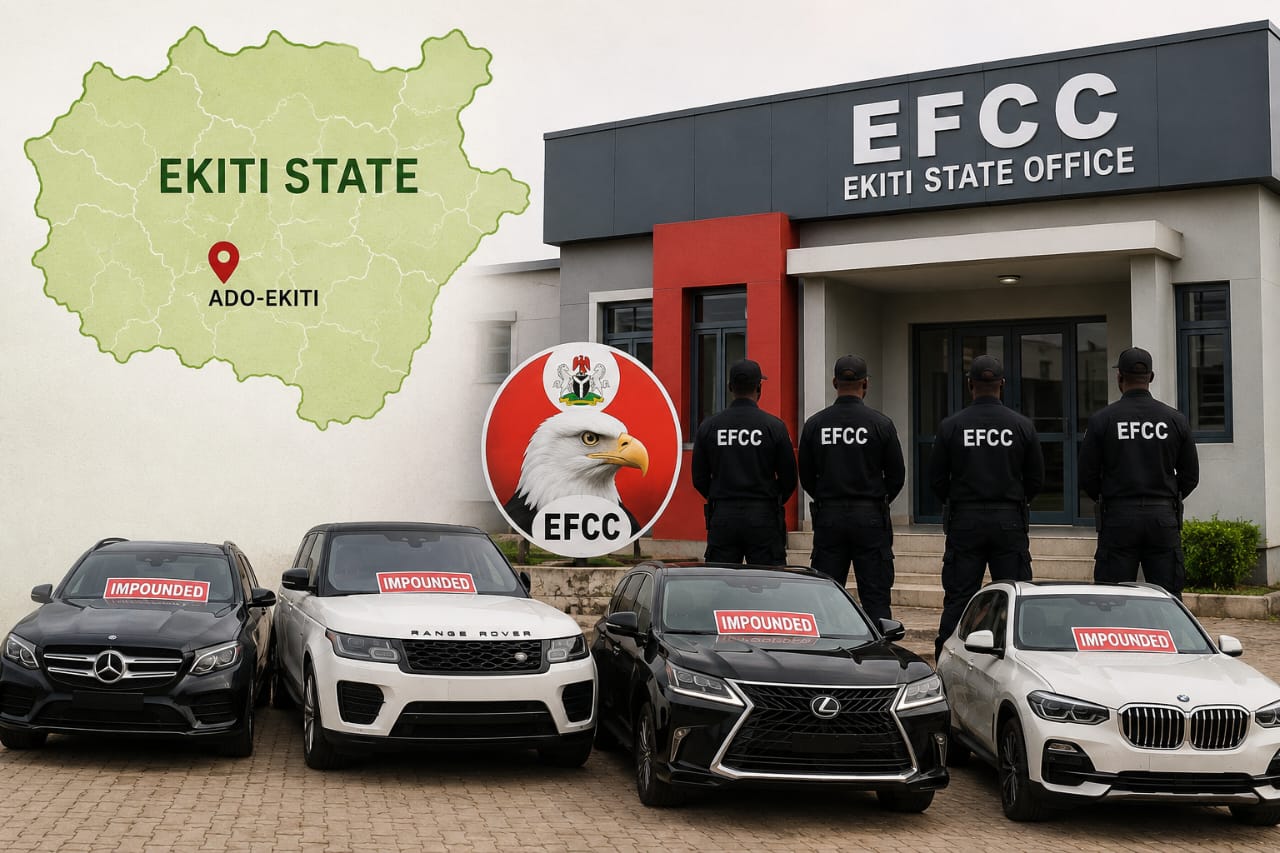
Certain people in Ekiti State want the newly located EFCC office removed. Their reason is simple. Since the office started working, internet fraudsters, commonly called “Yahoo boys,” have stopped spending freely in hotels, clubs, restaurants, and boutiques. Businesses that once depended on this spending are now feeling the pinch, so these people say the EFCC is bad for business.
At first, this may sound like a fair point. Every business wants customers with cash. But one question changes everything. Does it matter where the money comes from? Should we celebrate spending simply because it keeps a business alive?
This is where the argument collapses. No society can build its economy on crime money and still expect peace and progress. When fraud becomes the engine of local commerce, crime slowly becomes accepted as normal. And that is a dangerous road to walk.
Anyone defending the EFCC’s removal, whether they realise it or not, is defending crime. They are saying that as long as criminals spend their money in Ekiti, nobody should ask how they got it. Think about what that logic really means. Would we say armed robbers should be left alone because they buy cars? Would we excuse kidnappers because they shop at local boutiques? Of course not. Internet fraud should not get special treatment just because the criminals spend loudly.
Crime does not become good because it creates short-term business. In fact, crime money destroys more than it builds. It discourages honest workers. It sends a message that hard work no longer matters. Slowly, people start measuring success by money alone, not by character.
The worst damage happens to young people. Children watch everything. They see boys driving flashy cars, wearing designer clothes, and spraying money at parties. If society protects these people, young people learn one lesson: crime is a shortcut to success. This is already happening across many Nigerian communities. Many no longer ask how someone got rich, they just admire the money. Education, patience, and honest work start to look useless next to quick cash.
Ekiti has never stood for that. For generations, it has been known as the Land of Honour, a place known for education, honesty, and discipline. These values were not built overnight. They came from decades of sacrifice, good parenting, and respect for what is right. That reputation should never be traded for quick money. A society that drops its values for temporary cash is setting itself up for decline. Once integrity stops being respected, corruption finds room to grow, and honest people start to feel foolish for staying honest.
Yes, some businesses have seen fewer big spenders since the EFCC became active. But fewer customers from criminal money is not the same as economic collapse. It is a wake-up call. It should push Ekiti to build an economy powered by real things: farming, technology, manufacturing, tourism, and honest enterprise.
A strong economy is not one built on crime funds. It is one where honest people create real value, employ workers, pay taxes, and build something that lasts. That kind of economy may grow slower at first, but it grows stronger with time.
Here is the truth about the crime money that has already been spent: it was wasted. If those funds had gone into real businesses, the owners would now have steady income and no reason to worry about EFCC’s presence. Instead, most of it went into luxury living that produced nothing lasting. The moment pressure came, the spending simply stopped, because there was no real investment behind it.
This is the lesson many people miss. Spending money is not the same as creating wealth. A man who spends millions in clubs every weekend gives temporary business to club owners, but he builds no factory, pays no taxes and creates no jobs. Real development comes from investment, not reckless spending.
Most things bought with fraud money lose value fast. Clothes go out of fashion. Cars depreciate. Parties end in a few hours. Once the excitement fades, nothing is left to keep creating jobs or income. Now imagine if that same money had gone into farms, tech startups, or factories instead. Those investments would still be creating jobs today, paying taxes, and supporting families. That is what real wealth creation looks like.
There is another cost people forget. Internet fraud damages Nigeria’s image abroad. Every fraud case reported overseas makes life harder for genuine Nigerians chasing scholarships, jobs, or business deals. A few criminals end up punishing millions of innocent citizens.
This is why the fight against financial crime deserves support, not resistance. The EFCC was not created to punish honest people. Its job is to investigate and prosecute financial crime, as the law demands. Like any institution, it can improve how it works, but its presence should not become controversial just because criminals are uncomfortable.
The real question is not whether fraudsters are spending enough to keep businesses afloat. The real question is whether Ekiti is building an economy that future generations can be proud of. Short-term cash should never replace long-term prosperity. Communities that chase quick money usually pay for it later.
Both the Federal and Ekiti State governments have opened doors for young people to build honest careers. There are funded and subsidised training programmes in Data Analytics, Software Engineering, Cybersecurity, Artificial Intelligence, and UI/UX Design. Many people involved in fraud could have used these programmes to build real skills and real income. The state has also introduced youth farming programmes to support agribusiness. Fraudsters could have redirected their money there instead. Many chose to stay dependent on crime instead. When the government creates a path and people refuse to walk it, we must ask ourselves honestly: who is really to blame?
Parents also carry responsibility. Children learn more from what they see than from what they are told. Families must teach that success built on integrity may come slower, but it brings real peace and lasting respect.
Religious leaders, traditional rulers, schools, and community leaders all have a role too. They should keep promoting hard work, contentment, and lawful living. Society must stop admiring wealth just because it looks good. Honour should go to people whose success came from integrity.
Ekiti has produced professors, judges, civil servants, teachers, and professionals who succeeded through honest labour. These are the people young boys and girls should look up to. Their lives prove that greatness does not need fraud. Character remains one of the greatest assets anyone can have.
This debate raises a deeper question. What example do we want to set for the next generation? Do we want them to believe that criminal wealth deserves protection because it boosts business? Or do we want them to know that true prosperity comes from honesty, creativity, and lawful enterprise?
Every society becomes what it chooses to defend. If crime is tolerated because it looks profitable, crime will spread. If integrity is rewarded, honesty will become attractive again. That choice belongs to all of us, not just the government or the police.
The EFCC’s presence in Ekiti is not an attack on business. It is a chance to rebuild the economy on a stronger, moral foundation. Businesses should grow because of real investment, farming, tourism, and manufacturing, not because criminals are spending stolen cash. That is the kind of economy that can survive anything.
History will not remember Ekiti for the exotic cars driven by fraudsters. It will remember the values the state chose to protect when tested. The Land of Honour earned its name through honesty, learning, and hard work, and those values are worth far more than any money that comes from crime.
As this debate continues, every resident of Ekiti should think carefully before joining calls to remove the EFCC office. This is bigger than business patronage or cash flow. It is about the soul of the state, the future of its youth, and the legacy this generation will leave behind. Choosing integrity over crime may bring short-term discomfort, but it builds the strongest foundation for lasting prosperity and honour.
*Idowu Ephraim Faleye writes from Ado-Ekiti +2348132100608*