By Okoi Obono-Obla
Ugep Urban County Council: Historical Foundations and Political Legacy
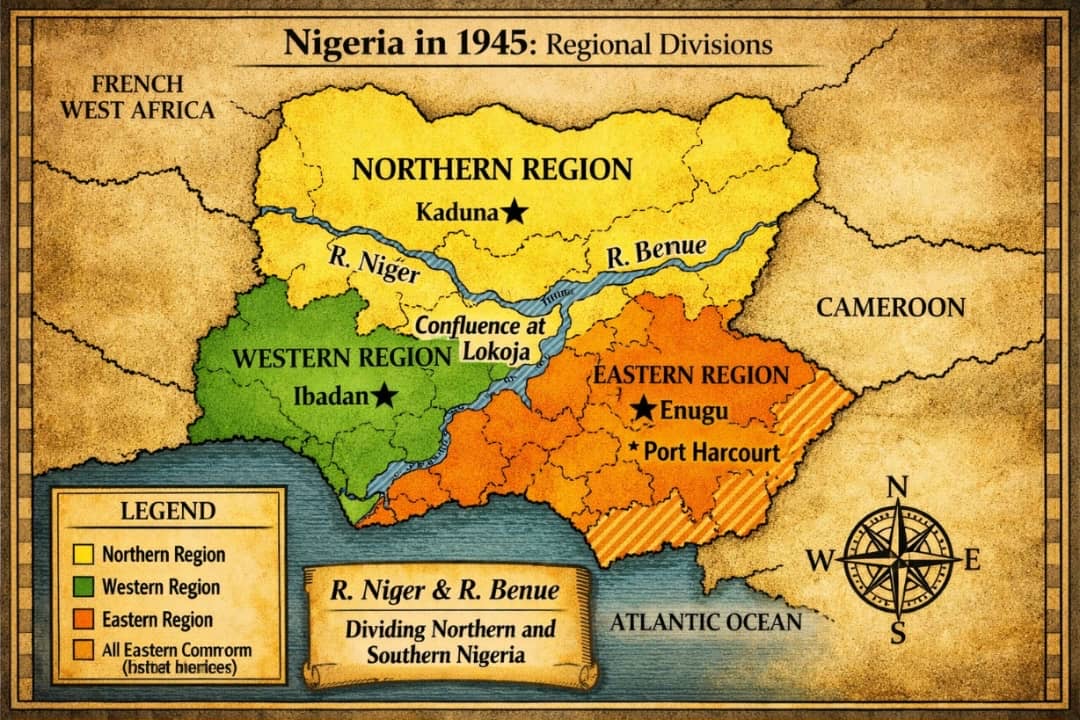
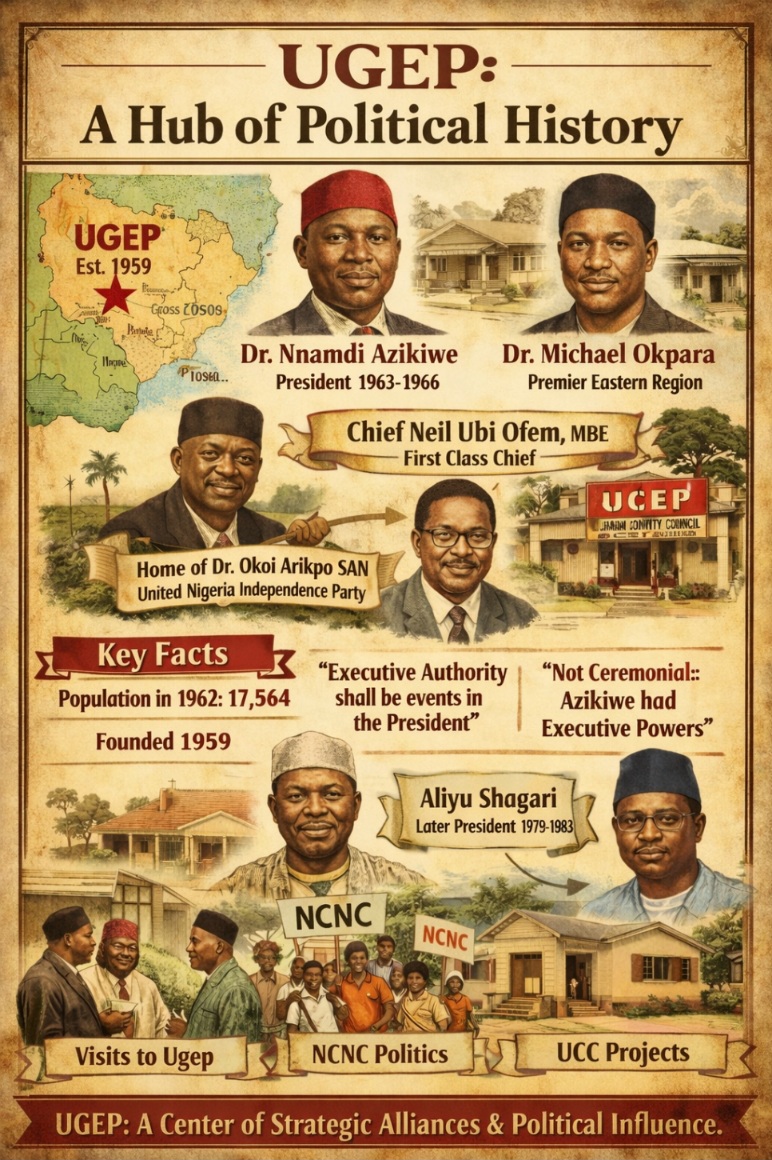
Official provincial data from the 1962 reports of the Eastern Nigeria Local Governments recorded the population of the Ugep Urban County area at exactly 17,564 people. The first Chairman of the Ugep Urban County Council was Chief Usang, who hailed from Mpanghi in Bikobiko Town, Ugep. He was a staunch member of the NCNC, the political party in power that controlled the Government of the Eastern Region of Nigeria. At the time, the Premier of the Eastern Region was Dr. Michael Okpara.
Dr. Okpara visited Ugep several times, largely due to his close friendship with Chief The Hon. Neil Ubi Ofem, MBE, a First Class Chief representing Abakaliki Province in the Eastern Nigeria House of Chiefs. Their bond was so strong that Chief Ofem named one of his sons Michael Okpara. Chief Ofem also maintained a close relationship with Dr. Nnamdi Azikiwe, who served as Premier of the Eastern Region from 1953 to 1959 before becoming Governor‑General of Nigeria (16 November 1960 – 1 October 1963). Upon Nigeria attaining Republican status in 1963, Dr. Azikiwe became President of the Federal Republic of Nigeria and Commander‑in‑Chief. One of Chief Ofem’s sons, Godfrey Ofem, popularly called “Zik,” was named after him.

Under the 1963 Constitution, the President was Head of State but not Head of Government. The Head of Government was the Prime Minister, Sir Abubakar Tafawa Balewa. Contrary to some accounts that portrayed Dr. Azikiwe as merely a ceremonial President, the Constitution vested him with executive authority. Section 84, subsections 1 and 2, explicitly state:
1. The executive authority of the Federation shall be vested in the President and, subject to the provisions of this Constitution, may be exercised by him either directly or through officers subordinate to him.
2. Nothing in this section shall prevent Parliament from conferring functions on persons or authorities other than the President.
Dr. Nnamdi Azikiwe also visited Ugep several times during his tenure as Premier of Eastern Nigeria, owing to his friendship with Chief Ofem. Politically, Ugep was a cultivated and closely monitored town, being the hometown of Dr. Okoi Arikpo, SAN, who had defected from the NCNC in 1953 to form the United Nigeria Independence Party. This party aligned with the Action Group, a bitter rival of the NCNC. Consequently, the NCNC government sought to keep Ugep firmly under its political control.
The widely held view that Dr. Nnamdi Azikiwe did not possess executive powers is not correct. Indeed, he was President with executive powers, and therefore the impression that Alhaji Aliyu Usman Shehu Shagari was the first President of Nigeria with executive powers is inaccurate. However, it must be noted that the Constitutions under which both Dr. Azikiwe and Alhaji Shagari served as Presidents were materially different.
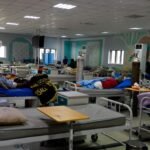
Chief Usang’s Ugep Urban County Council (UCC) carried out numerous developmental projects in Ugep, including the establishment of the Maternity Clinic and the Government Primary School Ketabebe, popularly known as UCC.
ConclusionThe history of Ugep Urban County Council reflects not only the political significance of its leaders but also the developmental strides that laid the foundation for modern governance in the area. Its legacy underscores the importance of visionary leadership, constitutional authority, and the strategic cultivation of political influence in shaping Nigeria’s democratic journey.