By Okoi Obono-Obla
Okpugha: The Wealth Symbol of Agwagune Civilization
Assisine Ogban from Agwagwune, Biase Local Government Area of Cross River State — a community that strikingly shares many customary and traditional practices with Yakurr Local Government Area — responded to my article on the wearing of bangles by maidens in Yakurr, Abi, and Biase. He expounded further by discussing Okpugha (Liman) among the people of Agwagwune before colonialism and during the epoch of the Akpa Civilization, thus:
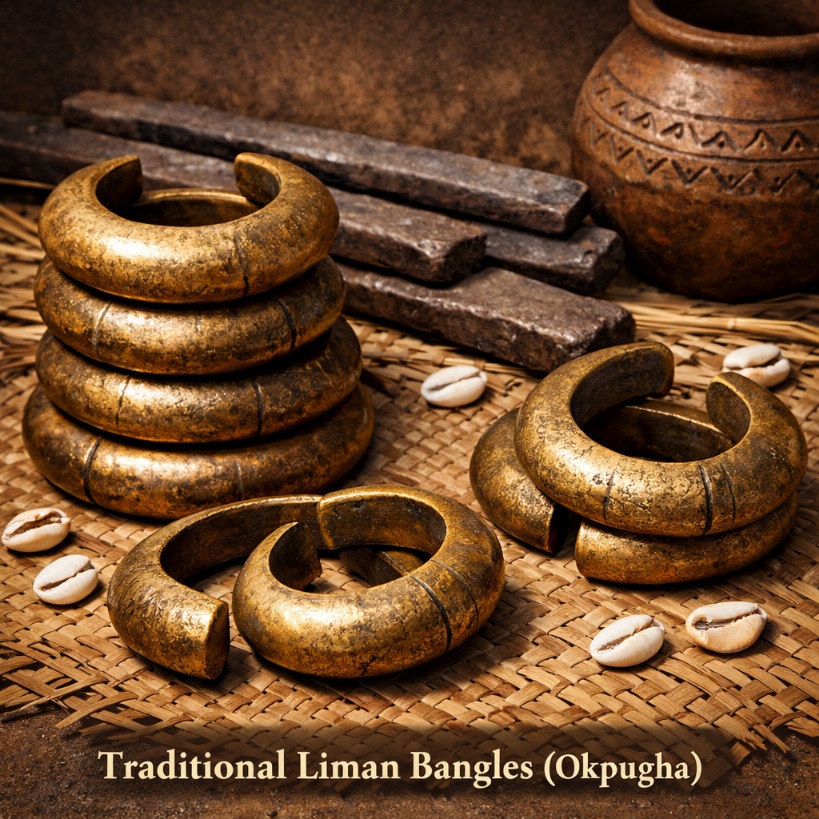
In Agwagune, Liman (bangle) is called Okpugha (money). Certain parts of Igbo land also call it Okpogo, meaning money. It was widely used during the Agwagune Trade Civilization within the Central and Northern Cross River basin as a means of exchange, gradually replacing trade by barter.
A specific quantity of these bangles was used to measure the wealth of a family, marking the transition to higher levels of wealth represented by iron bars during that civilization.
The Yakuur people, during Ledu (Yam Title), drag Okpugha/Liman along the road — units and tens of higher value — preserved as a symbol of family wealth.
As this civilization advanced and clothing became more prominent, there was a shift from wearing Liman on the leg to wearing Iwowo, woven threads adorned with colorful wool and jingling bells. Maidens in Agwagune, Ejagham, Efik, Ibibio, Anang, Oron, Opobo, and other riverine settlements of the Akpa Civilization embraced this transformation in their traditional costume.
I am always delighted to read such reflections, as they directly or indirectly encourage me to share what our forefathers preserved for the younger generation.
Conclusion
The story of Okpugha/Liman is more than a tale of adornment; it is a record of wealth, identity, and cultural transformation. From iron bars to woven threads, the evolution of these symbols reflects the resilience and creativity of the Akpa Civilization and its people.