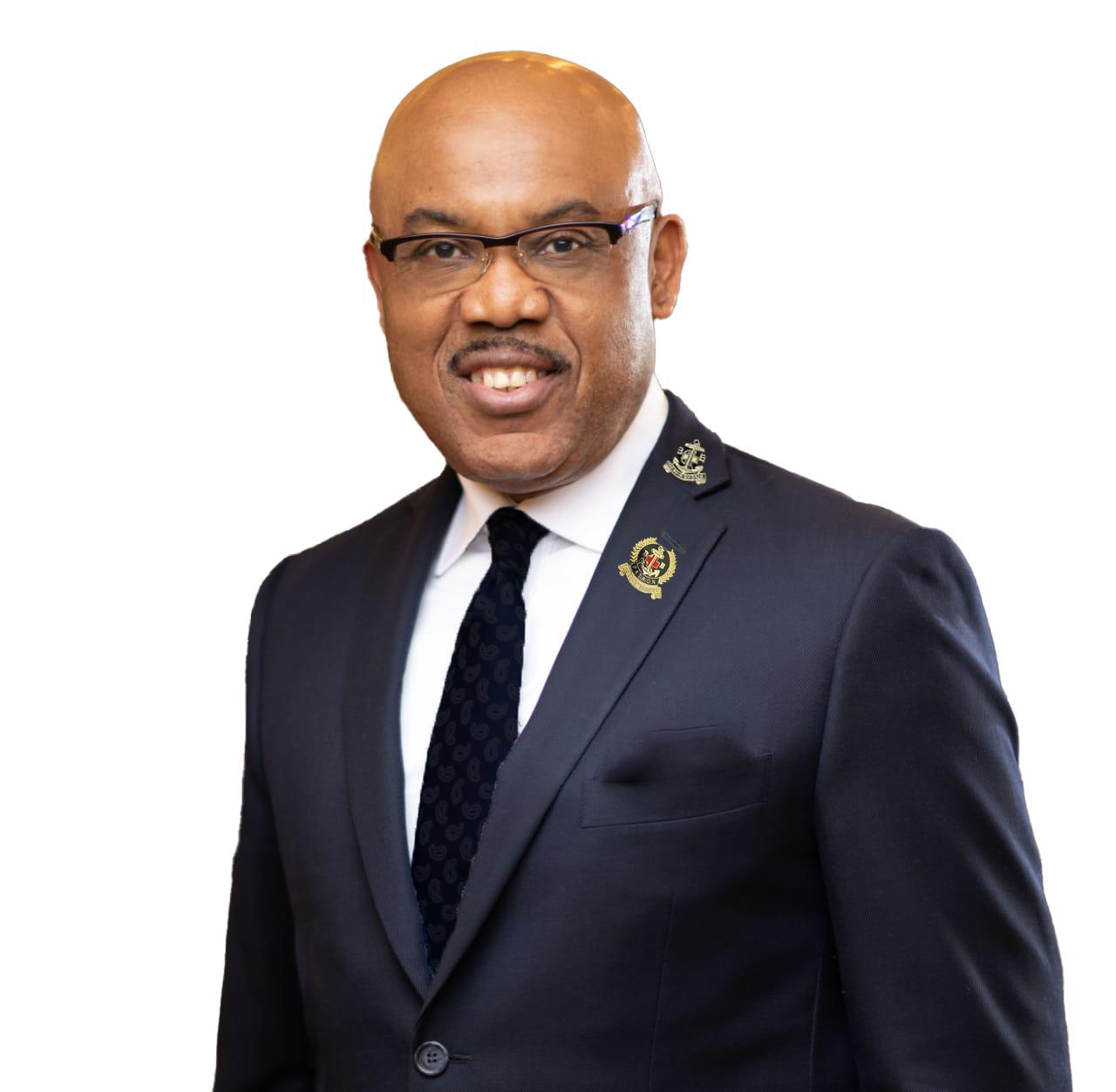
by Chief Eke Urum-Eke
June 20, 1998
Netters:
This write-up is by one Chief Eke Urum-Eke of New York, and first appeared
as “A LETTER TO THE NDIGBO: Cutting Our Nose to Spite Our Face” in
Nigerian Times International, January 16-31, 1996, page 8 ff. and was
first reproduced by me on the Net soon thereafter. Some statements in it
are prescient.
In this critical period of Nigeria’s decision-making, it is important that
we re-visit some markers of our past.
Best wishes all.
Bolaji Aluko
==============================================================================
“A LETTER TO THE NDIGBO: Cutting Our Nose to Spite Our Face”
Part I
In the politics of Nigeria, it has become painfully obvious that the
Northern oligarchy learned and internalized much better than did their
southern brothers the British colonial policy of “Divide et Impera”-Keep
the people divided and you can rule them forever. Thus, while they
encourage recriminations among southerners as to who did what to whom
“yesterday”, they loot and plunder the country while keeping its peoples
disorganized and disenfranchised. They do whatever they see fit to silence
dissension in the full knowledge that the rest of the country is too
disunited to mount and effective opposition against them. (Witness the
crumbling of the petroleum workers’ strike in 1994.) Consequently, wrong
continues to rule the land while waiting justice sleeps!
Part I of this letter will discuss the Igbo grievances which have
constituted such a serious stumbling block to Nigerians’ unity of action
and ultimate progress. Part II will discuss the folly of seeing any other
ethnic group in Nigeria as our permanent enemies.
Ojukwu’s No-show Act
On Saturday, November 18, 1995, I was honored with an invitation to
participate at a private meeting between the Ikemba of Nnewi, Chief Emeka
Odumegwu Ojukwu and the Igbo leaders of thought in the New York tri-
state area. The invitation came at very short notice indeed. But because
of all the disturbing things I had heard in recent times regarding the
Ikemba’s new line of thought in Nigerian politics, I dropped everything
else in order to be present at that meeting. I needed to hear it from the
horse’s mouth, and I went to that meeting to agree or disagree with the
Ikemba.
Unfortunately, due to unforseen scheduling conflicts, the Ikemba did not
show up. But one of our group who was present at a similar meeting
between the Ikemba and Igbo leaders in Houston, Texas volunteered to brief
us on what the Ikemba had said were his reasons for singing a new tune in
the politics of Nigeria. However, besides the usual (and historical)
litany of grievances the Igbo are wont to recite against the Yoruba, the
only new things I heard that night were about Abacha’s agreement to
contracts for road in the East and the issue of creation of new states.
But any person of average intelligence can easily surmise that these two
new items were simply brought in by the Ikemba as a sop to those present
so as to mitigate their opposition to his new friends. For one thing, when
did the northern oligarchy ever agree to the creation of one state in the
south without simultaneously creating a counterbalancing state in the
north ? Will this time be different ? Therefore the important issue I
want to address in this letter to my Igbo brethren is our litany of
grievances against the Yorubas and how it is affecting our ability to move
forward as a people.
Igbo Grievances & the Round Robin of Mutual Destruction.
At the risk of this letter becoming longer that intended, I wish to put
hstorical perspective the Igbo litany of grievances against the Yoruba.
The 1954 Western Elections – which was won by the NCNC under Dr. Nnamdi
Azikiwe (“Zik.’). But after a meeting of the Egbe Omo Oduduwa, several
Yoruba NCNC legislators suddenly “crossed carpet” to the Action Group (AG)
under Chief Obafemi Awolowot, thereby effectively preventing Zik from
becoming the first premier of Western Nigefla. Hurt and dejected, Zik
returned to the East, where he promptly displaced Prof. Eyo Ita from the
premierhip of the region. This helped fuel the anger and disloyalty of the
eastern minority elements, who soon organized to demand the creation of a
COR state. This was the beginning of tribalism in Nigerian politics.
The 1959 Federal Elections – in which none of the three major parties
(NPC, NCNC and AC) won a clear majority, but the NPC had the most seats,
followed by the NCNC. To prevent the northerners (a.k.a. the NPC) from
having the first shot at the prime Ministership of Nigeria with so much
executive power concentrated there, Awo proposed that the NCNC (i.e. the
Igbos) and the AG (i.e. the Yorubas) should form a coalition so as to have
the first shot at ruling at the center. But Zik, still peeved at what what
happened to him in 1954, would not have anything to do with Awo. Instead
he teamed up with the NPC to form the first Federal government of an
independent Nigeria on October I 1960. Thus, the Igbos became the junior
partner in a Federal government where they would have been the senior
partner had Zik agreed to a coalition with the Yorubas.
By the time the republican constitution came into force on October 1,
1963, it had become obvious that the coalition beeween the NCNC and NPC
was a tactical blunder on the part of Igbo leaders. The northerners were
playing for keeps! We had underrated their intelligence ! They were
grabbing power and gobbling up Nigerian resources at an astonishing rate.
They had even rigged the 1963 census figures to assure for themselves a
permanent majority at the Federal level. In other words, by refusing a
coalition with the West in 1959, we had cut our noses to spite our face !
By the time the 1964 Federal Elections rolled around, the East under Dr.
M.I. Okpara had learned its lesson and chose to align under the UPGA in
alliance against the NNA, which comprised the NPC and the NNDP. But our
lesson had been learned too late. The northern oligarchy who had delayed
Nigerian independence by four years because they didn’t have the skilled
manpower to run even a regional government had tasted the power that came
with independence and were loath to give it up ! They had consolidated
their hold on Nigeria far too strongly to be dislodged, what with three
governments under their control: the Northern and Western governments
under Tafawa Balewa, Ahmadu Bello and Ladoke Akintola respectively. This
NPC/NNDP alliance (alias NNA) used the instruments of government to effect
massive rigging of the elections. The UPGA, which had called for boycott
of the election in some parts of the country, rejected the results and
called upon Zik, the ceremonial president, to do the same. He ultimately
refused, claiming that he had been advised by the Attorney-General, Dr.
Taslim Elias, (who was appointed by, and answerable to the NPC) not to
reject the results ! Thus, we could not utilize even that which we had
thought to be our trump card – the ceremonial presidents power to say
who should form the next government !
Western Elections & The First Coup
When the 1965 Western elections came, it was the UPGA pitted against the
NNA, with the NNA as the alliance in power. This time around, massive
rigging gave rise to street riots and bloodshed throughout Western
Nigeria, which soon became known as the “Wild West”. The notorious slogan
of “weh-tiehthat region became the mob sentence for any known supporters
of the opposing party. Human bodies were strewn in the streets throughout
the region. But when challenged to do something to stop the killings,
Chief Akintola, the Western premier, retorted that even if all the
citizens of the region completely wiped out each other, he would be
content to rule the trees. Similarly, when the Federal authorities were
called upon to declare a state of emergency in the west, the NNA refused –
even though they had been only too glad to declare a state of emergency in
that region in 1963 when the AG was in control and when only the
Speakermace and a few chairs were broken during a fracas among members of
the State Assembly ! That is no street riots, no series of arsons, and no
lives lost before 1963’s state of emergency was declared !
It was in the face of all this that Exercise Damissa II – the first
military attempt in Nigeria occurred on East on January 15,1966. That coup
attempt failed, having been suppressed in its final stages by forces loyal
to the Federal government, forces led by Major-General Johnson
Aguiyi-Ironsi, the G.O.C., Nigerian Army. But because the entire civilian
leadership of the NNA governments had been decimated before the coup was
put down, the remaining elements of the civilian administration
volunteered to hand over power to the army to restore peace throughout the
country. The head of that army was Major-General J.T.U. Aguiyi-Ironsi,
who simply happened to be Igbo.
Exercise Damissa II was planned and executed by the now-famous “Five
Majors”, first and foremost, the stop the bloodshed in Western Nigeria,
and, only secondarily, to sweep our the corrupt political class and
restore peace and progress throughout Nigeria. In other words, the first
military coup attempt, if it has to be ascribed to any group at all, was a
Yoruba coupt. (The leader of the group, Major Chukuma Kaduna Nzeogwu, was
an Igbo in name only, having been born and bred in the North; he could
barely speak Igbo, and he would have been hard put to it to find his way
to his own father’s house in his hometown, Okpanam) Unfortunately, until
today, Igbo detractors in Nigeria and abroad have persisted in referring
to that putsch as an “Igbo coup”. But it was not. For if it were an Igbo
coup, and if Aguiyi-Ironsi was a part of it, why were the plotters
arrested and locked up in various prisons across the country without trial
for more than six months until Ironsi was himself overthrown it’ the
counter coup of July 29, 1966? Indeed, after the July counter coup, some
of the January coup plotters such as Major Don Okafor and Major Chris
Anuforo were abducted from their prison cells in Westem Nigeria and killed
by their northem colleagues. (Okafor was buried alive outside Abeokuta
prison while Anuforo was shot at Ilesha prison.) It is also conveniently
forgotten by Igbo detracctors, that the loyal troops who put down the
January coup had a preponderance of Igbo officers! This is because the
pre-war Nigerian army simply had an overwhelming preponderance of Igbo
officers.
The July counter coup and its aftermath principally, the series of
anti-Igbo pogroms in other parts of Nigeria and the failure of the Federal
government to stop the massacres – ultimately led to the en masse return
of Igbos to the East and the Masada complex that sustained the ensuing
Biafran War for so long. Many Igbo detractors, thanks mostly to Nigeria’s
wartime propaganda, have persisted in the claim that it was the presence
of crude oil in the East that made the Igbos decide to secede from
Nigeria. To the contrary, however, it was the presence of oil in the East
that made the Northern oligarchy insist on keeping the East as part of
Nigeria even when the ordinary northerner (including the northern
solidiers on 7/29/66) had expressed in word and deed his desire that the
East should go or they themselves would declare the Republic of Songhay !
Part II
Rancid Populism Versus Rational Leadership
In Part I of this letter, we discussed those aspects of Igbo grievances
that are rooted in Nigeria’s pre-war history. While this part will touch
on some of the post-war grievances, it will be devoted largely in favor of
reconciliation and the search for solutions to the present impasse in
Nigeria.
Increasingly, our so-called leaders have learned to warm themselves to our
hearts by telling us what we want to hear, even if it is to our long-term
detriment, rather than face the possibility of rejection by telling wus
the bitter truth and leading us in the direction which best serves our
long-term interests. Like the advertising moguls on New York’s Madison
Avenue, they have learned consumer emotions are a more reliable basis for
selling a product than the rational benefits of the product itself. For
whereas rational benefits are readily vulnerable, emotional bonds to
yesterday’s myths are hard to break! They exploit that knowledge and in so
doing, us. This is rancid populism. What we need is rational leadership.
But who will tell the people?
More Grievances? Yes!
In addition to the Igbo grievances listed in Part of this letter, I am
aware of the following grievances. Like those in Part I, I bring them up
now, not to arouse our passions, but to clear the air, to separate fact
from fiction, so that we can move on as a people. It is also incumbent
upon us Igbo leaders of today to ensure that younger generation of Igbos
is not led blindly into another futile war based on propaganda claims of
the previous war.
* During the Biafran war, Chief Awolowo, the highest ranking
civilian in Gowon’s government, declared that hunger and starvation were
legitimate weapons of war. And they used this weapon against us viciously
!
* During the war, Awolowo used his Yoruba brothers to replace the
highly-skilled Igbo technocrats in the Federal government who had left out
of fear for their lives. But after the war, he would not return these
positions to their Igbo holders. This greatly slowed down the political
recovery of Ndi Igbo in the Nigerian polity
* At the end or the war, Awolowo “decreed” that any Biafran who so
much as deposited one penny into his bank account during the war would be
entitled only to twenty Nigenan pounds (#20), no matter how many millions
of Biafran pounds he or she had in the bank. This policy played a
significant role in slowing down the pace of economic recovery of Igbos
after the war. The ban on stockfish and second-hand clothes were addition
anti-Igbo measures and a continuation of the economic war against us.
*The Indigenization Decree – the decision to Nigerianize foreigners’
holdings in the Nigerian economy and the stock market so soon after the
war, when the majority of lgbos had only 20 pounds (30 U.S. dollars) to
start life with, is the single most important reason why the commanding
heights of the Nigerian economy are in Yoruba hands ! Thanks to Awolowo !
* Awolowo’s promise to Ojukwu, which he did not keep, to the effect
that the West would secede from Nigeria if the East did so. As the story
goes, this left the Igbos alone to face the full fury of Nigeria’s war
machine.
* Abiola’s statement that he could win the 1993 elections without the
Igbo people !
The Awo Promise
The Igbo claim that Yorubas had promised to secede if the Igbos did so is
the promise of the century that never was ! Some Igbo fanatics have even
claimed that Awo and Ojukwu sat down and signed an agreement to that
effect ! But the tuth is that there was never any such promise, to say
nothing about a signed contract. I should know.
Having left my job in Lagos to return to the East less than 30 days
before the shooting war started, it is fair to say that I was old enough
to know whatever was in the public domain. As a Brigade Major with the
substantive rank of Captain in the Biafran Army, I had the resources to
listen to other news media besides Radio Biafra. As a DAQMG (Deputy
Assistant Quartermaster-General) in the last 12 months of the war, I had
access to persons and tidbits of information that most other Biafrans did
not have. And all this is in addition to the fact that my first cousin,
Dr. Ifegwu Urum Eke, was not only the highest ranking civilian in the
Biafran governmement but also the chief architect of Biafra’s propaganda
machinery.
The truth, then, is that on his way to the Aburi conference of Nigenian
leaders in Ghana, Chief Awolowo, in answer to a question from the BBC
correspondent (Angus McDermit?) stated “If the East goes, the West will
not stay.”
In the context of other things he was saying at the time, every
right-thinking person understood this statement not to be a promise to
Ojukwu but a threat to Yakubu Gowon: if you allow the East to secede from
Nigeria, you must not expect the West to remain. The BBC and the VOA
carried the news on the same day. But Radio Biafra carried it much later,
in a bastardized form, and only as part of Chief Okokon Ndem’s commentary
after the news!
The concept of a broken promise by Awolowo served Biafra’s wartime
propaganda well, but it has no place in the Nigeria of today. For one
thing, even if such a promise was made, declaring that you have seceded
does not mean you have seceded. Instead, you have seceded only when the
remainder of the country accepts it as such, either through negotiation or
by losing the war of unification. This did not happen. Therefore, we
cannot rightfully accuse the Yoruba of reneging on their promise.
Abiola’s Arrogant Statement
Many of my Igbo colleagues have an refused to join protest marches and to
speak up in favor of the June 12, 1993 elections or for the release of
Chief M. K. 0. Abiola from prison detention. The reason for their
attitude toward Abiola is twofold: first, it is said that during the of
election campaigns, be boasted that he could win without the Igbo vote;
second, it is said that he effectively marginalized the lgbo people when
he refused to accede to Ojukwu’s demand that an 1gbo be appointed party
chairman after he himself, being Yoruba, had been nominated as the party’s
presidential candidate and he had taken on a northerner as his running mate.
Instead, he gave the party chairmanship to a southern minority of a
Midwest extraction.
Regarding the first charge against Abiola, the claim is that such a
statement was arrogant and insulting to the Igbos; that it was
insensitive and undiplomatic; and that anybody who would say such a thing
about one section of the country he aspires to lead is not fit that or any
other country. I could’nt agree more. But the problem here is: did he
really say that ? Or have his detractors twisted what he said , or the
circumstances which he said it, in order to manipulate the Igbo people
into joining them in their personal vendetta against Chief Abiola ?
I was not in Nigeria during the campaign of ’93, but I have heard on good
authority that the following is what happened: During the Abiola’s
campaign swing through the East, unruly elements of the opposing party
(the NRC) stoned his motorcade at Owerri (or Aba.) As a result, they left
the East in a hurry in hopes of coming back to complete the swing after
satisfactory security arrangements should have been made for their
protection. However, back in Lagos, during a meeting with his innermost
group of trusted advisers, when somebody suggested that it was time for
the campaign to go back to complete their tour of the East, Abiola is
reported to have stated that if he could not win the elections without the
votes of those who threw stones at him, then he would rather lose the
election than go back there.
For one thing, this is not an unusual feeling for a normal person to
harbor towards people who have thrown stones at him, particularly when
that normal person is not a dyed-in-the-wool politician in the mold of of
Dr. M I Okpara or Chief Awolowo. Secondly, this was a feeling he expressed
among his innermost associates; it was not a public statement for the
generality of Nigerians to hear (Instead, it is a sad commentary of the
trust-worthiness of human beings that one of Abiolawould divulge his
private feelings to the press.) Therefore, we, the Igbo people should not
be so uptight about this alleged statement as to use it as our excuse for
not doing the right thing.
On tbe chairmanship of the SDP, I am inclined to to believe that Chief
Abiola was wrong when he failed to appoint an Easterner (not necessarily
an lgbo) to the party chairmanship. But then we have not heard from Abiola
on this issue. Who knows what his plans were? For one I have heard
unconfirmed reports that he had meant to appoint an Igbo to the position
of Secretary to the Federal Government and Head of Civil Service. If so,
is this not infinitely better than the party chairmanship? In any case,
these appointments were Abiola’s ride prerogatives. And we must not allow
our disapproval of how he used those prerogatives to become our excuse for
not doing the right thing.
In both cases, the right thing for the Igbo people to have done was to
come out strongly in protest against the annulment of the 1993 elections s
well as Abiola’s imprisonment. In doing so, we would not only be helping
Abiolawould be helping the cause of democracy, truth, justice, peace and
progresss in Nigeria as a whole. In not doing so, we have the military
cabal to get away with murder (of democracy) and we have allowed them to
get away with the belief that they can ride rough-shod over all of us
forever. We have cut our nose to spite our face!
Part III
The petroleum workers’ strike
It is said that the pen is mightier than the sword. The petroleum
worker’s strike of July ’94 was like the proverbial fountain pen for the
Nigerian people – the pen which we should have used to bring down the
sword of the military rascals without firing a shot ! But we blew it. And
we blew that chance because the lgbo people did not come out as strongly
as they might have.
The petroleum workers’ strike was like a pot sitting on a tripod, with the
petroleum workers as one leg, the Yorubas of the West as the second leg,
and the Igbos of the East as the third leg. The other two legs stood,
but the third did not. So the pot collapsed. And why did the third leg
not stand? Because of Igbo grievances against Awolowo (who had been dead
for seven years) and Abiola (who had won a free and fair election). Could
anything be more unreasonable? That strike was one way to show our
arrogant military that in spite of their guns, the people of Nigeria,
speaking with one voice, do have a way or bringing them down. Knowing
that, any future coup planner or election annuller, realizing that we have
a demonstrated weapon against his grab for power, will think twice before
doing so. This would be a lasting benefit to all Nigerians and to the
cause of democracy, even if he put Abiola in power for four years. But now
that the strike failed, what have the Igbos gained? Have we not simply cut
our nose to spite our face- again? Should Awolowo continue to direct and
propel Igbo self-destruction even from his grave ?
Abiola is not fit to rule ?
I have heard many Igbo people give this as one of their reasons for not
coming out to protest against the annullment of the 1993 elections as well
as Abiola’s arrest. But does this excuse make sense? Whether or not
Abiola is a crook, a thief or a bungling incompetent, we must never forget
that he was elected by a overwhelming majority of Nigerians. And those
Nigerianss voted for him after a nine-month electioneering campaign in
which his opponents, with all the resources available to them for digging
out dirt against him, had ample opportunity to tell Nigerians about all
his failings ! I do not know the man personally and cannot
vouch for him, but truth, justice, peace, and progress in Nigeria demand
that we let the man rule. We can throw him out after four years. He cannot
possibly do more damage in four years than the military riffraffs have
done to us in 30 years!
Furthermore, in my lifetime, bearing in mind how the Northern oligarchy
has consistently manipulated every census exercise in Nigeria to assure a
permanent majority for themselves, it should have been clear to every
right-thinking person that Abiola was the only southerner who stood any
real chance of wrestling power from the oligarchy in a free and fair
election. This is so because before joining politics, he had used his
immense personal wealth to make friends all over the country and acquired
IOUs from various communities throughout Nigeria. His generosity, however
he acquired the wealth, transcended ethnic boundaries, thus making his
more electable than most. Which other southerner can boast of similar
credentials in the foreseeable future? If Abiola’s mandate is not
actualized today, what is the guarantee that the Yoruba will accept the
result of the next presidential election if the winner is not Yoruba? Or
should we rely the force of arms to bring them into line when that time
comes ? Of course not. Therefore the least we should have done, as used
and abused southerners, was to insist that Abiola’s mandate be actualized.
In not doing so because of our past grievances, we have simply cut our
nose to spite our face!
The Saro-Wiwa Tragedy
Kenule Saro-Wiwa and I were together for three years at Government
College, Umuahia (He was three years ahead of me.) He was a School Prefect
and a House Captain, meaning that he had leaderhip qualities. He was
self-assured, strong-willed and fair-minded. And his command of the
English language was phenomenal! Hence it came as no surprise to me that
he would play a leadership role among the Ogonis.
When news came, first of his death sentence and, second, of his hanging, I
tried to talk other Nigerians in the New York area into holding protest
marches. But the response I got among my fellow Igbos was lukewarm at
best. One grievance against him was his anti-Igbo rhetoric on the
Abandoned Property issue immediately after the war, the other being his
call for a separate Ogoni nation.
As one who knew Saro-Wiwa, I wish to acknowledge that I too was deeply
hurt by his anti-Igbo stance on the Abandoned Property issue. And I told
him so during a Nigeria Airways flight from Lagos to London in late 1985.
My sense or his response was that, based on his reading of the Nigerian
situation during the previous ten years, were the end-of-the-war situation
to repeat itself, he would be a lot more circumspect in his utterances. As
for his call for an Ogoni nation, I heard of it only in recent years and
have not met him since. But knowing him, I would like to suggest that the
threat of secession was a two-pronged negotiation ploy: (A) Do something
to clean up our environment and give us more of what is due to us, or
suffer the consequence of another attempted secession; (B) Even though we
can be quite happy with 50%, and knowing that our opponent will never
agree to give us 100 %, we go ahead and ask for 100 % in hopes that our
opponent will offer 60%!
Therefore, based on all the above, the tepid response of the Igbo people
to Saro-Wiwa’s trial, conviction and eventual hanging is a matter of great
regret. By this tepid response, the Igbo people in particular, and other
Nigerians in general, have sent a message to any future tyrant, in uniform
on in mufti, that if any opponent proves to difficult to handle, all you
have to do is charge him with something, set up a tribunal of your friends
to try and convict him, and hang him the next day. And Nigerians will do
nothing !
The hanging of Saro-Wiwa was a national tragedy; but our tepid response is
an even greater tragedy, for Nigeria’s sake. He was not on trial for his
anti-Igbo rhetoric. He was not on trial for calling for Ogoni secession.
No! He was on trial for inciting murder. Even if he was guilty of that,
and I believe he was partly guilty of it, where in the world has the
penalty for such a crime exceeded 5- 10 years imprisonment ? As a
civilian, why was he tried by a military tribunal ? Without the right to
appeal ? Who of us will be next? Why must we, Ndi Igbo, continue to allow
yesterday’s grievances to be cloud our judgment and sense of justice
today? If the same thing happens to Ojukwu or to Mbakwe tomorrow, will we
have the not right to blame the Yorubas or the Ibibios, or even the
Ogonis, for not sticking with us ? Do two wrongs make a right ?
The Solution
I call upon all our people, at home and abroad, to be mindful of the
level of hunger in Nigeria today. Many industrial enterprises in the
country have closed down, including my own synthetic marble factory in
Aba; most others are on the skids. The only two flourishing business in
Nigeria today are the business of Government and the business of
smuggling. Smuggling is not for self-respecting individuals, however
lucrative it may be. Therefore the only avenue open for our leaders of
yesterday to maintaning their known lifestyle is the business of government
– penbased robbery and signature abuse by those inside, and fraudulent
contracts for those outside, the government ! And for them to get any of
these fraudulent contracts, state or federal, they must sing Abacha’s tune
Far be it from me to say that Chief Emeka Odumegwu Ojukwu, General of the
people of Biafra, Dike Di Ora Nma of Igbo land and the Ikemba of Nnewi, is
leading the Igbo astray for personal gains. But I do suggest that
whenever any of our home-based leaders switches alliances, particularly
towards a repressive government each and everyone of us must at least
consider the possibility of settlement before we follow such a leader.
Therefore today, as one of the better informed members of the Igbo
community in the Diaspora, I ask you to join forces to root out this evil
of Igbo extremism from our midst, to prevent hungry radicals at home (and
less informed radicals abroad) from leading us down the dark path of Igbo
intolerance, self-pity, and self-inflicted injury.
I call upon Ndi Igbo to put aside our grievances and close ranks with
Yorubas, the southern minorities, and all the progressive elements of the
north to put the army in its place.
We must insist that the mandate of June 12, 1993 be respected and
actualized, no matter how long it takes.
We must give moral and financial support to groups such as NADECO (If all
adult Nigerians in North America contribute only $5 a month each to
NADECO, the Abacha regime will be brought down within 12 months.)
Because of the politics of stomach now prevalent at home, Nigeria’s
salvation must be spearheaded by those of us abroad. Each of us must call,
write or visit his or her elected US representatives to press the case for
strong action against the Abacha regime. Then come out and join protest
marches.
We must acknowledge that today, Ojukwu is simply repeating the mistakes of
1959 when Azikiwe’s personal personal peeves against Awolowo led him to
creating an alliance that was not in the best interests of the Igbo
people. History must not be allowed to repeat itself, to our detriment.
We must have no “permanent” enemies. We must practice the Machiavelian
principle that when you have many enemies, you must make friends and close
ranks with some of them in order to face the more immediately pressing
enemy. The Nigerian military is that pressing enemy today.
We must all understand that unless strong pressure is brought to bear,
Sani Abacha has no real intention of departing even in October ’98. And
even if he does, some other dingbat in our free army uniform will take
over again in a few months. Only unambiguously demonstrated southern
solidarity can save Nigeria.
Long Live Nigeria !
Igbo bu Igbo, eleem unu !!
==============================================================================
This write-up is really by one Chief Eke Urum-Eke, and first appeared as
“A LETTER TO THE NDIGBO: Cutting Our Nose to Spite Our Face” in Nigerian
Times International, January 16-31, 1996, page 8 ff.
===============================================================================