by Adesuyi Ajayi M.D., Ph.D
Each time I hear the now-stale complaint about how Nigeria helped South Africa during the anti-apartheid struggle and is getting unjust treatment in return today I am riled up, honestly.
I now see those complaints as telling evidence of lack of understanding of trends in diplomatic relations, particularly lack of understanding of ‘shifting roles’ in foreign policy. The world over, nations that understand trends know better how to navigate the complex terrains of diplomacy leveraging their knowledge of the trends and dynamics.
Nigeria has failed, for a long time, to appraise how South Africa’s foreign policy has evolved post-apartheid. Before that appraisal, it is better to review the phased relations between the South and West African countries. The relations, beginning in 1960 when Nigeria attained independence, is split into four eras.
1) Solidarity Era (1960s-1990s):
This era began immediately after Nigeria became an independent nation. Motivated by the aspiration to lead the Black race, not just the black continent, to greatness, Nigeria adopted an anti-apartheid stance. As a fledgling independent nation in 1961, Nigeria, alongside other member states, pushed for the suspension of South Africa in the British Commonwealth.

Under intense international pressure, South Africa withdrew its membership in March 1961.
On the home scene, Nigeria established the National Committee Against Apartheid, NACAP in 1960, for which reason it chaired the United Nations Special Committee Against Apartheid, founded later in 1962, for well over three decades. As a Frontline State coalition member, Nigeria committed funds towards supporting causes and initiatives led by the ANC and PAC.
The South Africa Relief Fund, SARF, otherwise known as ‘Mandela Tax’, through which Nigeria channelled funds into the anti-apartheid struggle, was borne by Nigerian tax payers. Nigeria slapped an oil embargo on the apartheid regime culminating in a loss of over $40 billion incurred by the unpopular regime.
Even in the global sporting arena, Nigeria boycotted the 1976 Olympic games and the 1978 Commonwealth games to register her protest against apartheid. This solidarity era, of course, aligned with Nigeria’s Afrocentric foreign policy thrust of the time. This period, which lasted between the sixties and the nineties, showed remarkably how Nigeria championed the campaign to end white minority rule in South Africa.
2) Rivalry Era (1993-1999):
With the taking over of the government by Gen. Sani Abacha in Nigeria and the winning of the first multi-racial election in South Africa by Nelson Mandela of the ANC, the relations between the two nations became a paradox of sorts. This was not made any better by the execution of Kenule Saro-Wiwa and eight other Ogoni activists known as ‘Ogoni Nine’. Following the diplomatic outcries against the executions, South Africa championed the call for the suspension of Nigeria in the Commonwealth, the same thing Nigeria had done against the vile apartheid regime in the early sixties.
Nigeria was subsequently suspended in the group. Nigeria and South Africa became competitors on the continent, not collaborators. The relations between the two nations further reached its nadir when Nigeria could not participate in the Miss World pageant in South Africa’s Sun City in 1995 and when the same Nigeria, again, could not feature in the twentieth edition of the African Cup of Nations (AFCON) in 1996 in South Africa because of the diplomatic row with Mandela’s South Africa.
3) Realignment Era (1999-2007):
With Nigeria’s return to democracy and election of Olusegun Obasanjo, who had been in the Commonwealth’s Eminent Persons Group on Apartheid (EPG), the election of Thabo Mbeki, and Mandela’s eventual retirement from politics, all happening in 1999, the turn of the twenty-first century witnessed a realignment in relations between Nigeria and South Africa. In 1999, a Bi-National Commission was established between the two countries to deepen ties and expand relations in areas like trade, energy, security, diplomacy, and the like. The 2000s, indeed, marked a watershed in the diplomatic journey between the two nations. While South African multinational firms poured into Nigeria, Nigerians emigrated to South Africa.
The two nations led in the founding of the New Economic Partnership for Africa’s Development, NEPAD. But ‘the golden era’ in the bilateral relations between Nigeria and South Africa soon petered out with the exit of two friends and leaders, Obasanjo and Mbeki, following which diplomatic relations suffered fracture, rupture and, shall we say, strain.
4) Era of xenophobes (2008-?)
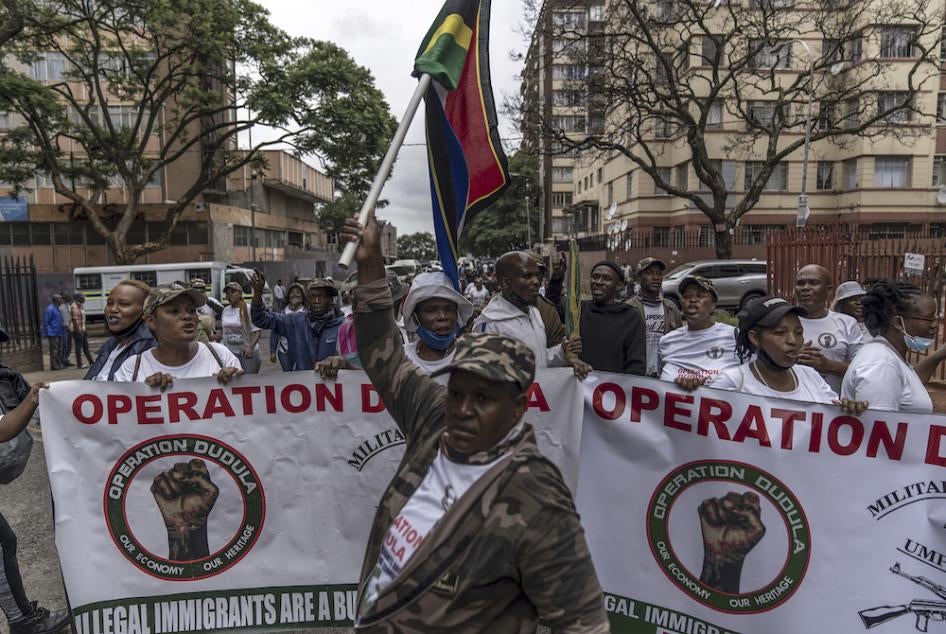
Apartheid left in its wake a skewed wealth distribution system that disfavoured the Black majority in South Africa, no doubt. But the 2010s witnessed heightened anger fuelled in large part by suspicion of ‘strangers’, perceived to be opportunists. Soon, scapegoating began. Othering followed. A misplaced aggression known as xenophobia was kicking in.
The situation came to a head in 2008 when Black South Africans took out their frustrations on ‘foreigners’, killing over sixty and destroying properties owned by ‘migrants’. Some mainstream media houses amplified the hate crime by weaving and spinning narratives on ‘us versus them’, ‘aliens’, etc. South Africa’s Daily Sun, Independent Online, Daily Dispatch, Sowetan and Times, for example, were responsible for media sensationalism through the deployment of pejorative language.
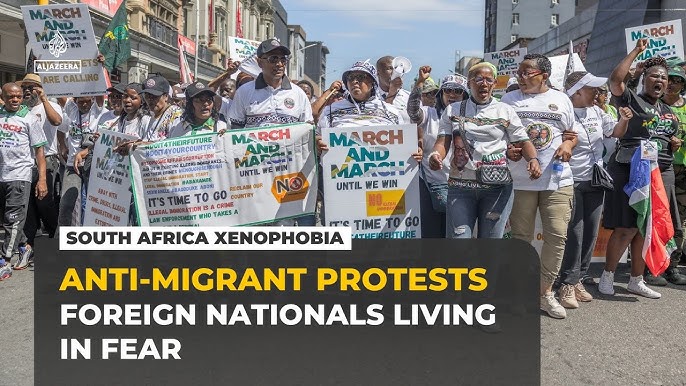
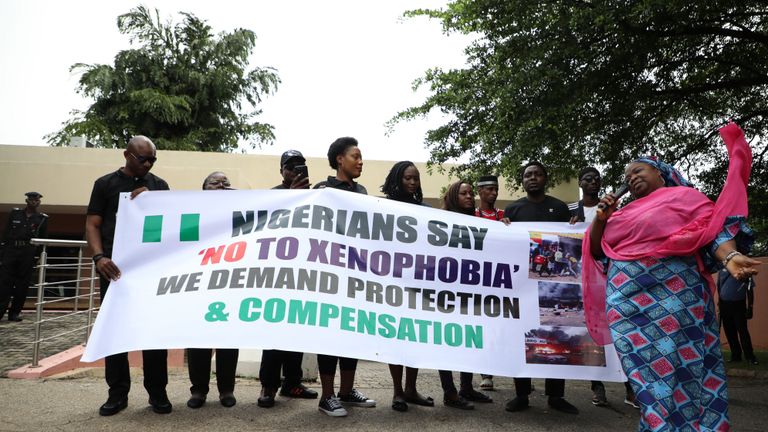
In 2015 a spree of xenophobic attacks on foreign businesses and properties broke out in South Africa. It began in Durban from where it spread to Johannesburg culminating in wanton destruction. Another wave of xenophobic attacks were reported in South Africa in 2019 during which time Nigerians took the law into their own hands, attacking South African-owned multinational firms, malls and chains of stores in Lagos and Abuja.
In all of these attacks, Nigeria had always tried to engage constructively, using a structured approach. But it can do better.
Trends and relations have changed, the era of solidarity is behind the two nations. Nigeria needs to be more strategic in pushing an anti-xenophobic campaign. She must weigh her options both bilaterally and regionally.
There are multiple diplomatic platforms and avenues Nigeria needs to explore. At the bilateral level, the two states have the Bi-National Commission, through which Nigeria can demand accountability or the establishment of a joint community safety watch capable of reducing and reporting xenophobia. Both nations are members of the African Peer Review Mechanism, APRM, a specialised agency of the AU that allows the review of member states’ performance on areas like the economy, democracy, social development and more. Under this arrangement, Nigeria can technically request a ‘targeted review’ of South Africa’s policy on rights of migrants with a view to extracting better commitment from the latter. This has become crucial with the emergence of right-wing parties in South Africa. And I mean here parties with seats in the parliament, like Action SA, Patriotic Alliance and the rest whose populist manifestoes endorse xenophobia and harsh immigration stance.
There is the AU whose legal arms Nigeria can explore as well. Nigeria can petition the Peace and Security Summit, the decision-making organ of the Union, to look into the atrocities of xenophobia or push for the adoption of a resolution against xenophobia. There are other legal departments like African Court on Human and People’s Rights, the main judicial arm of the Union, where Nigeria can initiate an interstate complaint. International judicial oversight could be a necessary option; one only wonders why Nigeria has yet to really seek a regional approach.
Finally, when all options do not work, Nigeria needs to firmly adopt reciprocity known as ‘diplomacy of consequences’. Under the late President Yar’Adua, Ojo Maduekwe, ex foreign affairs minister, espoused this foreign policy model. It was an era when Nigeria opted for citizen-centred diplomacy – ‘how you treat our people is how we will treat your people’. That was exactly the case when in March 2012 South Africa wrongfully repatriated Nigerians over ‘yellow fever certificate’. In the ensuing diplomatic spat, Nigeria deported many South Africans citing what the then foreign affairs minister, Olugbenga Ashiru, termed ‘xenophobia against Africans’. South Africa had to formally apologise.
Times have changed, and trends too, what has to change next is Nigeria’s approach to diplomatic engagements.
I’m off to Timbuktu 🚶 🐪…