

Greetings All,
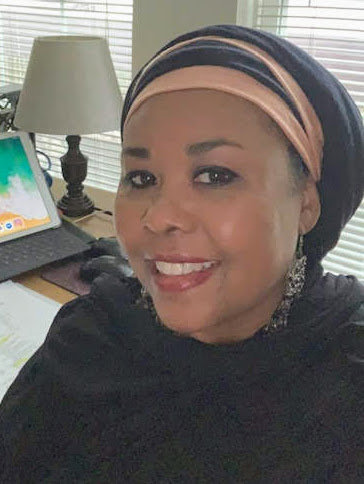
As I settle into this space, I wanted to introduce myself in my own voice; first person feels more natural when writing directly to people I hope to connect with.
I am a public health practitioner specializing in epidemiology and workforce development. My work sits at the intersection of global health security, emerging infectious diseases, and ethics. My publications span bioethics, public health ethics, maternal mortality, and social epidemiology, reflecting a career dedicated to both scientific rigor and a deep commitment to equity in global health research.
Over the years, I have contributed to shaping how ethical frameworks are applied within complex, resource-constrained settings across Africa. I am mindful of the scale of our challenge: I am one of approximately 6,900 epidemiologists serving a continent of 1.5 billion people. I write from a majority world perspective, rooted in the belief that good science and ethical practice are inseparable.

I look forward to the conversations and connections ahead.
Disclaimer
The views and opinions expressed in this profile and subsequent posts are my own and do not necessarily reflect the position of any affiliated academic institutions, government agencies, or professional organizations. Content provided is for informational and educational purposes only and should not be construed as professional medical advice.













Thank you so much for this generous and thoughtful response. It is deeply encouraging to be received so warmly.You have captured something I hold close to my work… ethical frameworks in global health must be rooted in the lived realities of the communities they seek to serve, not imported wholesale from contexts that bear little resemblance to our own. The majority world perspective is not a limitation; it is a lens that sharpens the questions we ask and the solutions we pursue. I look forward to contributing meaningfully to the conversations on this platform. Thank you again for the warm welcome.
It’s refreshing to read a bio written from a first-person perspective that explicitly highlights the critical equity gap; the statistic about only ~6,900 epidemiologists for 1.5 billion people really underscores the urgency of your mission. I appreciate your emphasis on embedding ethical frameworks within resource-constrained African settings, as that specific nuance is often overlooked in broader global health discussions.
Thank you for locking onto the equity gap and the power of data driven narratives. Sometimes, the numbers speak louder than any abstract argument can. This gap is a daily reality for workforce planning and health security on the continent. When I write I often try to reflect and attempt to ensure we are all starting the conversation from a place of structural reality rather than idealized global health rhetoric. I’m glad that specific nuance resonated with you, and I look forward to diving deeper into these gaps on ChatAfrik.
I really appreciate your emphasis on the inseparable nature of good science and ethical practice, particularly within the complex, resource-constrained settings you navigate. Your majority world perspective is vital for ensuring global health research truly serves the communities it aims to protect. Welcome to the platform, Dr. Ambe; I look forward to seeing how this space helps amplify those important conversations.
I appreciate your warm welcome and thoughtful reflection. You hit on the core of it: when science and ethics split, it’s the communities on the ground that pay the price. The majority world perspective is vital precisely because it shifts the center of gravity, ensuring that research protocols and health interventions actually protect and serve, rather than just extract. Looking forward to sharing space and ideas with you here.
Jennyfer, your reflection on the staggering ratio of epidemiologists to the African population really underscores the critical need for robust workforce development in this field. I particularly appreciate your emphasis on merging scientific rigor with ethical frameworks within resource-constrained settings, as this balance is often the missing link in global health equity efforts. Looking forward to the valuable conversations you’ll spark on this platform.
Thank you, I appreciate you highlighting that connection. Workforce development in public health is often treated as a secondary logistical issue, but as that ratio shows, it is a foundational health security vulnerability. We cannot have resilient health systems without the local workforce to anchor them, and we cannot scale that workforce without a strict commitment to equity and scientific rigor. Glad to have you along for these upcoming conversations!