By Adeyemi Ademowo
Few weeks ago, the University where I teach sent forth another proud cohort of graduates! Of course, as a teacher and administrator, I am too happy to see them move to the next phase of their lives. In fact, far from ABUAD (Afe Babalola University, Ado-Ekiti — where I teach), the celebrations seemed to have moved to LinkedIn, where the season seems unending with diverse announcements, stories, and photos. Sincerely, I enjoyed scrolling through them, the joy, the pride, the colours and the resilience behind every smile. I never tire of it. People should celebrate in their own way and in their own time. No one should be bullied into posting as e dey hot. Let people breathe in their own victory.
But as I kept scrolling, another thing caught my eye, not the photos this time, but the titles on those certificates.
Many of our Nigerian MSc and MA degrees are still the same old ones we inherited from the colonial university tradition.

MSc Finance. MSc Political Science. MA Philosophy. MSc Sociology.
They are decent, respectable, and well-established. But they are also the regulars : old, comfortable and predictable! They have survived countless accreditation exercises without ever being made to reinvent themselves. The fonts change, the course codes change, but the philosophy behind them rarely shifts.
Then I look at those graduating abroad — especially from the UK and US, where some of my former students have sought academic refuge for different reasons — and I see something else:
MSc Financial Technology and Business Analytics.
MSc Global Sustainability and Digital Development.
MA Philosophy with Computer Science.
These are not just catchy titles. They are signs of academic imagination. They tell me that someone, somewhere, sat down and asked: What is the world becoming, and how should knowledge respond?
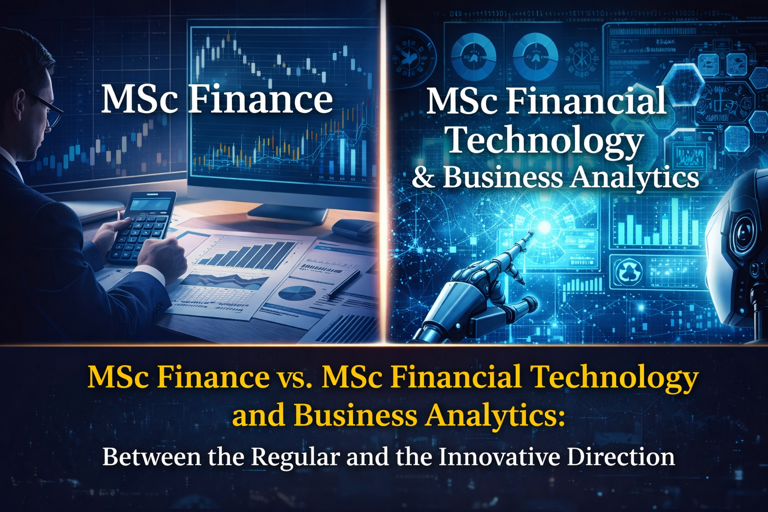
MSc Finance trains you to understand and manage capital.
MSc Financial Technology and Business Analytics trains you to understand the algorithms and technologies that now create and move capital.
The first fits neatly into a bank or financial institution office (with some exceptions though); the second walks straight into the fintech hub. One reproduces what exists; the other anticipates what is coming. Dont get me wrong, a BSc Finance isnt a bad idea but is a peep into the future for an innovative change for MSc a wrong direction?
Unfortunately, our curriculum culture in Nigeria still treats innovation as disruption. We love tradition, even when it has outlived its relevance. Committees, Senates and accreditation panels cling to “what we know works,” even when the world has moved on. And so, we produce graduates who are brilliant, diligent and employable but who are also boxed in by the rigidity of their training.
Maybe it’s time to start imagining differently.
Maybe:
MSc Sociology can evolve into MSc Digital Society and Human Behaviour.
Maybe MA Philosophy can stretch into MA Ethics, AI and Society.
Maybe MSc Economics can re-emerge as MSc Data-Driven Development Studies.
Or:
MSc Behavioural Policy and Decision Science?
Msc Conflict, Security and Development Studies?
MSc Strategic Learning and Development?
Innovation is not a luxury. It’s survival.
So, yes!, I celebrate every graduate, every proud parent, every mentor’s joy. But I also whisper a quiet question to the system: “When will our universities start rewarding imagination instead of conformity?”
To me, between MSc Finance and MSc Financial Technology and Business Analytics lies the distance between memory and foresight, between maintaining and imagining.
And that, I think, is the direction the future will favour.
Ire o!