

By Okoi Obono-Obla
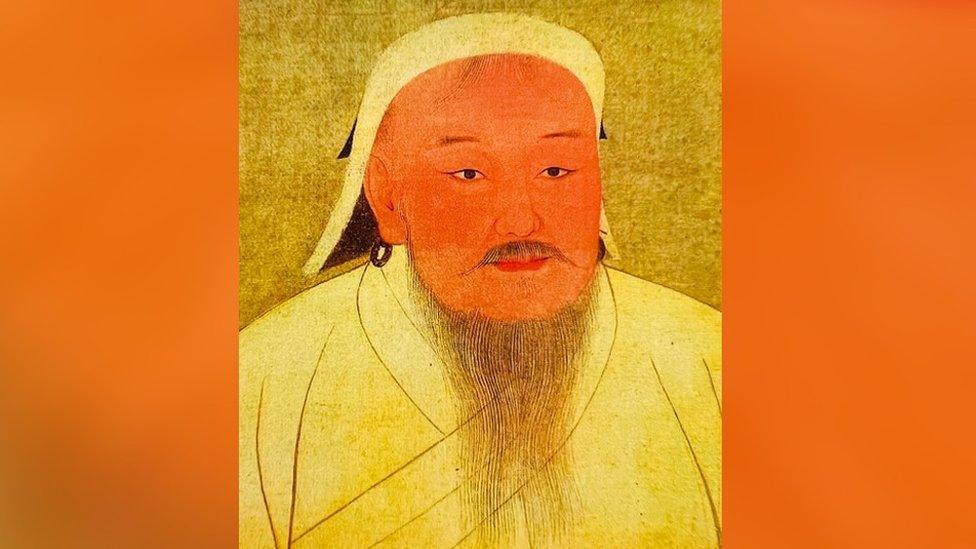
Temüjin: From Steppe Warrior to Genghis Khan
Early Life and Rise
Temüjin, often spelled Jemujin, was born around 1162 in the harsh steppes of Mongolia. The son of a minor tribal chief, Yesugei, and his wife Hö’elün, Temüjin’s childhood was marked by hardship. After his father’s death, his family was abandoned by their clan, forcing him to survive in poverty. These struggles forged his resilience and ambition. Through alliances, cunning, and military skill, he gradually united the fractious Mongol tribes. In 1206, he was proclaimed Genghis Khan, meaning “Universal Ruler.”
The Steppe World
The Eurasian Steppe—vast grasslands stretching from Eastern Europe through Central Asia to Mongolia—was home to nomadic peoples like the Scythians, Huns, Turks, and Mongols. Life revolved around horses, herding, and mobility. Steppe societies prized loyalty, kinship, and military prowess. Temüjin embodied these traditions, transforming them into tools of empire-building.
Conquests and Expansion
Genghis Khan’s campaigns reshaped Eurasia:
– China: He defeated the Jin Dynasty in northern China.
– Central Asia: He annihilated the Khwarezmian Empire after a diplomatic dispute.
– Middle East and Europe: His armies swept into Persia, Russia, and Eastern Europe, laying the foundation for the largest contiguous empire in history.
At its peak, the Mongol Empire covered 23 million km², spanning modern countries such as China, Mongolia, Russia, Iran, Iraq, Turkey, Ukraine, India, and much of Central Asia and Eastern Europe.
Women, Alliances, and Power
Genghis Khan’s personal life was deeply entwined with politics:
– He kept a harem of wives and concubines, often taking women from conquered peoples.
– His chief wife, Börte, remained influential throughout his life.
– He married his daughters to trusted generals and commanders, binding them to his dynasty and ensuring loyalty. These women often ruled territories in their own right, while their husbands fought in campaigns.
Such practices were not merely indulgence but strategic statecraft, weaving conquered peoples into his family network and stabilizing his empire.
Legacy
Genghis Khan died in 1227 during a campaign against the Western Xia dynasty. His burial site remains unknown. His descendants divided the empire into khanates—the Golden Horde, Ilkhanate, Chagatai Khanate, and Yuan Dynasty—each ruling vast regions. The Mongols facilitated Silk Road trade, spreading goods, technologies, and ideas between East and West. Genetic studies even suggest his lineage persists widely across Eurasia.
Conclusion
Temüjin’s transformation into Genghis Khan was one of history’s most remarkable journeys. From an abandoned boy on the steppe to the ruler of the largest contiguous empire ever built, his story is one of resilience, ambition, and ruthless strategy. His legacy endures not only in the lands once under Mongol rule but also in the cultural, political, and genetic threads woven across Eurasia.