
Iran’s war of the damned and shortsighted Africans
By Seun Kolade
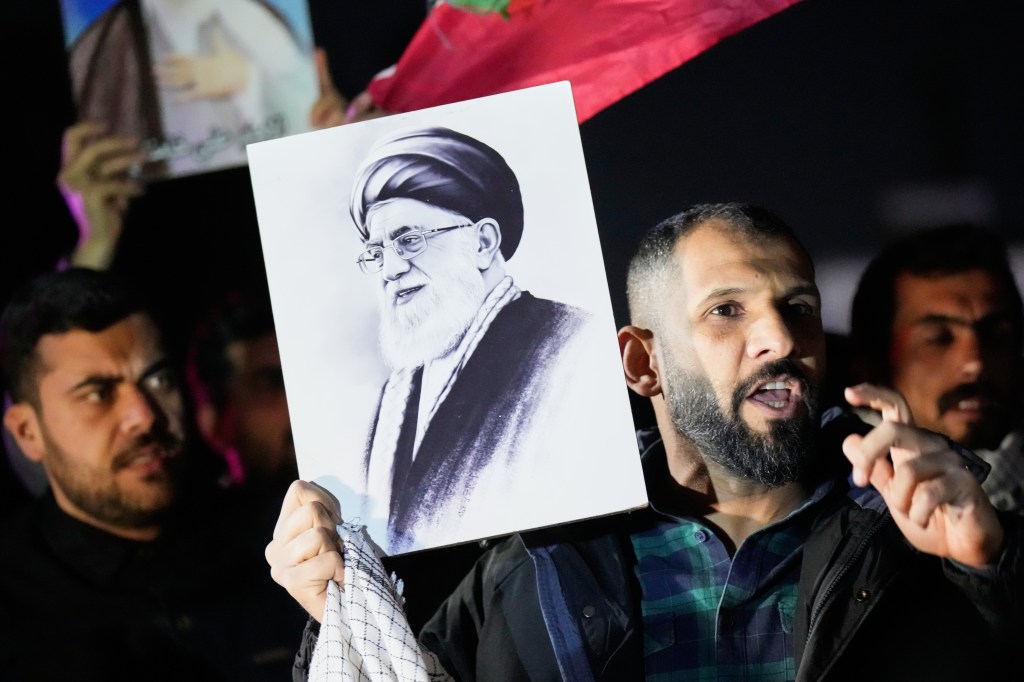
The US-Israel-Iran war has entered its fourth day, and the world is already learning, again, how quickly “civilisation” can be peeled back to reveal the old grammar of power: intimidation, punishment, and spectacle. Saturday 28 February 2026 now stands as a turning point. On that day, the Supreme Leader of the Islamic Republic of Iran was assassinated in a US–Israeli strike on his compound. Reports say he was in his office when he was killed. His wife was severely injured in the attack and died in the days that followed.
The Ayatollah was eighty-six. And, crucially, he was not hiding in a bunker. He had not been spirited away to some impregnable mountain cave, far from the bombs. For weeks, even months, there had been open threats of elimination, open talk of regime change, and repeated comments by the US president and senior officials suggesting they knew his whereabouts. Yet, by all accounts, he remained in his compound, present to the danger, strangely available to it. In the circumstances, it is hard to dismiss the suggestion that he was waiting to be killed.

That is not praise. It is a recognition of a political psychology that many commentators, especially in the West, consistently fail to understand: when leaders are cornered, some do not run. They choose the script of martyrdom. Predictably, millions of followers now see him precisely in those terms. In death, he becomes a more potent rallying point for anti-American and anti-Israeli sentiment than he ever was in life. Assassination may remove a man; it can also anoint an idea.
Since the killing, the war has taken a decisively new turn. Iran’s military response has not resembled the calibrated signalling that often characterises state-to-state escalation. It has been closer to scorched earth, the language of a state that believes it has been pushed past the point where restraint is meaningful. The region is reeling. Properties have been destroyed. Flights have been cancelled in their thousands. Airspaces that were, until yesterday, the arteries of commerce and tourism are now corridors of anxiety. In a part of the world that had marketed itself as a premium destination of modernity, spectacle and leisure, war has returned with crude insistence.
Let us be clear about Iran, because clarity matters. The Iranian regime has been demonstrably repressive. In recent rounds of citizen-led protests, it has been accused of killing large numbers of its own people, and of governing through fear, surveillance, and ideological policing. Iran has also been actively involved in arming and sustaining proxies across the region, from Lebanon to Yemen and Iraq. It is not a force for peace.
But it does not follow, as many appear to assume, that such a regime will simply capitulate under American and Israeli firepower, sign the paperwork of surrender, and thank its conquerors for the privilege of being “liberated”. That assumption is not only naive. It is dangerous. It misreads how states behave when they are being publicly humiliated and systematically decapitated.
It also underlines the delusional thoughtlessness with which President Donald Trump has pursued this war. Trump has appealed to powerful members of Iran’s elite corps, the Revolutionary Guard, reportedly offering amnesty if they surrender. Let us accept, for a moment, that some members of the Iranian establishment might contemplate their personal survival. Even then, the central question remains: why would they trust the word of a government that has repeatedly demonstrated that its commitments are tactical, not credible?
When a powerful state attacks in the middle of negotiation, it is not merely attacking its opponent. It is attacking the idea of negotiation itself. It is teaching the world that dialogue is, at best, a stalling tactic, and at worst, a trap. In that environment, “amnesty offers” are not a pathway to peace. They are a theatre of domination, a demand that the other side accept humiliation first and safety later. And once humiliation is the price of survival, many societies will choose death.
Perhaps what we are witnessing is not thoughtlessness but something colder: a simple recourse to brute force by the world’s predominant military power, unburdened by restraint because it no longer feels the need to perform restraint. The language of freedom and democracy, once used to dress up aggression, now barely bothers to show up. The mask has slipped. The age of pretence is giving way to the age of rawness.
This is why the war is becoming intractable. Trump, urged on by Netanyahu, is now locked in what looks like a war of the damned. Iran’s leadership and those who remain loyal to it appear to have resigned themselves to eventual death in the face of American and Israeli firepower. They have also realised that personal amnesty is not security. It is a promise issued by a state that has already demonstrated its comfort with deceit and subterfuge. If they are to die, they will not go down quietly. They will seek, in their last agency, to make the cost unthinkable.
There is an old historical echo here, and it is not flattering to anyone. The unfolding war is reminiscent of Japan’s kamikaze strategy during the Second World War, where a certain conception of honour and imperial destiny made surrender psychologically impossible. The suicide pilots were prepared to die to the last man, taking as many American and allied troops with them as possible. The Japanese establishment itself could not imagine capitulation without disgrace.
The Americans, recognising this, escalated to the atomic bombing of Hiroshima on 6 August 1945 and Nagasaki on 9 August 1945, unleashing misery on a scale that still reverberates. Only then did the Emperor and the state relent. That history is often told as a triumph of force. It is better understood as a warning about what happens when you drive your opponent into a corner where the only remaining exit is annihilation.
It appears the Americans have learned less from that episode than they think. The culture of honour and dignity is strong across the world, and especially in many Asian and Middle Eastern societies. It is also present in African cultures. In Yoruba thought, there is a saying: “ikú yà jù ẹ̀sìn lọ”. Death is preferred to humiliation. It is not a slogan for violence. It is an observation about the human spirit under siege. It is the same spirit that animated the kamikazes. It is the same spirit, I argue, that is now locking Iranian leaders into this war of the damned.
This matters because we are not merely watching a regional war. We are watching a wider moral architecture collapse.
We already know that the current “rules-based” order is, in practice, an elaborate arrangement by which the most powerful nations take the best portions of the world’s goods and resources for themselves. Yet it has been clever, at least in one respect: it leaves room for those lower on the ladder to retain a semblance of dignity while they feed on the crumbs. The theatre of rules, institutions, and procedures is not only about justice. It is also about stability. It gives weaker states a sense that they inhabit a world, not a jungle.
In that sense, the entire industry of international development, along with the paraphernalia of overseas assistance, has often functioned as a dignity-management system. It is a way of saying: you are poor, you are dependent, but you are still recognised; you still have a place at the table, even if it is at the far end. That dignity, however thin, is a linchpin of the global order. Without it, resentment hardens into revolt, and revolt hardens into violence.
Mr Trump does not understand this, or does not care. Under his government, the world is being taught a brutal lesson: that there is no table, only a boot; no rules, only power; no international community, only the powerful and the disposable. He does not merely break norms. He mocks the idea of norms. He speaks of invading countries at will. He treats diplomacy as weakness, law as inconvenience, and vulnerability as an invitation.
This is how civilisational regress happens. Not with a dramatic announcement that the world is abandoning its principles, but with repeated acts of impunity that normalise the unthinkable. First, the dismantling of the moral furniture: aid, institutions, cooperative language. Then, the casual threats. Then, the actual invasion or decapitation strike. Then, the insistence that this is “strength”. Then, the inevitable consequence: other actors conclude that only force has meaning, and the world moves one step closer to the abyss.
What makes this even more grotesque is the appeasement it has inspired. Allies who should know better have embraced compliance. Opposition at home, constrained by partisanship and fear, offers only tepid resistance. The international system, already damaged by hypocrisy, is now being openly dragged into a new era of civilisational regress where brute power is not a last resort but a default setting.
And yet, in the face of mounting evidence of the existential precarity that weaker regions face in such a world, many “educated” Africans are expending their intellect and energy defending these imperial military adventures in Iran, ostensibly because they dislike the mullahs.
This is the part that requires a sharper moral lens.
It is one thing to dislike the Iranian regime. It is another thing to cheer the humiliation of a sovereign state by external powers, as if the spectacle of domination is somehow “progress” as long as the dominated are unsympathetic. That is not political maturity. That is the logic of the plantation, internalised and repackaged as opinion.
Some Africans appear to believe that aligning emotionally with Western violence buys them a seat in the imagined “civilised” world. It does not. The architecture of power is not moved by your applause. It is moved by interests. And when interests shift, yesterday’s applauder becomes tomorrow’s target.
There is talk among right-wing commentators about the desirability of re-colonising Africa. Some Africans dismiss this as outrageous and far-fetched. But is it really far-fetched in a world that is rapidly discarding restraint? If powerful states can extract leaders, decapitate regimes, redraw red lines at will, and then dare the world to object, what exactly prevents the logic from travelling?
In the old colonial era, Africa was invaded and partitioned not because Africans were uniquely wicked, but because Africans were vulnerable and the world’s powerful were hungry. Today’s hunger wears different clothes, but it is still hunger: for minerals, for strategic corridors, for markets, for data, for geopolitical positioning. The only thing that meaningfully restrains hunger is cost. When the cost of predation falls, predation becomes policy.
This is why the celebratory mood some Africans adopt toward the collapse or punishment of Iran is not only misguided. It is self-endangering. It reveals a startling inability to connect patterns. It assumes that power is principled rather than opportunistic, that violence is righteous when it wears the right flag, and that Africa is somehow exempt from the future being rehearsed in Iran.
But Africa is not exempt. Africa is not protected by goodwill. Africa is protected, imperfectly, by norms, by diplomatic friction, and by the reputational cost that still comes with any attempt at open conquest. If that reputational cost is stripped away in Iran, it does not vanish; it simply relocates. It looks for the next theatre.
So, no, Africans should not be throwing a party at the fall of the Iranian regime, if it comes. That should be the last item on its priority list. Not because the mullahs deserve sympathy, but because the method matters. The precedent matters. The direction of the world matters.
If a rules-based order is replaced by a predator’s charter, then everyone without claws becomes prey. In that world, the moral performance of cheering the predator does not save you. It only confirms that you have already accepted your place in the food chain.
And that, in the end, is the tragedy of the shortsighted African response: it is not merely an error of judgement about Iran. It is a failure to recognise that what is dying in Tehran is not only a man or a regime, but the thin, fragile restraint that makes civilisation possible. Once that restraint collapses, the rest is just a matter of time, and geography.