

By Okoi Obono-Obla
The Tuareg People: Guardians of the Sahara:
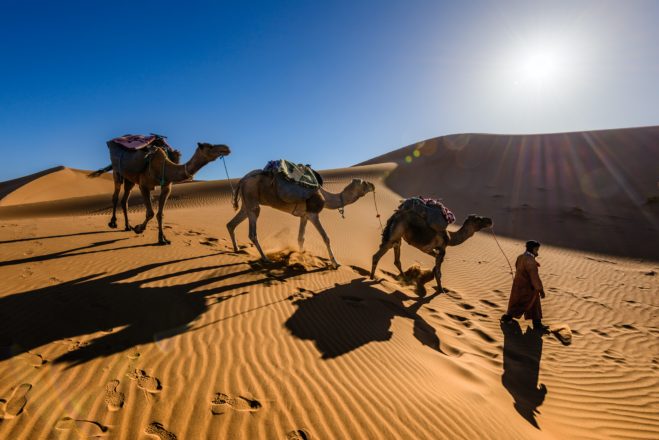
The Tuareg are semi‑nomadic herders and traders living in Northern Mali and across its borders in Niger, Burkina Faso, Algeria, Libya, and Nigeria. They are indigenous to the Sahel, with the Sahara Desert as their natural habitat. The Tuareg are an ethnic group within the larger Amazigh community, who are the indigenous people of Northwest and Northern Africa, stretching from Mauritania to Algeria before the Arab invasion of the region in the sixth century.
The Amazigh resisted the intrusion of Arab forces into their traditional strongholds in North Africa, led by Queen Dihya (Kahina), a warrior‑queen renowned for her leadership and courage. Despite her victories against Arab general Hasan ibn al‑Nuʿman, she was eventually defeated around 702 CE, marking a turning point in Amazigh history.
The Tuareg later suffered another heavy blow during the Berlin Conference, convened by European powers such as the United Kingdom, France, Portugal, Spain, and Holland. This conference divided more than 40,000 African kingdoms, chiefdoms, territories, and empires into colonial states, fragmenting Amazigh lands into Algeria, Morocco, Libya, Mali, Mauritania, Niger, and Nigeria.
The Amazigh people remain a clear example of Africa’s diverse phenotypes, which continue to challenge simplistic European classifications. Africans come in many hues and complexions—light, brown, dark, and black—reflecting the continent’s deep diversity.
Conclusion:
The Tuareg, as part of the Amazigh heritage, embody resilience and cultural continuity despite centuries of external pressures—from Arab invasions led against Queen Dihya to European colonization. Their story is a testament to Africa’s enduring diversity and the strength of indigenous identities across the Sahara and Sahel.












Leave a comment