

By Ozodi Osuji
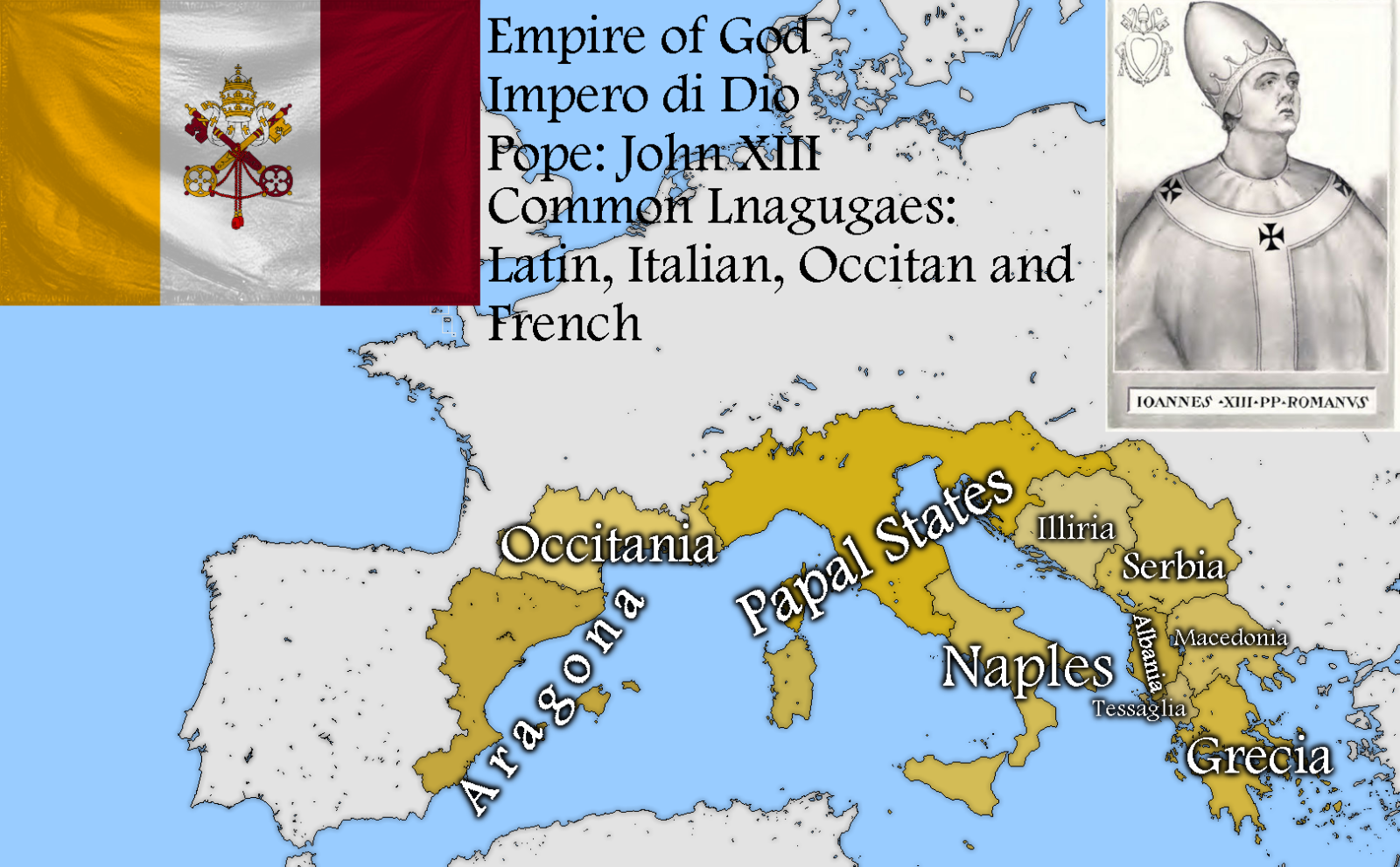
Thinking about what Donald Trump’s America is, the empire of the morally depraved, of narcissistic personalities who seek attention from other people, wanting to be told that they are special and have the power to destroy other people at will, as Trump said that he was going to destroy the civilization of Iran, it occurred to me that we have seen this movie before. My mind reflected on Saint Augustine’s book, The City of God versus the City of Man, written in 426 AD.
A Germanic barbarian tribe, the Visigoths, had sacked Rome in 410 AD (the Western Roman Empire finally fell in 475 AD), and folks were wondering how a primitive Germanic tribe could defeat the most powerful empire the world had seen until then.
A Roman Pagan philosopher, Varro, wrote that Rome fell because it had converted to Christianity. The Roman Emperor, Constantine, had converted to Christianity in 312 AD, and got the people in his empire to become Christian and give up their pagan worshiping (of Greek and Roman gods).
In 325 AD, at the behest of Constantine, the Bishops of Christianity met at Nicaea and constructed the Nicene Creed and began putting the bible, as we now know it, together. Many books that some early Christians had considered part of their sacred books were not selected to become part of the Bible; those not selected are now called apocrypha; they include the Gospels of Thomas, Mary Magdalene, Judas, and the other Gnostic Gospels.
Saint Augustine of Hippo, North Africa, set out to prove that the conversion of Rome to Christianity is not the cause of its fall; to the contrary, he argued that Rome expanded and became powerful because it gradually became Christian.
(For an exhaustive study on the decline and fall of the Roman Empire, see Edward Gibbon, The History of the Decline and Fall of the Roman Empire, 1776, Strahan and Cadell, London.)
If you recall, Jesus Christ was allegedly born in 4 BC during the reign of the first Roman emperor, Gaius Octavius, aka Augustus Caesar.
Augustus and his successors grew the empire from the first century AD to its fall in 475 AD. In other words, the Roman Empire became what it was, the world’s greatest empire, because of the Christian influence on it; it would not have been what it was without the impact of Jesus Christ.
Saint Augustine, before converting to Catholicism, had been a Gnostic Christian who embraced the Manichean doctrine that the world is a place of darkness due to our separation from the source of light, God, and his light. (Mani’s Gnostic writings were like Helen Schucman’s contemporary book, A Course in Miracles, written several thousand years later.)
According to Christian Gnosticism, aka Neo Platonism, to be on earth is to live in darkness; to return to light, hence to God and his heaven, we must give up what the world represents, the pursuit of individual and collective power, egoism, life of pleasure derived from the body; we must embrace ascetism, and return to a life that emphasized spiritual matters and give up the pursuit of physical pleasure, we must return to light.
On earth, in body, we live in matter; Gnosticism equates matter, the human body, with darkness and evil; its whole practice is to enable people, the few capable of spirituality, to dissociate from their egos and bodies and embrace their spiritual, light self.
Augustine eventually found Gnosticism wanting because no matter how much you try, you are never sure that you have returned to light; the individual cannot save himself by his efforts, therefore, he has to accept that only a messenger sent by God, in this case, Jesus Christ, can save him. Hence, salvation is by faith in Jesus Christ, not from one’s efforts to be saved.
Was Augustine correct in ditching Mani, 216-274 (a Persian) for Eusebius of Caesarea (260-240 AD), a Christian exegete and polemicist?
What I do know is that I am currently seeing the American empire as a city of man and comparing it to what my mind tells me is the city of God, what Saint Augustine called the New Jerusalem for the new Christian man.
Of course, I have not seen an actual city of God, a world lived on the parameters of the teachings of Jesus Christ; I am engaged in mere intellectual exercise. Intellection is allowed; therefore, I am just going to have to think and see where this line of thinking takes me.
What is self-evident to me is that America and the West in general have, more or less, done away with God and now live according to the findings of their ego-based science.
Science and its applied form, technology, have given Western man tremendous power over nature and people, to the point that a man lacking in any kind of scruples, called Donald Trump, boasted on April 6, 2026, that Iran has forty-eight hours to comply with his dictatorial demand to surrender or else he would eliminate its 4000-year-old civilization. That utterance is ego arrogance at its most supreme.
The West is now the epitome of the arrogant ego, pride at work, an ego that is not guided by any spiritual light; there is no God in the Western mind (as Nietzsche said, God is dead, and we live by Zarathustra), folks now live in accordance with what Arthur Schopenhauer called (The World as Will and Representation) their will to power.
Interestingly, Zoroastrianism was the ancient Iranian religion.
The ego believes that it can do whatever it wants, transform men into women and use them as sexy objects, have sex with five-year-old children, even eat their bodies, as the Epstein Files indicate that the Western ruling class does.
It is an amazing world that this godless world, based on science and technology, has given to Western man.
Thus, the question that arose in my mind is: do we need to return to living in the City of God, and if so, who defines it? We do not see God, and whatever we say about God is given to us by religious leaders, people who, when they had power, returned people to primitive states of being; think of the Catholic Inquisitions, where you either think as the amoral popes wanted you to think or they burned you at the stake, alive!
Who is to decide what constitutes the city of God versus the city of man, good and bad? Saint Augustine was among what Catholics call the founding fathers of their Church (others included Ambrose, Athanasius, Origen, Tatulian, and Eusebius); their writings shaped the Church’s theology, perhaps more so than that of Thomas Aquinas book, Summa Theologica ( written in 1265-1274), which attempted to use Aristotelian categories to prove that God exists.
Augustine wrote many books, including Confessions, The Enchiridion, On Christian Doctrine, and many others.
Let us think about this subject without presuppositions and preconceptions of what the truth is.
AMERICANS AS I SEE THEM
Americans like to call themselves Christians. If they are Christians, perhaps, they do not read the same Bible, The New International Version, that I read.
In the NIV, the four gospels of Matthew, Mark, Luke, and John, plus the letters of Saint Paul, show a Jewish young man called Yeshuah, whom the Greeks called Jesus, asking his followers to love and care for each other. Who are his followers?
“John 13:34-35: Jesus commands, “A new command I give you: Love one another. As I have loved you, so you must love one another. By this, everyone will know that you are my disciples, if you love one another”.
John 15:12: Jesus states, “My command is this: Love each other as I have loved you”.
“These verses emphasize the importance of selfless, agape love as a fundamental aspect of discipleship and Christian living.”
Matthew 7:12 and Luke 6:31
Matthew 7:12 teaches the Golden Rule: treat others as you would like to be treated, summarizing the Law and the Prophets.
Matthew 7:12 states, “So in everything, do to others what you would have them do to you, for this sums up the Law and the Prophets” (NIV). “This verse is part of Jesus’ Sermon on the Mount, where he provides guidance on moral and ethical living. It emphasizes reciprocity, empathy, and respect in human interactions, serving as a concise summary of the ethical teachings found throughout the Old Testament.”
Christians are those people who love God and their neighbors as they love themselves. You can choose to deceive yourself all you want, but the fact is that Jesus Christ taught love and kindness. He told the rich young man, Nicodemus, who in the middle of the night came to see him, to go and sell all his property and give the money to feed the poor because it would be easier for the camel to go through the eye of the needle than the rich man.
“In the Bible, Jesus tells the rich young man, Nicodemus, in Matthew 19:21, to “go, sell what you have and give the money to the poor, and you will have treasure in heaven; and come, follow Me.” This teaching emphasizes the importance of prioritizing spiritual wealth over material possessions.”
In the parable of the Good Samaritan, Jesus essentially asked his followers to take care of the medical bills of those who cannot do so by themselves. Luke 10: 25-37.
The Parable of the Good Samaritan
25 On one occasion, an expert in the law stood up to test Jesus. “Teacher,” he asked, “what must I do to inherit eternal life?”
26 “What is written in the Law?” he replied. “How do you read it?”
27 He answered, “‘Love the Lord your God with all your heart and with all your soul and with all your strength and with all your mind’[a]; and, ‘Love your neighbor as yourself.’[b]”
28 “You have answered correctly,” Jesus replied. “Do this, and you will live.”
29 But he wanted to justify himself, so he asked Jesus, “And who is my neighbor?”
30 In reply, Jesus said: “A man was going down from Jerusalem to Jericho, when he was attacked by robbers. They stripped him of his clothes, beat him, and went away, leaving him half dead. 31 A priest happened to be going down the same road, and when he saw the man, he passed by on the other side. 32 So too, a Levite, when he came to the place and saw him, passed by on the other side. 33 But a Samaritan, as he traveled, came where the man was; and when he saw him, he took pity on him. 34 He went to him and bandaged his wounds, pouring on oil and wine. Then he put the man on his own donkey, brought him to an inn, and took care of him. 35 The next day, he took out two denarii[c] and gave them to the innkeeper. ‘Look after him,’ he said, and when I return, I will reimburse you for any extra expense you may have.’
36 “Which of these three do you think was a neighbor to the man who fell into the hands of robbers?”
37 The expert in the law replied, “The one who had mercy on him.”
Jesus told him, “Go and do likewise.”
Capitalism, on the other hand, is predicated on each individual looking after his self-interests, cooperating with other people, but where necessary using them. Adam Smith’s book, The Wealth of Nations (1776), the bible of Capitalists, made it abundantly clear that the economy grows wealthy if each person serves his self-interests, not other people’s interests.
Americans are capitalists. Capitalists are people who produce goods and services that people want to buy, demand, and sell them, and amass great wealth and become billionaires, whereas those who have nothing to sell are poor and are homeless, and no one cares for them. Indeed, John Calvin noted that if you are not rich, God did not bless you!

The university economists that America pay stipends to mouth the good of capitalism tell us that the poor should not even be given handouts; they preach that all social safety net programs should be taken away from the poor; no unemployment benefits, no old age pensions, no welfare for mothers with dependent children, nothing, nada to help poor people.
Acts of the Apostles, 5:1-11
5 Now a man named Ananias, together with his wife Sapphira, also sold a piece of property. 2 With his wife’s full knowledge, he kept back part of the money for himself but brought the rest and put it at the apostles’ feet.
3 Then Peter said, “Ananias, how is it that Satan has so filled your heart that you have lied to the Holy Spirit and have kept for yourself some of the money you received for the land? 4 Didn’t it belong to you before it was sold? And after it was sold, wasn’t the money at your disposal? What made you think of doing such a thing? You have not lied just to human beings but to God.”
5 When Ananias heard this, he fell down and died. And great fear seized all who heard what had happened. 6 Then some young men came forward, wrapped up his body, carried him out, and buried him.
7 About three hours later, his wife came in, not knowing what had happened. 8 Peter asked her, “Tell me, is this the price you and Ananias got for the land?”
“Yes,” she said, “that is the price.”
9 Peter said to her, “How could you conspire to test the Spirit of the Lord? Listen! The feet of the men who buried your husband are at the door, and they will carry you out also.”
10 At that moment, she fell down at his feet and died. Then the young men came in and, finding her dead, carried her out and buried her beside her husband. 11 Great fear seized the whole church and all who heard about these events.
Opposed to the Christian demand for mutual help, to Capitalists, life is, as Charles Darwin said in his 1859 book, The Origin of Species, a competition, where the fittest survive, and the weakest die off. Herbert Spencer, in his Ethics, said Amen.
Americans live for their self-interests and couldn’t care less about other people’s well-being. If you have the right skill set, you make a good living; if not, you can sleep on the streets and die off. Who cares?
This is the America that I see with my two naked eyes. It is the city of man, the city of the ego. America is a place where people believe that they are separated from each other and have different interests and pursue their interests and do not even see other people.
Don’t complain about America because it made its modus operandi quite clear for all to see.
Do you have skills? Stick around, if not, the highway is on your left, right, and in front and back, move on.
America is an amoral haven. In this Kafkian world, less than ten percent of the population owns most of the property and wealth of the land, and ninety percent eke out a miserable living and are propagandized to still say that they live in the best country in the world.
The individual American does not have health insurance coverage unless his employer gives it to him, and he loses it when fired from his job; he cannot go to college unless his parents have the money to send him to college.
America is the picture of hell, but is presented as the picture of heaven; propaganda at its best markets hell as heaven!
Donald Trump, the current President of America, symbolizes Americans’ amorality. He believes that the powerful should take from the world what it can and leave the weak to suffer what they must. The man said that he went and kidnapped Nicolas Maduro of Venezuela to take that country’s oil and then went to Iran to take the oil. The plight of the people is not his concern.
Become powerful like him, if he will allow you to, or else do not complain if he comes after your country and takes its resources for the good of America. Why not, his amoral god, Baal, so dictates.
Gnosticism sees the Old Testament God, Yahweh, as the Demiurge, the proud Lucifer who rebelled against the good God and was chased out of heaven, and he came to earth to establish his egoistic and proud reign. The God that American White Christian Nationalists worship is, according to Gnosticism, Satan!
The USA is hell on earth. If your frame of reference is empiricism, Aristotelian realism, you conclude that it is the way the world is and do not worry about it. The other countries in the world are not better than the USA.
Pure scientific observation shows us people competing for food and the fittest having more food than the weakest, the weak riddled with diseases and ignorance, and dying off, whereas the rich have the best access to healthy food, medications, clothes, shelter, and education, and the ability to travel around the world having fun. That is just the way it is.
But, if you for some reason, believe that realism is not good enough and harken to Plato’s idealism, see humanity as people in a dark cave, ignorant of the light of God, love and caring for each other, and believe that there is a world of love outside the dark cave, outside our world, and that we ought to try to live beyond the shadows of us we see with the reflected light in the cave, go outside and be in the light, see perfection of people and things as God made them, then you have an alternative to Aristotle’s dog may eat dog world we live in. (See Plato’s book, The Republic.
The Republic is a magnificent treatise on idealism; it is, however, problematic because it does not endorse democracy; it wants the best of the best, aristocrats, the philosopher kings, to rule human polity. The masses and their democracy, Plato says, always lead to chaos, disposing society to yearn for a dictatorship to bring about order, as American democracy has elected an illiterate dictator in King Donald.
The idealist believes that we are better than we currently are and aims at getting to it, but the realist tells us that the idealist is neurotic and wastes his time wishing for non-existent ideal selves and world. Take your pick, realism or idealism, who knows what the truth is?
Nevertheless, history teaches us that Rome fell when attacked by primitive barbarians, and most other empires also fell.
The USA, as we speak, despite its infantile pride, as represented by Trump, is on its last legs and by the end of this century will be counted as having been a great empire, and others will take over, repeat the same mistakes, fall, and others will take over. The human drama, the comedy cum tragedy of the human experience on planet earth, continues.
DISCUSSION
The American empire is the empire of well-fed slaves. If they speak up against the empire, they are quickly picked up and punished or blacklisted and left to rot. The political establishment has the people well-trained to go and fight foreign wars for it, but not to stand up and fight for domestic economic and social justice.
Complain about what seems an injustice in the land, and you are punished, therefore, most white men keep their mouths shut, have jobs that pay their bills and feed them and their family, but know that the moment they say something negative about the oligarchic rulers of their land they are finished, they are simply thrown out to the streets and to the dogs.
The white American is a parody of what a human being could be; he fights for the leaders of his country but will not fight for social and economic justice in the land.
The American soldier is similar to the medieval European soldiers who fought and died for their Kings, Dukes, Earls, Barons, and other aristocrats, but would not ask for fairness in their land. This is a pity; the people are trained to be happy slaves.
As one looks at the contemporary white American male, even female, one wonders if he or she is even a human being at all. Maybe what we are looking at is a breed apart from regular human beings, genetically bred, happy slaves? You never know. The white American is contemptible; a true human being at least asks for a little justice in his land.
Compare the American to the French; let the French government propose to do something that the people do not like, and they are in the streets demonstrating and fighting for justice and will not rest until they achieve their goal, but in the USA, people go along with atrocious injustices, no publicly paid health care, no access to education through college for all. What is the government for, just to use the people to go fight its wars to conquer and transform human beings into slaves?
When the American empire collapses, as it is on its way to doing, the world will breathe a little easier. The USA has been a plague on the world, a disease to be healed.
From its inception, it nearly killed off all the natives, enslaved Africans, and refused to give its people what folks all over the world take for granted, such as annual paid vacations of a month or more, paid day care centers for children (the Republicans ask women to have children but will not help them financially to support those children!).
I am not being sentimental; I take the world as my two eyes show it to me; I see a world where the rich and powerful screw the weak and poor, a world where white folks screw black folks, and so on. I do not cry over spilled milk; the world is what it is, and I live with it.
Yet something in me asks me to ask whether Saint Augustine had some useful points in asking for a city of God, a people that live by the teachings of Jesus Christ, care for each other?
Another part of me, aware of what the Catholic church did in the past, especially during the various inquisitions, enslave people to its superstitions, caused the dark ages that followed the fall of the Roman Empire, and also mindful of how the great superstition called Islam has enslaved the minds of Arabs and those unfortunate to live in Muslim countries, well, I would rather die than support a theocracy.
So, what is the alternative if the city of God, since God is our idea, is not the answer to the pathetic cowards that Americans have become? How do we inject some morality into people’s behaviors without imposing religious false morality on them?
CONCLUSION
Can a city of God, the empire of God, ever be practiced on planet Earth? Or is it a mere wish that the realities of what we know about people prevent us from ever practicing them?
What I know for certain is that there were no past empires and cities of God on planet earth. The past and the present do not preclude a better future, so who knows whether we shall in the future have a city based on Christian morality, a new Jerusalem, and a new people?
Expectation of miracles may not be mere magical thinking; perhaps the universe has built into it the possibility for magic?
In the meantime, we must deal with the realities of this world as they are. America and other countries are organized around self-interests. The New Jerusalem that Saint Augustine wished would replace the old, sinful one is still not part of human reality.
In a world operating on self-interests, people will harm each other, steal from each other, and do the other dreadful things that they have done throughout human history; therefore, for them to even exist, society must be well organized with governments, police, courts, prisons, militaries, and the other means of bringing about law and order. Removing these instruments of social control, in Thomas Hobbes (Leviathan, 1651) language, people’s lives become nasty, brutish, and short. While waiting for idealism, we must do what the exigencies of selfish human beings call for: realism.
Ozodi Osuji
April 9, 2026
















Leave a comment