

By Otunba (Dr) Abdulfalil Abayomi Odunowo
My dear Brothers and Sisters, Uncles and Aunties, Fellow Nigerians,
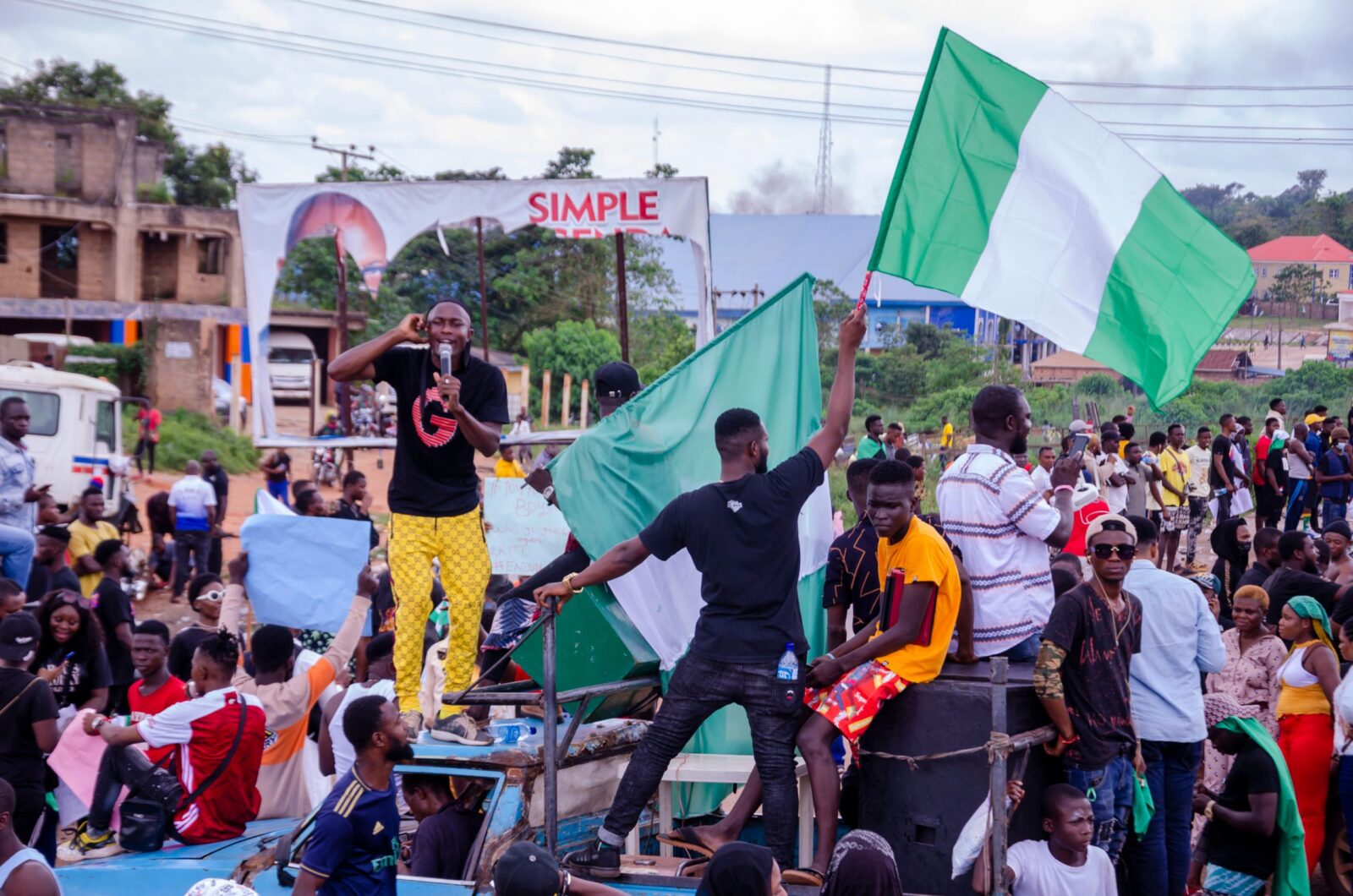
Time isn’t on our side. Every year we waste, our children’s tomorrow shrinks a little more. So before we dash to the streets, before we chant ourselves hoarse or start throwing stones, let’s stop and face the hard questions in front of us. Not in anger. Not in blind tribal defence. But with the kind of straight, uncomfortable honesty our ancestors would recognise, the kind of honesty that might’ve saved us years of heartbreak.
Because Nigeria’s biggest danger isn’t one man or one party. It’s our shared stubbornness, our refusal to learn from the blood-stained chapters of our own story. Since independence we’ve kept replaying the same errors, and the bill has come in lives lost, hopes crushed, and a country still pleading for light.
1. THE SOUTH-EAST QUESTION: WHAT DID DECADES OF LOYALTY ACTUALLY DELIVER?
For more than sixty years, the South-East has stayed loyal to stable political platforms, most notably the PDP in the Fourth Republic, delivering bloc votes election after election. In 1979, the NPP under Dr. Nnamdi Azikiwe swept the region; with the return to democracy, the South-East remained a PDP fortress, even while the APC struggled to crack 10% in many cycles. That loyalty was complete. Predictable. Unshaken.
But what did it yield?
No executive president from the South-East since the ceremonial role of Nnamdi Azikiwe in the First Republic. No vice president in the Fourth Republic. Federal infrastructure has trailed behind, and the cries of marginalisation, echoing from the scars of the 1967-1970 civil war that claimed over a million lives, still hang unanswered. Where’s the proportional development? Where are the refineries, the federal highways, the industrial hubs that should’ve followed decades of alignment?
Loyalty without results isn’t virtue. It’s political self-harm dressed up as faithfulness. The South-East has given plenty and gotten crumbs. How long do we keep watching our children migrate or rot in frustration before we demand more than praise for “consistency”?
2. THE NORTH QUESTION: WHAT DID GENERATIONS OF POWER TRULY ACHIEVE?
This isn’t emotion, it’s the record.
The North has held Nigeria’s leadership for most of our independent history. From Sir Ahmadu Bello’s influence in the First Republic, to Shehu Shagari (Sokoto, 1979-1983), to military rulers like Murtala Mohammed (Kano), Ibrahim Babangida (Niger), Sani Abacha (Kano), Abdulsalami Abubakar (Niger), and civilian presidents Muhammadu Buhari (Katsina, 1983-85 and 2015-2023) and Umaru Yar’Adua (Katsina, 2007-2010). The North-West alone has controlled the presidency for over 11 years in the Fourth Republic, and vice presidencies add even more weight.
And yet, today, the numbers are brutal:
• 65% of Nigeria’s multidimensionally poor 86 million souls live in the North, according to the 2022 National MPI. Eight of the ten poorest states are Northern, with Sokoto at a staggering 91% poverty incidence.
• Insecurity hits hardest here: Boko Haram erupted in 2009 in the North-East under northern-led administrations, killing tens of thousands and displacing millions. Banditry and farmer-herder clashes have turned the North-West and North-Central into killing fields.
Power without outcomes isn’t strength. It’s national heartbreak. How did dominance over the presidency, the military, and resources fail to translate into schools, factories, or safety for the very people it claimed to protect? Northern Nigerians deserve far better than recycled explanations while their children go hungry and die.
3. THE LAGOS MODEL QUESTION: WHAT DOES REAL BUILDING LOOK LIKE?
While some clung to loyalty and others clutched power, Lagos went another route: deliberate, structured state-building.
In 1999, Asiwaju Bola Tinubu inherited a near-bankrupt Lagos. He didn’t just “govern”, he mapped out a system. He established the Lagos Metropolitan Area Transport Authority (LAMATA) in 2002 with World Bank support, setting the foundation for modern rail and roads. And here’s the key: the plan didn’t die with one administration. Babatunde Fashola built on it, Akinwunmi Ambode extended it, and Babajide Sanwo-Olu is delivering Africa’s first sub-national modern intra-city rail system funded without federal handouts.
Today, Lagos contributes over 30% of Nigeria’s GDP, attracts 45% of national capital inflows, and hosts over 2,000 startups, making it the fastest-growing tech ecosystem on the continent. IGR has exploded. Institutions function. Systems survive. Even with pushback from the centre, Lagos kept building, people, infrastructure, continuity.
So why do we resist proven competence? Why pretend we can’t see a model that turned a chaotic megacity into an economic engine while much of the country wrestles with collapse? The evidence is right there. Dismissing it is choosing darkness when light is available.
4. THE NATIONAL QUESTION: WHY ARE WE REWARDING THE ARCHITECTS OF FAILURE?
The same political forces that oversaw decades of underdevelopment, weak institutions, structural imbalance, and squandered chances are now rebranding for yet another turn at the wheel.
They led while poverty ballooned (from 39 million poor in 1980 to over 112 million by 2010). They were in charge as the North’s poverty deepened and insecurity spread like a cancer. So what’s different now? Have they genuinely changed course, or are we simply repackaging the same tired storylines that have kept Nigeria on life support since independence?
Trusting them again without proof isn’t optimism. It’s historical amnesia, and that carelessness has already cost us rivers of blood and oceans of possibility.
5. THE PRESENT REALITY: REFORM OR RETREAT INTO FAMILIAR RUIN?
Nigeria’s troubles didn’t appear overnight, they’re the compounded poison of decades of bad decisions.
Now, arguably for the first time in years, serious reforms are happening under President Tinubu: fuel subsidy removal in May 2023 (ending a decades-long drain that bled trillions), foreign exchange unification to kill arbitrage, and fiscal tightening that has already produced trade surpluses, rising reserves, and projected GDP growth above 4% in 2025. Inflation is easing. Revenue is rising. Infrastructure funding is moving in ways we didn’t see before.
None of this is painless. People are suffering, no one should deny that. But it’s movement, real movement away from the cliff. Do we abandon surgery because it hurts? Or do we crawl back into the familiar mess: subsidies that didn’t reach the poor, multiple exchange rates that enriched the few, and the same leadership style that delivered poverty and blood?
6. THE FINAL QUESTION: ARE WE THINKING STRATEGICALLY OR DOOMED TO EMOTIONAL RUIN?
This is bigger than any single leader. It’s about patterns versus sentiment.
• Those who held power but delivered poverty and insecurity now want another chance.
• Those who gave loyalty but reaped marginalisation still defend the old arrangements.
• The one linked to visible systems, institutions, and continuity faces the fiercest pushback.
Nigerians, the decision is ours: evidence or emotion? Progress or familiarity? Break the cycle, or sentence our children to repeat it?
CONCLUSION: THE TERRIBLE COST OF GETTING THIS WRONG
If we remove direction without a better alternative, we aren’t advancing, we’re deliberately rebooting failure.
If we ignore history, we aren’t being hopeful, we’re gambling with the lives of 200 million people.
And if we keep choosing with our hearts instead of our heads, we may wake up in 2030 with new faces in power and the same pain inside our homes.
This moment is urgent. The future isn’t guaranteed. Nigeria is standing at the edge of history, and the choice in front of us is simple, yet massive:
Are we finally ready to think like a nation that intends to survive and thrive? Or will we keep reacting until there’s nothing left to save?
The quality of the answers we give today will decide whether our children inherit a country, or a graveyard of broken promises.
Let us choose wisely. Let us choose Nigeria.
Time is not waiting.
Signed
Otunba (Dr) Abdulfalil Abayomi Odunowo
National President
SpeakUp Collective Nigeria (SCN)









Leave a comment