
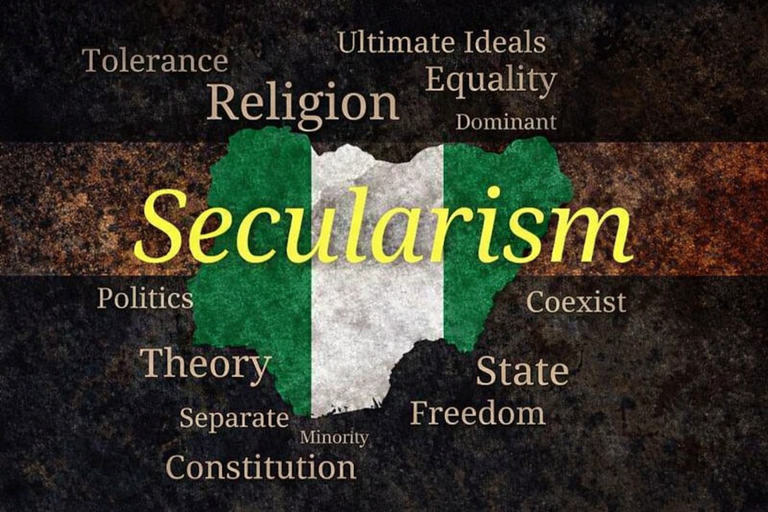

“Because of the ambiguity that attends our public discourse (and the public-law regime) on secularism in Nigeria, faith-groups continue to assert that secularism means either government ‘neutralise’ religion or government ‘side’ with religion. In both cases the state is seen to lose its legitimacy.”* — Adeyemi J. Ademowo, Secularism, Secularisation and the Secular Nigeria Project (2014)
The suspicion that the Nigerian state is complicit in religious conflict is long-standing. It springs from the ambiguity I noted years ago: that secularism in Nigeria has never been clearly understood nor sincerely practised. Over time, both Christian and Muslim groups have accused the state of bias, depending on where power tilts. But the real problem is not religious collusion; it is ethno-political partiality disguised as faith.
From the historicultural perspective, Nigeria’s crises, from Sokoto to the Middle Belt, have rarely been about religion in its pure sense. They are struggles over identity and control. The Fulani expansionist project, which began with Othman Dan Fodio’s jihad, used Islam as its legitimising banner but pursued conquest and domination. The subsequent subjugation of Hausa civilization, the Alimi–Afonja betrayal in Ilorin, and the halted invasion of Yorubaland at Osogbo all illustrate this. What began as a supposed moral or spiritual movement was, in fact, an imperial one: one that replaced plurality with hierarchy and masked ethnicity with faith.
In more recent history, this pattern remains visible. MKO Abiola’s humiliation and death were not about Islam; they were about the politics of control. The recent attempted coup against Bola Ahmed Tinubu too, can be deduced as not spiritual rivalry but the continuing fear of a particular ethnic group of losing dominance. Religion merely provides the vocabulary; ethnicity supplies the grammar. Today, what we call “religious terrorism” is, in truth, can be tagged as Fulani expansionism weaponising Islam, which is an old ambition refitted for modern times. Those who orchestrate it rely on the state’s weakness, its ethnic sensitivities, and its moral confusion.
To be sure, I am convinced that the tragedy of our secular Nigeria project today is twofold: political greed and ethnic ambition. The weapons once distributed for electoral advantage now fuel banditry and terror and the borders once opened for “brothers” from the Sahel to “help for political reason” now serve as gateways for kidnappings, conquest and chaos. And while Nigerians quarrel over Islam and Christianity, the real architects of disorder thrive under both banners.
To rethink the “Secular Nigeria” project is to move beyond these illusions. Secularism is not hostility to faith; it is justice in the management of diversity. It is the courage to be fair even when fairness threatens ethnic privilege. Until Nigeria names and resists the ethnic roots of its insecurity, particularly the Fulani project cloaked in religion, the state will remain haunted by its own moral confusion.
Ire o!
@yemiademowo@gmail.com












Leave a comment