

By Sonala Olumhense
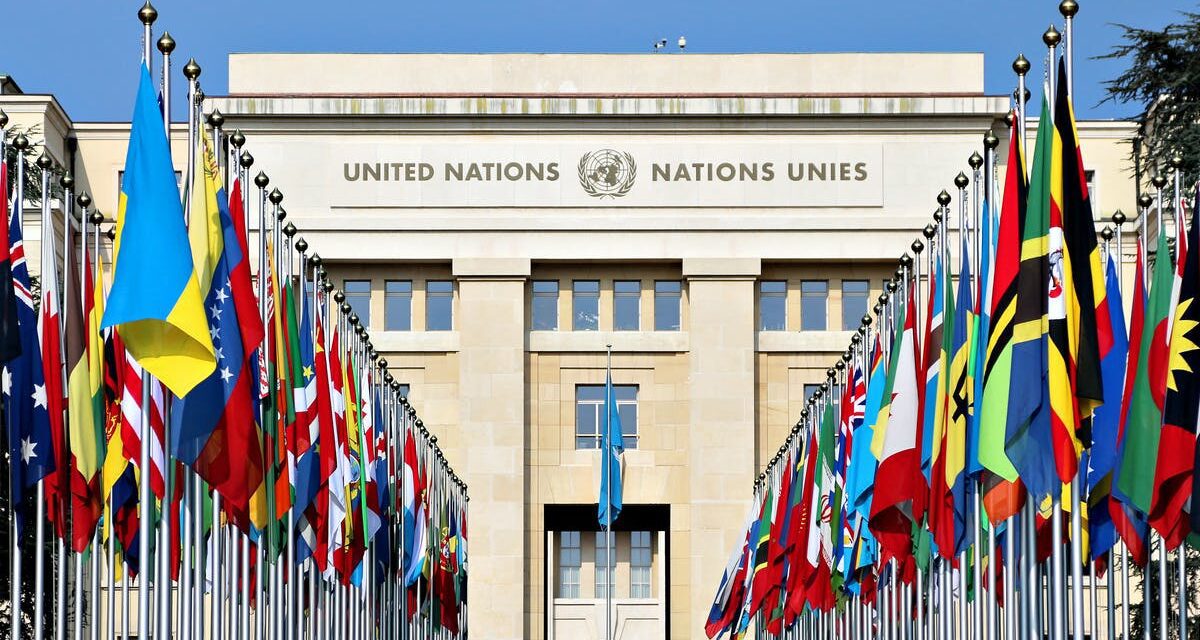
I have spent time on the Third Floor of the United Nations Headquarters in New York, where the press corps works. It is not a gentle place. The journalists there are seasoned professionals drawn from every region of the world: people who have reported wars, corruption scandals, and the fall of governments. They are interested in facts, not impressed by titles.
They ask the question behind the question, and they do not move until they have an answer. When a Permanent Representative walks into that building to speak for 220 million people, the world watches. And so, on behalf of those 220 million people, I am watching too.
I am watching with grief.
Last week, President Bola Tinubu appointed Senator Jimoh Ibrahim to New York as Nigeria’s Permanent Representative to the UN. The congratulatory messages arrived immediately, as they always do in Nigeria, where appointment is confused with achievement and proximity to power as evidence of character.
The Ooni of Ife called him the right man for the job. Former Senate President Ahmad Lawan called him one of the finest Nigerians he had worked with. Governor Dapo Abiodun said something about a “distinguished career.”
I invite these men to examine the record.
Ibrahim’s business career is not one of creation or upliftment. It is of acquisition and collapse. That is why, for years, his name has circulated in connection with financial disputes, asset issues, indebtedness, investigations, forgery, tax allegations, embezzlement, money laundering, and massive debt recovery proceedings.
Consider: NICON Airways: acquired, collapsed, approximately 300 workers left without wages from May 2007. The National Industrial Court awarded those workers N1.5 billion in 2013. Ibrahim appealed. The Court of Appeal dismissed the appeal in 2017.
In 2024, a statement from former staff representatives confirmed that N808.7 million in salary arrears remained unpaid, along with N8.1 million in pension contributions that had been deducted from workers’ salaries but never remitted. Nearly two decades later, that money—their money, taken from their wages—has cruelly not reached them.
Air Nigeria: taken over in 2010, collapsed in 2012. The National Assembly’s own Joint Committee on Aviation stated on the record that the airline was grounded because Ibrahim diverted a N35.5 billion government intervention loan—guaranteed by UBA, funded by the Bank of Industry—into his family company, NICON Investment Limited.
His Finance Director, John Nnorom, a qualified accountant who resigned and was then prosecuted on Ibrahim’s initiative, submitted detailed evidence to a Senate committee in 2016, including the acquisition of Energy Bank of Ghana with Afrexim loan funds registered not in Air Nigeria’s name but in Ibrahim’s personal name. He was later discharged and acquitted. The Senate’s 2014 resolution directing the CBN Governor to recover the aviation funds from Ibrahim was never enforced.
NICON Insurance: acquired, gutted. Former managers say Ibrahim fired 85 per cent of staff, and the company went from national market dominance to less than one per cent of its pre-privatisation client base. In 2016, the Federal Inland Revenue Service (FIRS) sealed its offices for N182.7 million in unremitted taxes.
FIRS filed a 10-count criminal charge against Ibrahim personally—not his company, him—for five years of unpaid taxes totalling N4.86 billion and for producing and presenting forged Tax Clearance Certificates to renew expatriate quota positions for 30 persons. That charge sits in the Federal High Court in Abuja.
In November 2020, the Asset Management Corporation of Nigeria seized 12 named properties from Ibrahim over a N69.4 billion debt. AMCON said publicly that Ibrahim and his companies had been “recalcitrant and unenthusiastic” about repayment despite multiple exit opportunities. The court filing—Suit No. FHL/L/CL/776/2016—was filed in 2016. It took four years to obtain the seizure order. How much of that N69.4 billion has been recovered?
Remember the famous NewsWatch magazine? Until a court stopped him, Ibrahim was the one who tried to rip it out of the soil and throw it away.
In New York, Aersale Inc. dragged Ibrahim to the US District Court, claiming over $7.68 million for breach of aircraft lease agreements in which he had signed as personal guarantor. In 2012, EFCC agents interrogated him for hours; sources at the time reported he had burned documents before the interrogation and sustained visible injuries in the process.
These are the credentials of the man being promoted by Aso Rock to represent Nigeria at the UN.
Now consider the environment. The Nigerian Mission’s anaemic website is a monument to institutional abandonment. Its most recent UNGA session archive stops at the 72nd session, which ended in 2018. There are no recent events or records, and no evidence of a functioning communications operation.
The building, just one block from the UN, is, in effect, a ghost. Into this ghost is Nigeria thrusting an operative who will abandon hundreds of unpaid workers, billions in court-ordered debts, criminal charges, a burned archive of documents, and the wreckage of at least three institutions that Nigerians trusted. What message will he bring to the world: that he represents Nigerians?
The timing makes it worse. Ibrahim travels to the media capital of the world that already knows Bola Tinubu by name. Sadly, that is not from reporting great success on the UN podium of conquering insecurity in Nigeria or in implementing the Sustainable Development Goals. Instead, it is from the federal courthouse in Chicago, where the drug scandal of 1993 is a matter of permanent public record and in a country where Tinubu is begging to hide his records because they would do him “irreparable harm.” International journalists know about these ghosts. And when they want to ask about them, who will answer for Nigeria?
This is not governance. It is the re-circulation of embarrassment. It is what happens when a government has contempt for its own people, when it trusts that outrage will not last, that the congratulatory messages will drown out the record.
Ibrahim’s appointment is not a diplomatic strategy. It is a confession: that in the grotesque estimation of this administration, Nigeria’s seat at the world’s most important table is a reward to be bestowed, not a trust to be honoured.
I have written previously about the comatose state of the Nigerian Mission to the UN. I write again now, with the same outrage—and something heavier than outrage. I write with grief. The grief of a country that keeps asking its citizens to lower their self-esteem. The grief of workers in Abuja waiting for wages since 2007. The grief of a continent that could be represented with distinction.
Only last week, in front of an international TV audience, presidential adviser Daniel Bwala infamously demonstrated the pain and humiliation of a compromised operative being ruthlessly disrobed. Several of the ambassadors that the Tinubu government is currently trying to shoehorn into relevance are known to be of the same mould of hypocrisy and charlatanism. Nigerians are being systematically desensitised to shame by a government with a sense neither of smell nor of vision.
This is an insult in real time. It is irreparable harm to Nigeria.








It’s interesting to see the difference between how appointments are celebrated publicly in Nigeria and the scrutiny that comes with representing a country at the UN. Navigating that high-pressure environment will be a real test, and it will be fascinating to see how Jimoh Ibrahim rises to the challenge.