

THE US-IRAN TENSIONS, GLOBAL ENERGY FEARS AND TINUBU’S UK VISIT: A Moment Nigeria Must Not Waste
BY KHALED YAZEED
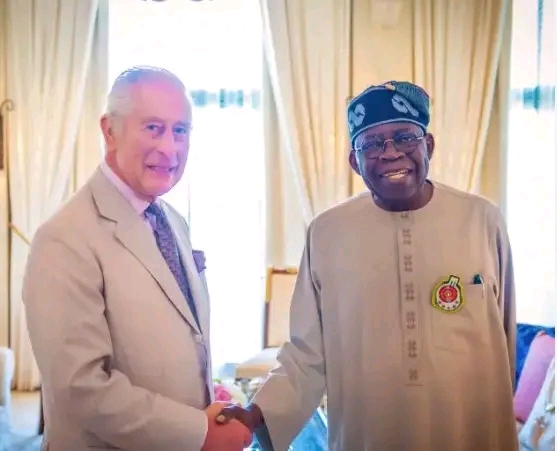
As President Bola Ahmed Tinubu arrives in the United Kingdom for a high-level diplomatic visit, the global geopolitical landscape is becoming increasingly tense. What might ordinarily be viewed as a routine state engagement now carries deeper significance as tensions in the Middle East raise concerns about global energy security.
This is not simply a ceremonial visit. It comes at a time when the world is watching the fragile stability of energy markets, particularly in the Gulf region.
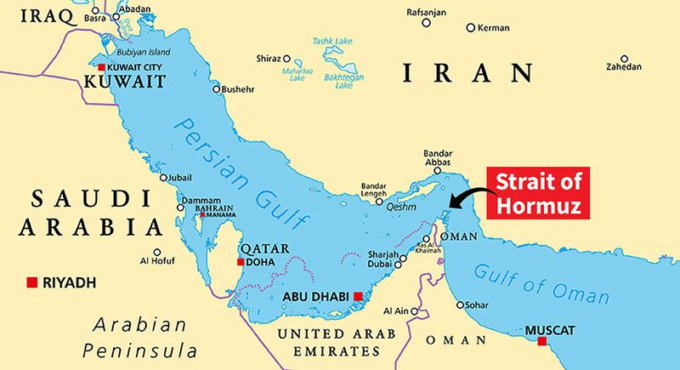
At the centre of global concern lies the Strait of Hormuz, a narrow maritime corridor between Iran and Oman through which nearly 20 percent of the world’s oil and liquefied natural gas passes every day.
Recent tensions involving the United States, Israel and Iran have raised fears that any escalation could disrupt shipping through this strategic waterway. Although the strait has not been formally closed, heightened military activity and security risks have forced shipping companies and insurers to reconsider operations in the area. War-risk insurance premiums have risen sharply, and several shipping firms have begun rerouting or delaying cargo.
For energy-importing nations like the United Kingdom, these developments create understandable anxiety. While Britain still receives energy supplies from various sources, any disruption in the Middle East inevitably pushes global oil prices upward and creates uncertainty across the market.
The issue therefore is not that Britain is running out of fuel today, but that energy security has suddenly become a strategic priority once again.
This is where Nigeria quietly enters the geopolitical conversation.
Unlike many Gulf producers, Nigerian crude does not pass through the Strait of Hormuz. Oil exports from Nigeria move through Atlantic terminals such as Bonny, Forcados, Brass and Escravos before heading directly to international markets. In a period where supply routes are under scrutiny, such geographic advantage becomes significant.
Nigeria’s Foreign Affairs Minister, Yusuf Tuggar, has repeatedly emphasised the country’s potential role in helping diversify global energy supply chains. For countries seeking reliable partners outside potential conflict zones, Nigeria’s position along the Atlantic corridor offers a measure of stability.
Another factor reshaping Nigeria’s energy landscape is the emergence of the massive Dangote Refinery near Lagos. With a refining capacity of about 650,000 barrels per day, the facility is expected to significantly reduce Nigeria’s reliance on imported refined petroleum products while strengthening domestic fuel supply.
The refinery has already begun altering long-standing fuel trade patterns in West Africa. For decades, Europe exported large volumes of refined petrol to Nigeria. As domestic refining capacity improves, that dynamic is gradually shifting.
Beyond economics, the project symbolises something deeper: Nigeria’s ambition to move from being merely an exporter of crude oil to becoming a fully integrated energy player.
Observers believe this broader transformation adds weight to President Tinubu’s discussions in London.
The visit itself is also politically notable. It marks one of the most significant diplomatic engagements between Nigeria and the United Kingdom in recent years and comes as the British government under Prime Minister Keir Starmer seeks to deepen partnerships with strategic economies across Africa.
While official discussions are expected to cover trade, investment, climate cooperation and security, energy remains an unavoidable topic in the background.
Nigeria’s federal budget for 2026 was benchmarked at roughly $75 per barrel. Rising geopolitical tension has already pushed global oil prices higher, and analysts warn that any prolonged disruption in the Gulf could drive prices even further. For an oil-producing nation like Nigeria, higher prices could translate into increased revenue, provided production levels remain stable.
Yet the relationship between Nigeria and the United Kingdom is not without complications.
One unresolved issue is the long-running arbitration dispute involving Process and Industrial Developments Limited, commonly known as P&ID. The multi-billion-dollar legal case over a failed gas processing agreement has cast a shadow over bilateral relations for years and continues to move through the British legal system.
Nigeria’s Solicitor-General, Dayo Apata, has stated that the government will continue to explore every legal option available to protect national assets and challenge the judgment.
Despite these tensions, the broader strategic relationship between Nigeria and Britain remains important for both countries.
For the United Kingdom, Nigeria represents one of Africa’s largest economies, a major energy producer and a key regional partner.
For Nigeria, Britain remains an important destination for investment, technology transfer and financial cooperation.
Moments of global uncertainty often reshape international partnerships. The ongoing tensions surrounding the Strait of Hormuz are a reminder of how fragile global supply chains can be.
For Nigeria, the real question is whether the country is prepared to convert geopolitical opportunity into long-term national advantage.
President Tinubu’s visit to London therefore carries significance beyond diplomatic protocol.
It represents a moment where Nigeria can present itself not merely as a resource-rich country, but as a reliable strategic partner in an uncertain world.
Whether that opportunity is fully realised will depend not on speeches or ceremonies, but on the policies and agreements that follow.
The world may be watching events in the Middle East, but it is also quietly watching how countries like Nigeria respond.
The UK needs what Nigeria has: secure, accessible energy supplies outside conflict zones. Nigeria needs what the UK offers: investment, technology, and long-term partnership.
If this visit yields concrete agreements, if the diplomatic choreography translates into barrels of oil and cubic feet of gas flowing reliably to British shores, then Nigeria will have finally seized a global moment rather than watching it pass by.
If not, this will become another chapter in the painful history of missed opportunities.
Nigeria’s moment has arrived. The only question remaining: Is Nigeria ready?















Nicely put . Cheers
Source:
https://www.google.com.bd/url?q=https://astra-hotel.ch/articles/code_promo_45.html
With thanks Numerous interesting information