


by Prof. Adeyemi Ademowo
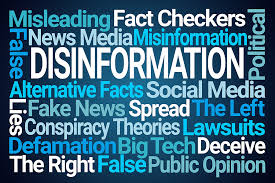
I have often been fascinated by how every generation believes it is living in the most confusing period of history. Yet, there is something about our own time that feels particularly unsettling. Information has never been this abundant, and truth has never felt this uncertain. We live in an age where everyone speaks, everyone writes, everyone forwards, everyone comments, and yet very few pause to ask a simple question: Is this true? Today, we live in the age of intense opulence of disinformation.
The culture of disinformation did not, however, begin with social media, but social media has given it a speed, reach and emotional power that previous generations could hardly imagine. In the past, rumours travelled slowly. Today, falsehood travels faster than thought. Before one verifies a claim, it has already been shared hundreds of times, believed by thousands, and weaponised by many.
What worries me is not only the existence of disinformation, but the fact that we seem to have become comfortable with it. We forward messages without reading them carefully. We believe stories because they confirm our fears. We accept claims because they favour our tribe, religion, political party, or personal bias. In doing so, we are not merely victims of disinformation; we become participants in its culture.
Scholars of communication have long warned about this danger. One useful concept is what sociologists call the social construction of reality, a term popularised by Peter Berger and Thomas Luckmann. Their argument was simple but profound: human beings do not only live in reality; we live in the reality we collectively create through communication, belief, and shared meanings. When falsehood is repeated often enough, it begins to look like truth. When enough people believe something, it gains the power of reality, even if it is not real.
Social media has intensified this process. Platforms that were meant to connect people now also connect fears, anger, suspicions, and prejudices. Algorithms reward what is dramatic, emotional, and shocking, not necessarily what is accurate. The more outrageous a claim is, the more attention it attracts. The more attention it attracts, the more it spreads. In such an environment, truth becomes slow, while disinformation becomes viral.
We see this every day. A story appears online. Nobody knows its source, yet everyone has an opinion about it. Within hours, the story divides people into camps. Some defend it passionately. Others attack it fiercely. Very few investigate it calmly. The result is noise, not knowledge.
Part of the problem is that social media has given everyone a voice, but it has not given everyone the discipline that responsible speech requires. In traditional societies, elders often reminded the young that words are powerful and must be used carefully. Today, the digital world has removed many of those restraints. One can speak without seeing the consequences, accuse without evidence, and judge without reflection.
There is also a deeper psychological dimension. Human beings naturally prefer information that supports what they already believe. Psychologists call this confirmation bias. Social media makes this tendency stronger because we surround ourselves with people who think like us. We read what we agree with, share what pleases us, and ignore what challenges us. Gradually, we begin to live inside mental echo chambers where falsehood can grow without resistance.
The danger of this culture is not only intellectual; it is social. Disinformation weakens trust. When people no longer know what to believe, they begin to suspect everything: government, media, institutions, even one another. A society that cannot trust anything cannot build anything lasting.
Yet the solution is not to reject social media. That would be unrealistic and unnecessary. The real task is to develop a culture of responsibility within the age of unlimited communication. We must learn again the discipline of asking questions before sharing, verifying before believing, and thinking before reacting.
Every generation must struggle to protect truth in its own way. In our time, that struggle takes place not only in universities, newspapers, or courts, but also on our phones, in our chats, and on our timelines. Each of us must decide whether we will contribute to the spread of confusion or to the search for understanding. The choice to arrest the growing culture of disinformation is ours; we must do the needful.
Ire o!











Leave a comment