
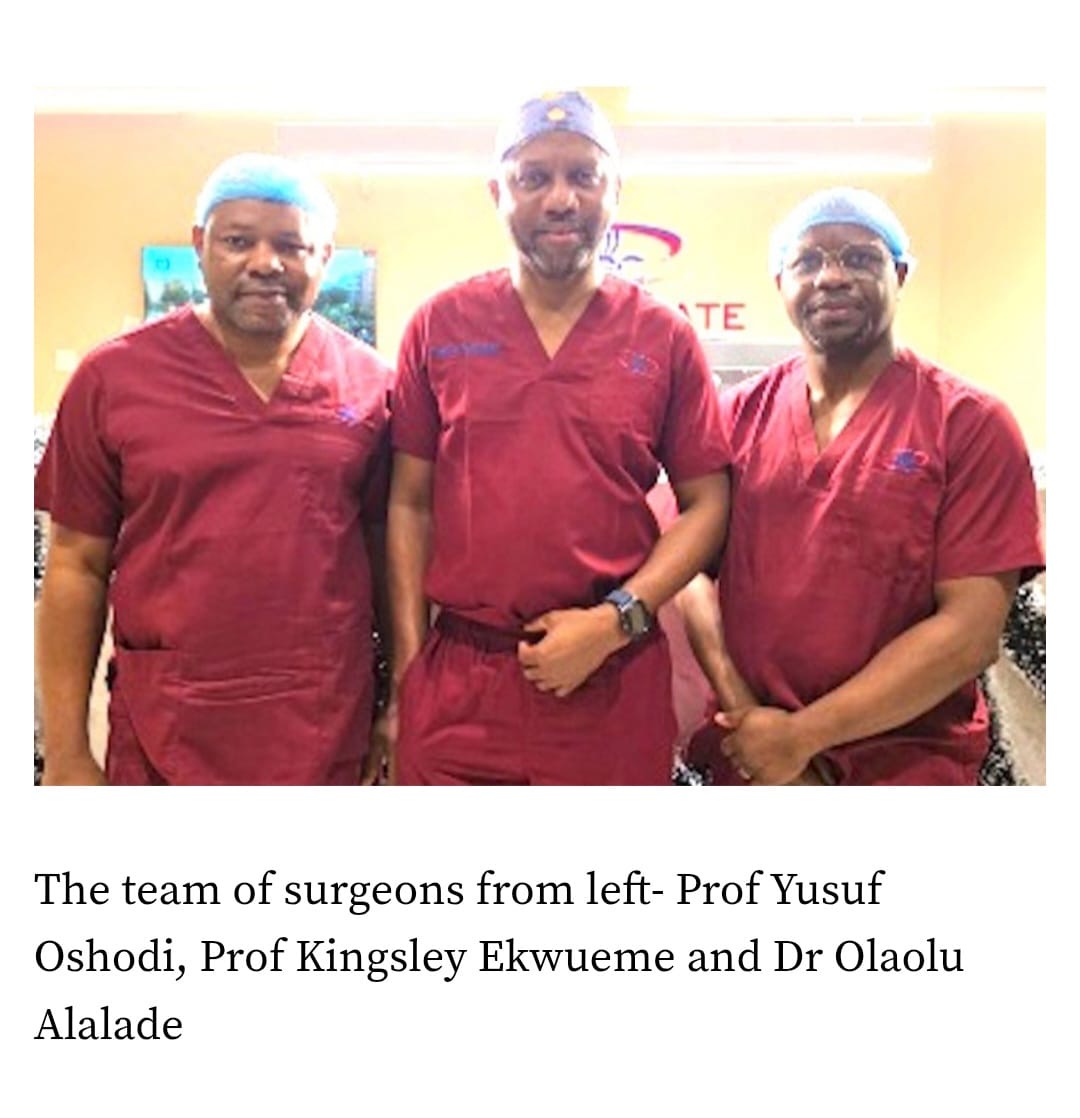

Nigeria performs first robotic gynecological surgery in West Africa
By Doris Obinna
Nigeria has recorded another milestone in advanced healthcare delivery as The Prostate Clinic (TPC), Lagos, has successfully carried out robotic surgery on a female patient, described by experts as the first robotic gynaecological procedure in West Africa.
The procedure was performed on a 30-year-old woman diagnosed with an ovarian tumour, marking a deliberate expansion of robotic surgery in the country from male-focused procedures to women’s health.
Speaking at the facility, the Consultant Robotic Surgeon and Medical Director, TPC, Prof. Kingsley Ekwueme, said the development underscored the hospital’s commitment to innovation and the use of cutting-edge technology to address complex medical conditions.
He said TPC introduced the first surgical robot in Nigeria and West Africa last year and was now extending the technology to gynaecological surgeries. According to him, the patient had been suffering significant pain and disruption to her daily life before undergoing the procedure. “With robotic surgery, we removed two large tumours. She will go home today and can return to work tomorrow,” Ekwueme said.
He explained that robotic surgery significantly reduces the prolonged hospital stay, pain and productivity loss associated with open surgery. He added that patients could be discharged within six hours once vital signs were stable, with minimal blood loss, faster recovery and preservation of vital bodily functions.
Ekwueme described the procedure as a major breakthrough for women with gynaecological conditions such as fibroids, endometriosis, ovarian tumours and selected ectopic pregnancies. He disclosed that the surgery was provided free of charge as part of TPC’s corporate social responsibility, noting that the economic losses linked to prolonged illness often exceed the cost of advanced medical care.

He also revealed that TPC has entered into a partnership with the Imo State Government to establish a robotic surgery centre, which he described as the first of its kind in Nigeria. The centre, he said, would focus on innovation, training and research, while helping to reduce medical tourism abroad. “This revolution has just started. With the right partnerships and vision, Nigeria can become a hub for advanced medical care, training and research,” he added.
Also speaking, Consultant Gynaecologist, Lagos State University Teaching Hospital (LASUTH), Prof. Yusuf Oshodi, said the patient was thoroughly evaluated and found suitable for robotic-assisted surgery.
He noted that the tumour was benign and that the precision of robotic surgery allowed for removal of only the affected tissue without compromising the patient’s fertility. “She will be relieved of the pain she has endured for six months, without damage to surrounding structures,” Oshodi said.
He noted that many Nigerian women suffer silently from gynaecological conditions such as fibroids, endometriosis, ovarian tumours and abnormal menstrual bleeding. According to him, fibroids are particularly common, affecting up to 70 per cent of women in some communities, although only about 10 to 20 per cent develop severe symptoms.
Oshodi added that delays in seeking medical care often result in complications such as anaemia and impaired heart function. He said robotic and minimally invasive surgeries offer precise treatment, shorter hospital stays, preservation of reproductive capacity and faster return to normal activities.
Another member of the surgical team, UK-based Consultant Gynaecologist, Dr. Olaolu Aladade, said robotic and minimally invasive surgery offered clear advantages over open procedures. He said open surgery is associated with more complications, longer recovery periods and potential reproductive challenges, while robotic surgery enables faster recovery, earlier return to work and improved psychological and economic outcomes for patients.
Drawing on his clinical experience, he added that many patients resume normal activities far sooner than expected. “I’ve had patients who, within one or two weeks of surgery, are already back at work. That speaks volumes about how transformative this approach can be.”
Aladade concluded that while statistics and figures are often used to evaluate medical outcomes, the true value of minimally invasive surgery lies in its life-changing impact on patients. “Some benefits simply can’t be quantified,” he stated.

















Leave a comment